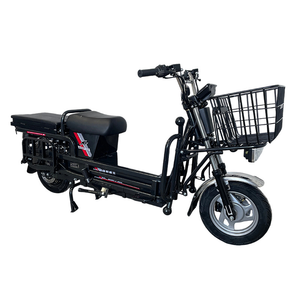
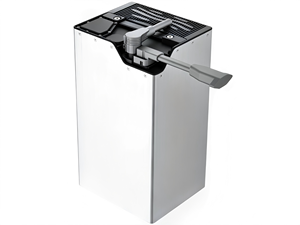
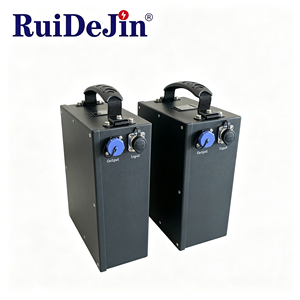
Automotive-grade hardware modules fully integrated into our remote telematics & FOTA update framework.
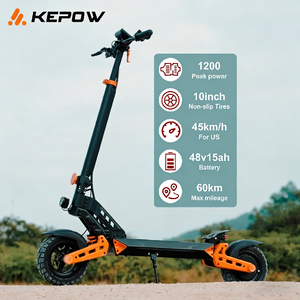

How advanced firmware over-the-air (FOTA) architecture and high-voltage vehicle systems redefine urban fleet management, severe heat reliability, and regulatory compliance across Saudi Arabia.
As Saudi Arabia accelerates its ambitious Saudi Vision 2030 sustainability mandate, the capital city of Riyadh has emerged as a powerhouse for urban electrification and smart mobility adoption. Transitioning two-wheeler transport—spanning commercial delivery fleets, municipal micro-mobility services, and high-performance urban roadsters—to zero-emission electric platforms requires far more than basic battery power. In the demanding climate of the Arabian Peninsula, where summer ambient temperatures routinely top 50°C, the true core of vehicle longevity, fleet optimization, and operational efficiency lies in Over-the-Air (OTA) motorcycle software architecture.
As a leading OEM factory and Tier-1 hardware/software supplier serving the Riyadh market, our organization delivers automotive-grade, high-voltage (HV) electric motorcycles equipped with localized Firmware Over-The-Air (FOTA) and Software Over-The-Air (SOTA) update engines. By integrating car-level Electronic Control Unit (ECU) topologies, dual-bank flash memory redundancy, AES-256 encrypted hardware security modules (HSM), and seamless cellular telemetry across local Saudi telecommunications networks (STC, Mobily, Zain), we provide distributors and fleet operators with unprecedented remote maintenance capabilities.
Traditional electric two-wheelers depend on physical OBD-II tethering for firmware diagnostics, forcing vehicle recalls and costly workshop visits across the Kingdom. Our integrated OTA ecosystem allows remote recalibration of Battery Management System (BMS) thermal thresholds, dynamic torque mapping for desert terrain, micro-controller patches, and real-time charging protocol updates without a single minute of physical fleet downtime.
Ensures zero bricking during remote updates. If connection drops across remote desert stretches, the ECU instantly rolls back to verified firmware banks.
End-to-end cryptographic payload signing and Hardware Security Module (HSM) key verification prevent unauthorized firmware tampering or intercept attacks.
Utilizing high-voltage battery systems (5.4 kWh and above) enabling lower operating currents, dramatically reducing thermal stress during rapid 135 km/h highway runs.
Detailed engineering breakdown of our OTA update infrastructure tailored for Riyadh fleet importers and OEM partners.
Customizing hardware and over-the-air firmware strategies to overcome extreme ambient conditions in Saudi Arabia.
Operating electric motorcycles in Riyadh presents distinct environmental challenges that off-the-shelf low-voltage scooters cannot withstand. During the peak summer season from May to September, pavement surface temperatures along major corridors such as King Fahd Road, Northern Ring Road, and Olaya Street regularly exceed 65°C. Conventional low-voltage lithium batteries experience extreme thermal throttling, leading to sudden power degradation or catastrophic thermal runaway.
Last-mile food and parcel delivery platforms require 14+ hours of uninterrupted operation daily. Our FOTA system dynamically adjusts regenerative braking intensity and thermal dissipation algorithms based on real-time ambient heat telemetry broadcasted across Riyadh neighborhoods.
In accordance with Riyadh’s Digital Twin and IoT Smart City initiatives, our onboard cellular modules stream continuous GPS, diagnostic, and route telemetry directly to centralized fleet dashboards via secure API microservices.
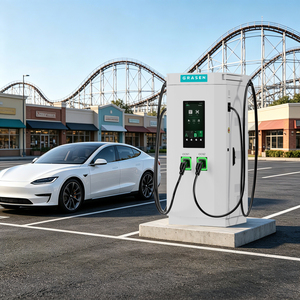
By adopting the universal CCS2 fast-charging protocol standard prevalent across Saudi Arabia's growing public EV infrastructure, riders can replenish 50 km of IDC range in under 15 minutes at public stations without requiring proprietary chargers.
Under the umbrella of the Saudi Green Initiative (SGI), Saudi Arabia aims for 30% of all vehicles in Riyadh to be fully electric by 2030. The GCC two-wheeler market is rapidly transitioning from noisy, maintenance-heavy internal combustion engine (ICE) bikes to high-performance, connected electric roadsters and heavy-duty cargo platforms.
Key regulatory frameworks established by the Saudi Standards, Metrology and Quality Organization (SASO) and the Communications, Space and Technology Commission (CST) mandate stringent electromagnetic compatibility (EMC), cybersecurity resilience, and local cellular e-SIM registration. Our factory-backed solutions provide turn-key SASO-compliant vehicles, ensuring frictionless customs clearance, vehicle registration, and rapid market rollout for Riyadh enterprise clients.
Automotive-grade manufacturing, vertically integrated software engineering, and robust supplier backing.
We control both hardware assembly and the underlying operating system (Raptee OS equivalent architecture), enabling bespoke OTA software features tailored to local Riyadh enterprise workflows.
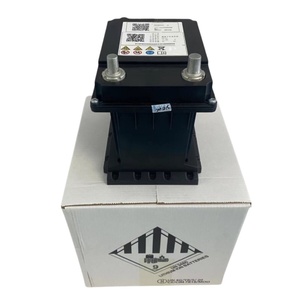
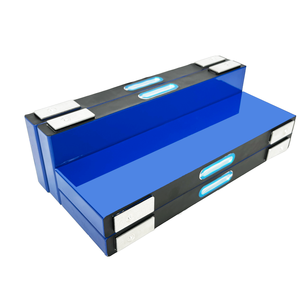
Engineered with prismatic NCM/LFP cells and automotive-grade smart BMS controllers, supported by an industry-leading 8-year or 80,000 km battery performance guarantee.
From specialized 500kg heavy-duty delivery bikes to 135 km/h high-speed streetfighters, our flexible production lines fulfill custom fleet orders with fast lead times.
Addressing essential technical, legal, and operational inquiries for enterprise partners in Saudi Arabia.
Our FOTA engine complies fully with UNECE R156 and ISO/SAE 21434 cybersecurity benchmarks. Firmware binary images are signed using asymmetric ECC/RSA cryptographic keys inside a Hardware Security Module (HSM). Vehicles download encrypted update packages over TLS 1.3 channels via registered STC/Mobily/Zain cellular connections. Updates are decrypted only within isolated microcontroller security enclaves after checksum validation.
Yes. All vehicle variants shipped to the Riyadh market undergo Gulf Cooperation Council (GCC) standardized homologation and SASO compliance testing. Electronics, wiring harnesses, and battery enclosures feature IP67/IP69K ingress protection to resist fine desert dust, high pressure washing, and extreme ambient heat up to 55°C.
Yes. Through our enterprise Telematics Fleet Dashboard, operational managers in Riyadh can group vehicles into regional fleets, schedule off-peak OTA updates during non-delivery hours (e.g., 2:00 AM to 4:00 AM), set maximum velocity caps, monitor battery health diagnostics remotely, and enforce geofencing boundaries across specific municipality zones.
High-voltage architecture operates at significantly lower electrical current for equivalent power output (e.g., 22 kW peak). Lower current reduces I²R resistive heat buildup in motor windings and power cables. This allows sustained highway cruising at 110-135 km/h on major Riyadh ring roads without thermal throttling, while enabling compatibility with public CCS2 DC fast chargers.
Our microcontrollers utilize Dual-Bank A/B flash memory architecture. The vehicle downloads the complete encrypted firmware payload into Bank B while actively running on Bank A. Only after full verification of package integrity does the bootloader swap execution to Bank B. If connection drops or power fails mid-transmission, the vehicle seamlessly defaults to Bank A with zero risk of software corruption or vehicle bricking.
We offer end-to-end customization including custom branding, tailored UI languages (Arabic/English cockpit displays), localized cellular SIM profiles, specialized cargo box mounting frames, heavy-duty suspension tuning, and custom BMS parameter tuning for specific commercial load profiles.