Explore our certified range of high-efficiency Onboard Chargers (OBC), DC/DC converters, swappable LiFePO4 battery modules, and vehicle telematics hardware. Custom engineered for Mexican EV assemblers, commercial fleets, and light electric vehicle (LEV) manufacturers.
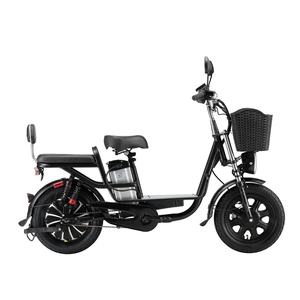
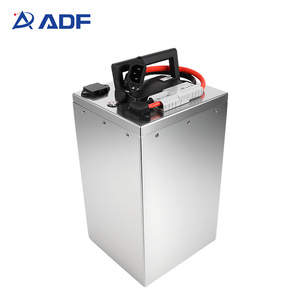
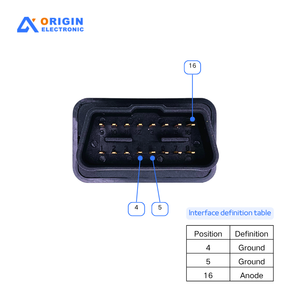
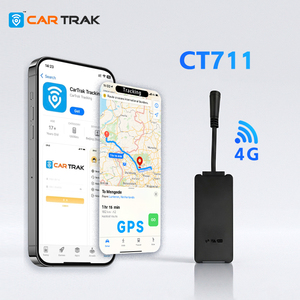

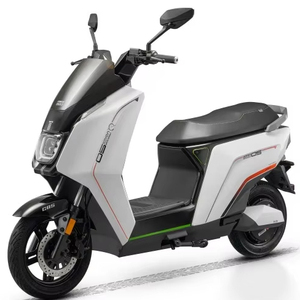
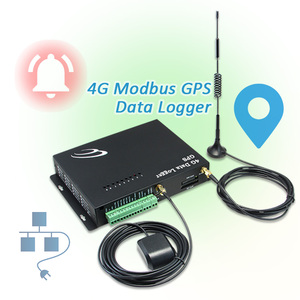
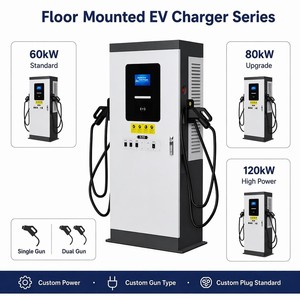
Mexico has rapidly transformed from a traditional automotive manufacturing stronghold into Latin America’s premier hub for Electric Vehicle (EV) assembly, component fabrication, and advanced mobility development. Driven by the United States-Mexico-Canada Agreement (USMCA / T-MEC) rules of origin, global OEMs and Tier-1 suppliers are migrating production facilities to industrial corridors across Nuevo León (Monterrey), Saltillo, Querétaro, Guanajuato, and Puebla. Selecting the right Onboard EV Charger Manufacturer is critical for automotive brands capitalizing on Mexico’s nearshoring surge.
An Onboard Charger (OBC) serves as the core power electronic conversion gateway inside an electric vehicle. It converts alternating current (AC) from grid sources (ranging from domestic 110V/220V single-phase to commercial 480V three-phase systems in Mexico) into stabilized direct current (DC) required to charge high-voltage and low-voltage traction battery packs. Because Mexico’s electrical grid exhibits significant regional voltage variance, high harmonic distortion, and localized thermal stressors, standard off-the-shelf chargers frequently fail. Tier-1 Mexican vehicle integrators demand customized, ruggedized OBC architectures built to withstand real-world operational challenges.
Furthermore, compliance with Mexican official standards—specifically NOM-001-SEDE (electrical installation safety) and NOM-016-SCFI (energy efficiency for power supplies)—is mandatory for commercialization across Mexico. Partnering with a specialized manufacturer capable of providing pre-certified OEM/ODM OBC modules ensures seamless vehicle homologation with Mexican regulatory bodies such as CONUEE and CRE.
Modern electric mobility demands compact, high-density, and thermally resilient power electronics. Our engineering methodology incorporates state-of-the-art Silicon Carbide (SiC) and Gallium Nitride (GaN) power switches, replacing legacy Silicon MOSFETs to achieve unmatched volumetric efficiency and minimal thermal dissipation.
Designed to operate reliably across Mexico's fluctuating 85V-265V AC inputs. Protects against grid surges, voltage drops, and phase imbalances typical in regional industrial zones.
Supports Vehicle-to-Load (V2L) and Vehicle-to-Grid (V2G) power discharge, allowing electric fleet vehicles to function as mobile energy storage units during grid outages.
Natively supports CAN 2.0B, CANopen, and J1939 protocols for seamless real-time handshakes with Battery Management Systems (BMS) and Vehicle Control Units (VCU).
The following comparative benchmark outlines our standardized Onboard Charger platforms tailored for light vehicles, commercial fleets, and heavy-duty electric buses operating in North American conditions:
| OBC Power Rating | Input AC Voltage Range | Output DC Voltage Range | Peak Efficiency | Cooling Mechanism | Target Vehicle Application in Mexico |
|---|---|---|---|---|---|
| 3.3 kW OBC | 85V - 265V AC (Single Phase) | 30V - 100V DC / 200V-450V DC | >95.0% | Forced Air / Sealed IP67 | E-Motorcycles, Delivery Tricycles, Last-Mile LEVs |
| 6.6 kW Bi-Directional | 110V / 220V AC Split-Phase | 200V - 500V DC | >96.2% | Liquid Cooled (Glycol/Water) | Passenger EVs, Commercial Delivery Vans (CDMX Fleets) |
| 11 kW Commercial OBC | 208V / 480V AC (Three Phase) | 400V - 800V DC High Voltage | >96.8% | Automotive Liquid Cooled | Heavy Duty Trucks, Municipal E-Buses, Mining Vehicles |
| 22 kW Ultra-Fast OBC | 480V AC (Three Phase Industrial) | 500V - 900V DC High Voltage | >97.1% | Integrated Dual Liquid Circuit | Long-Haul Logistics Fleets & Intercity Transit Lines |
Understanding local operational environments is essential for engineering reliable electric vehicles. Mexico’s unique geography—ranging from high-altitude metropolitan areas like Mexico City (2,240 meters above sea level) to extreme ambient heat in Sonora and Baja California—imposes strict design parameters on power electronics.
Dense traffic, stop-and-go driving, and heavy payloads require low-voltage high-current OBCs capable of rapid top-up charging from standard 110V wall outlets during loading dock rest periods.
Cross-border shuttle trucks operating between Texas and Nuevo León demand heavy-duty three-phase 11kW/22kW liquid-cooled OBCs that interface cleanly with North American J1772 and CCS1/CCS2 charging standards.
At high elevations, reduced air density impairs conventional air cooling. Our liquid-cooled OBC modules feature intelligent thermal derating algorithms to prevent thermal runaway even in desert ambient temperatures exceeding 45°C.
As an established global leader in power conversion systems, our manufacturing facilities adhere strictly to automotive-grade quality control protocols. We provide end-to-end OEM/ODM custom development services for automakers and Tier-1 integrators across North and South America.
Our automated SMT assembly lines operate under strict IATF 16949 and ISO 9001 standards. Every manufactured OBC undergoes 100% full-load thermal burn-in testing, high-voltage isolation checks, and automated optical inspection (AOI) before shipment.
Vehicle architectures vary greatly. Our engineering team provides custom firmware tailoring for CAN communication matrix tuning, custom charge profile curves for LiFePO4, NMC, and LTO chemistries, and specialized diagnostic software integration.
We maintain strategic buffer inventory and streamlined customs documentation to support fast logistics delivery into major Mexican industrial parks including Apodaca, El Marqués, and Silao, reducing assembly line downtime.
Are you developing an electric vehicle project in Mexico? Our technical engineering team provides free structural space-claim evaluation, thermal modeling analysis, and CANbus integration matrix design for OEM partner inquiries.
To maintain a competitive edge, automotive procurement officers and chief engineers must align their technology roadmaps with key industrial transformations taking place across Mexico:
A. Electrification of Commercial Fleet Freight: Corporate sustainability mandates from retail conglomerates operating in Mexico (such as Walmart México, Bimbo, and FEMSA) are accelerating the transition from diesel delivery vehicles to electric fleets. Onboard chargers must now feature high durability ratings to support continuous 24/7 dual-shift operational cycles.
B. Transition from 400V to 800V Architecture: To support faster charging times without increasing cable weight and copper costs, premium EV platforms in North America are transitioning to 800V high-voltage platforms. Our SiC-based onboard chargers lead this shift, delivering up to double the power density in half the footprint.
C. Localized Component Sourcing & Compliance: With strict enforcement of USMCA regional value content rules, automakers located in Mexico are increasingly replacing uncertified suppliers with accredited power electronics manufacturers who can guarantee transparent component origin and compliance documentation.
Our Onboard Chargers feature an ultra-wide AC input voltage window (85V AC to 265V AC) equipped with active Power Factor Correction (PFC > 0.99). Integrated surge protection devices (SPD) shield internal power switches against severe voltage spikes, brownouts, and frequency drifts commonly encountered in rural and industrial grid sectors across Mexico.
Our products are manufactured under IATF 16949 automotive standards and carry international certifications including CE, UL, RoHS, and FCC. We assist Mexican vehicle manufacturers with localized NOM compliance testing (specifically NOM-001-SEDE and NOM-016-SCFI) by providing full EMC/EMI laboratory test reports and technical construction files.
Yes. All our onboard chargers feature isolated CAN 2.0B or CANopen communication interfaces. We provide full DBC files and customizable firmware software parameters, allowing your engineering team to define custom Baud rates, heartbeat intervals, error flags, and specific message IDs required by your VCU or Battery Management System (BMS).
Air-cooled chargers rely on ambient airflow and internal heat sinks; they are cost-effective for smaller light electric vehicles (LEVs) and e-scooters. However, for passenger cars and commercial delivery vans operating in high-temperature regions of Northern Mexico, liquid-cooled OBCs integrated into the vehicle's engine coolant loop offer vastly superior thermal management, consistent continuous power delivery, and complete IP67/IP69K sealing against dust, water immersion, and mud.
Yes. We supply advanced bi-directional Onboard Chargers (6.6kW and 11kW models) capable of converting DC battery power back into 110V/220V AC household electricity. This allows electric utility trucks, fleet vans, and passenger vehicles in Mexico to run power tools, emergency equipment, or feed energy back into microgrids.
Standard pre-engineered sample evaluation units ship within 7 to 10 working days. Customized prototype samples featuring bespoke CAN matrix programming or modified mounting dimensions are delivered in 3 to 4 weeks. Mass production orders are fulfilled within 4 to 6 weeks, supported by expedite logistics channels directly to Mexican ports or border crossing hubs in Laredo and Hidalgo.
Partner with an industry-leading Onboard Charger Manufacturer. Request custom technical datasheets, 3D CAD step files, or schedule a technical call with our engineering team today.

