

The Shift in Swiss Two-Wheeler Mobility: Transitioning from Low-Voltage Urban Commuters to High-Voltage Alpine Performers
Switzerland stands at the epicentre of European green transportation innovation. Guided by the Swiss Federal Energy Strategy 2050 and stringent decarbonization mandates enforced by the Swiss Federal Office of Energy (SFOE), the Swiss automotive market is undergoing a rapid transition toward total electrification. However, while four-wheeled Electric Vehicles (EVs) have achieved mass adoption supported by high-density DC charging corridors across Cantons like Zurich, Bern, Vaud, and Geneva, the electric two-wheeler segment has historically suffered from technological isolation.
Traditional electric two-wheelers sold in Central Europe rely predominantly on low-voltage (48V–72V) architecture. While adequate for flat micro-urban trips, low-voltage electric scooters and motorcycles encounter severe operational bottlenecks in Switzerland:
- Alpine Thermal Throttling: Continuous high-current drawdown during steep elevation climbs (such as the Gotthard Pass, Susten Pass, or regional alpine highways) generates excessive thermal buildup in low-voltage motors and battery cells, triggering immediate power derating.
- Proprietary Wall-Socket Isolation: Conventional e-two-wheelers cannot access Europe’s vast public CCS2 fast-charging network. Riders are forced to carry cumbersome Level-1 AC chargers, taking 4 to 6 hours to recharge via standard household sockets (230V/10A SEV 1011 plugs).
- Winter Range Degradation: Sub-zero Swiss alpine temperatures severely impair unheated low-voltage battery chemistry, causing voltage sags and drastically reduced usable capacity without active thermal management.
Engineering Architecture: How High-Voltage (HV) Drivetrains Redefine Two-Wheeler Manufacturing
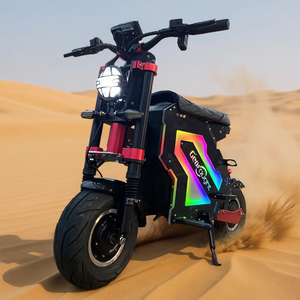
As an OEM/ODM manufacturing partner expanding across Switzerland and the DACH region, our core technical differentiator lies in our proprietary car-grade high-voltage powertrain design. Unlike conventional suppliers who merely pack higher amp-hour batteries into 72V frames, our high-voltage two-wheeler architecture mirrors electric passenger vehicle engineering.
Lower Electrical Current & Heat Reduction
By operating at high voltage, the electrical current (Amperage) required to output peak motor power (22 kW / 70 Nm) is drastically reduced. According to Joule's First Law ($P = I^2 R$), halving current reduces heat dissipation in wiring harnesses and motor windings by up to 75%.
Direct CCS2 DC Fast-Charge Compatibility
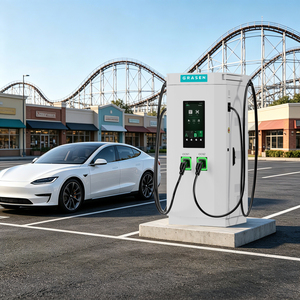
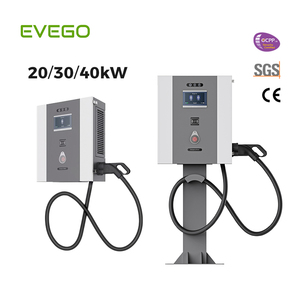
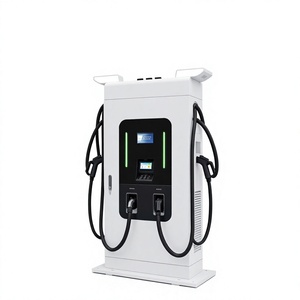
Equipped with an integrated IEC 62196-3 CCS2 charging interface, our two-wheelers plug straight into standard Swiss car chargers. A 20% to 80% charge is accomplished in just 36 minutes, while a brief 15-minute coffee stop adds up to 50 km of mountain-ready range.
Smart Battery Management (BMS) with Cold-Climate Preconditioning
Engineered for harsh Swiss winters, our advanced CAN-bus telematics and BMS dynamically control cell balancing and active heating circuits. This maintains battery operating temperatures within the optimal 20°C–35°C envelope even in freezing ambient conditions.
Localized Swiss Application Scenarios: Where High-Voltage 2W EVs Excel
To capture commercial market share in Switzerland, distributors and fleet managers must deploy vehicles built around real-world Swiss geography, climate, and transit patterns. Below are the primary deployment vectors for our fast-charging two-wheeler models:
1. Suburban Inter-City Commuting (e.g., Winterthur to Zurich / Lausanne to Geneva)
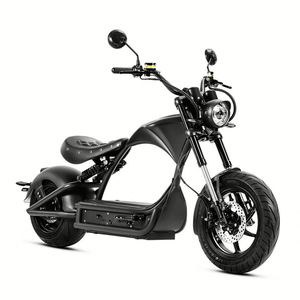
Thousands of Swiss commuters travel daily along high-speed suburban arterials such as the A1 and A2 express routes. Standard 45 km/h mopeds (L1e category) are banned or unsafe on these corridors, while 80 km/h low-voltage bikes suffer thermal fatigue. With a sustained top speed of 135 km/h and 0–60 km/h acceleration in 3.5 seconds, our L3e-category electric roadsters merge seamlessly into highway traffic, maintaining speed up steep inclines without performance degradation.
2. Alpine Tourism & Mountain Pass Touring
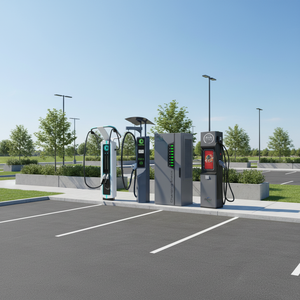
Switzerland’s iconic pass routes (such as the Grimsel Pass, Klausen Pass, and St. Gotthard) represent the ultimate testing ground for electric two-wheelers. High-voltage power delivery delivers unyielding 70 Nm torque from 0 RPM, enabling sharp acceleration out of hairpin turns. Riders can stop at mountain summit EV charging stations equipped with CCS2 plugs, recharge while taking in the panorama, and complete full alpine circuits without range anxiety.
3. Eco-Conscious Municipal & Last-Mile Delivery Fleets in Car-Free Zones
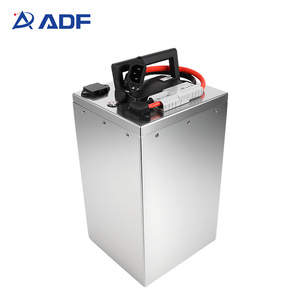
Swiss alpine resorts like Zermatt, Saas-Fee, and Wengen strictly enforce zero-emission zones. Furthermore, urban logistics hubs across Basel and Lucerne face increasing pressure to eliminate diesel delivery vans. Our swappable LiFePO4 battery modules and high-speed DC urban scooters offer commercial logistics providers 24/7 uptime, robust payload capabilities, and integration with 4G IoT telematics for live fleet positioning and battery state-of-health tracking.
Comparative Technical Analysis: Low-Voltage vs. High-Voltage Architecture
For Swiss importers, motor vehicle buyers, and fleet managers evaluating wholesale procurement, the structural differences between traditional e-bikes/scooters and high-voltage motorcycles are outlined below:
| Performance Specification | Standard Low-Voltage (48V - 72V) | High-Voltage (HV Architecture) | Swiss Market Advantage |
|---|---|---|---|
| Charging Standard | Proprietary AC Wall Socket (230V Home Plug) | Universal CCS2 DC Fast Charge + Onboard AC | Full access to 12,000+ public Swiss car charging points |
| 20% to 80% Recharge Time | 4.0 – 6.0 Hours | ~36 Minutes (DC Fast Charge) | Eliminates downtime; enables long-distance tour capability |
| Peak Motor Power Output | 3 kW – 7 kW | 22 kW (70 Nm Instant Torque) | Superior incline climbing on steep Swiss alpine grades |
| Thermal Management | Passive Air Cooling (Prone to overheating) | Car-Grade Thermal Dissipation & BMS Preconditioning | Sustained 110–130 km/h cruising with zero thermal derating |
| Battery Pack Capacity | 1.8 kWh – 3.2 kWh | 5.4 kWh High-Density Pack | Real-world 200 km IDC range for inter-cantonal transit |
| Vehicle Warranty Coverage | 1 – 2 Years Limited | 8 Years / 80,000 km Battery Warranty | Highest residual value & lowered Swiss total cost of ownership (TCO) |
Regulatory Compliance & Homologation Standards in Switzerland (FEDRO / ASTRA Guidelines)
Importing and distributing motor vehicles in Switzerland requires strict adherence to federal transportation regulations enforced by the Federal Roads Office FEDRO (ASTRA / Astra-Guidelines) and alignment with European Whole Vehicle Type Approval (EUWVTA - Regulation 168/2013). Our manufacturing facilities maintain comprehensive compliance across all export lines:
- Swiss Category L3e-A2 / L3e-A3 Homologation: Full compliance with braking, lighting, structural integrity, and noise emission requirements for high-performance electric motorcycles.
- Standardized Safety Systems: Dual-channel ABS (Anti-lock Braking System) paired with regenerative electronic braking, traction control (TCS), and LED daylight running lamps certified under UNECE standards.
- EMC & Electrical Safety: ECE R10 electromagnetic compatibility certification ensuring zero interference with Swiss telecommunications and vehicle sensors, coupled with high-voltage isolation safety compliant with ISO 6469.
- Battery Environmental Regulations: Full conformity with EU/Swiss Battery Directives (WEEE, RoHS, REACH) and UN38.3 transport safety validation for lithium-ion and LiFePO4 battery chemistries.
Manufacturer Edge: Why Partner with Our Manufacturing Hub for Switzerland & Europe
As a global OEM/ODM manufacturer focused on high-voltage light electric vehicles, we offer Swiss distributors, brand owners, and commercial fleet operators an end-to-end partnership model designed for fast scaling and long-term margin reliability.
State-of-the-Art Automotive Production
Integrated automated assembly lines featuring robotic cell-stacking, laser welding, and automated end-of-line (EOL) dynamometer testing to ensure zero-defect quality across every chassis.
Custom OEM/ODM Modular Development
From custom badging, ECU software localization (German/French/Italian UI display support), to tailored suspension tuning for European roads, we adapt vehicle specs to your regional brand strategy.
4G Telematics & Fleet Management Cloud
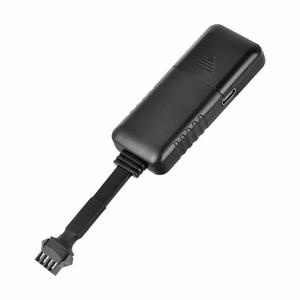
Vehicles come pre-integrated with 4G IoT telematics hardware, enabling remote diagnostic monitoring, geofencing, over-the-air (OTA) firmware updates, and REST API integration for B2B fleet platforms.