Specially engineered for Peruvian roadside assistance operators, municipal emergency teams, and commercial fleet managers. Featuring car-grade high-voltage systems, swappable energy storage, and real-time cloud management.
Peru’s transportation sector is undergoing a profound structural transition toward zero-emission mobility. Driven by national sustainability commitments such as the NAMA Electromovilidad program, the Ministry of Energy and Mines (MINEM), and municipal electrification targets across Metropolitan Lima, Callao, Arequipa, and Trujillo, electric passenger vehicles, commercial delivery fleets, and high-voltage industrial utility transport are proliferating rapidly. However, Peru's geographical extremes—ranging from dense coastal urban grid corridors along the Pan-American Highway (Ruta 1) to ultra-high-altitude mining arteries exceeding 4,500 meters above sea level in the Andes—present unprecedented logistical challenges for emergency EV recovery.
Unlike traditional Internal Combustion Engine (ICE) breakdown assistance, which primarily requires simple flatbed towing or auxiliary 12V lead-acid jumpstarts, an immobilized Electric Vehicle (EV) presents complex electromechanical, thermal, and software constraints. Depleted high-voltage traction batteries cannot be towed via conventional drive-wheel contact without generating dangerous Back-Electromotive Force (Back-EMF), which threatens inverter power electronics and risks thermal runaway within the lithium-ion matrix. Consequently, international B2B buyers, municipal roadside operators, and corporate fleet dispatchers require highly specialized, engineered roadside recovery ecosystems.
In regions like Cusco, Puno, and Cerro de Pasco, high altitude reduces ambient air density, degrading passive cooling efficiency for high-voltage DC fast-charging power modules. Off-grid recovery units must incorporate active liquid thermal loops and high-dielectric breakdown insulation to operate reliably up to 4,800m altitude without power derating.
While Lima-Callao concentrates over 70% of Peru's light EV fleet, highway gaps along the coastal deserts leave long stretches without DC fast chargers. Mobile recovery vehicles equipped with 120kW to 261kWh LFP Battery Energy Storage Systems (BESS) fill this critical infrastructure deficit through rapid Vehicle-to-Vehicle (V2V) power transfers.
As an established OEM supplier and global exporter supplying Peru’s automotive and mining sectors, our recovery architectures discard low-voltage legacy band-aids. Instead, we deploy car-grade high-voltage (HV) power electronics, robust battery chemistries, and intelligence-driven fleet telematics engineered for immediate, on-site energy injection.
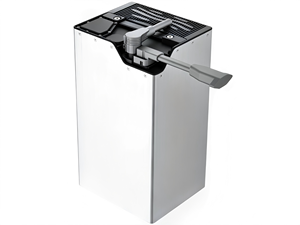
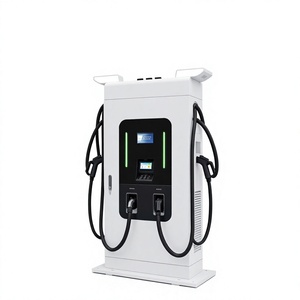
Integrated 120kW to 480kW floor-mounted or truck-mounted DC fast chargers utilize Lithium Iron Phosphate (LFP) or high-density NCM 811 prismatic cells. Operating on dual CCS2 / CHAdeMO protocols with OCPP 1.6J/2.0.1 compliance, these units deliver 20% to 80% SoC replenishment in under 35 minutes directly on the roadside.
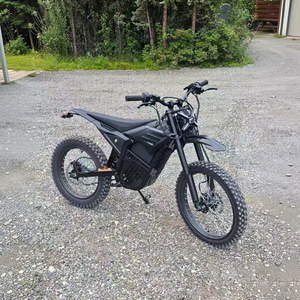
For two-wheelers, light delivery vehicles, and urban utility bikes, swappable NCM ternary cathode packs allow instantaneous energy restoration. Equipped with integrated Battery Management Systems (BMS) over CAN 2.0B buses, they provide micro-second short-circuit, over-charge, and thermal isolation protection.
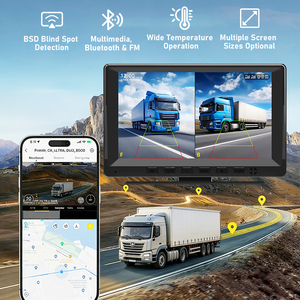
Roadside assistance service units are outfitted with 7-inch 2CH 1080P Smart Truck Dashcams featuring real-time 4G/5G cloud telemetry. Recovery operators can monitor stranded vehicle CAN-bus diagnostics, battery state-of-health, location metrics, and tow-arm load stresses in real time.
Comparing mobile emergency power supply configurations and commercial recovery hardware exported directly to Peruvian B2B clients, municipal fleets, and regional service partners.
| Hardware Category | Core Chemistry / Spec | Power / Load Output | Primary Application Scenario | Peru Regional Suitability |
|---|---|---|---|---|
| Mobile Fast Recovery System | LFP Battery Energy Storage (261kWh) | 120kW - 480kW DC Fast (Dual CCS2) | Emergency Highway Range Boost & Fleet Rescues | Pan-American Highway & Lima Suburbs |
| NCM Swappable Pack | NCM 811 Ternary Lithium Cathode | 72V / High Peak C-Rate Output | Two-Wheelers, E-Motorcycles & Micro-Mobility | Urban Lima, Arequipa Delivery Networks |
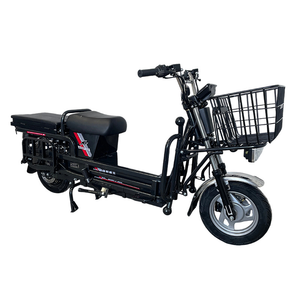
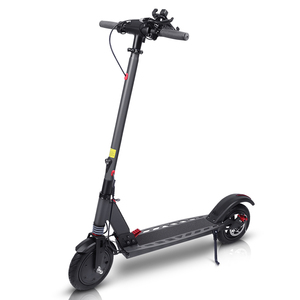
| Commercial E-Cargo Bike (Y19) | Heavy-Duty Brushless Motor + Frame | 500kg Payload Capacity / 72V Li-ion | Rapid Urban Service Technician Deployment | Historic Centers, Off-Road Camp Site Venue |
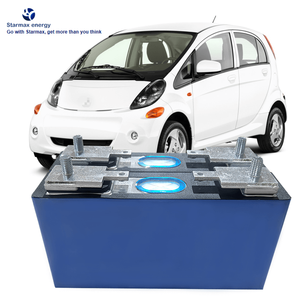
| Prismatic Module Upgrade | CATL 3.7V 93Ah NMC Prismatic Cells | High-Voltage Battery Bank Rebuilds | On-Site Battery Pack Refurbishment & Recovery | Mining Fleet Depots & Coastal Workshops |
| Smart Telematics Dashcam | 7-inch TFT / Dual 1080P / GPS Cloud | 4G LTE / CAN 2.0B / Remote AI Telematics | Recovery Fleet Dispatch, Video AI & Asset Tracking | National Trans-Andean Freight Corridors |
Deploying roadside assistance equipment in Peru demands strict engineering adaptability to accommodate local infrastructure realities. Below are three primary localized application scenarios where our exported equipment delivers quantifiable operational advantages:
Metropolitan traffic in Lima frequently leads to unexpected battery drain for commercial EV fleets stuck in congestion on Javier Prado or Vía Expresa. Our mobile service bikes (such as the Y19 Commercial E-Two Wheeler) allow emergency technicians to filter through dense gridlock carrying handheld high-voltage diagnostic tools, 12V auxiliary power bridges, and portable lithium swap packs, reaching stranded vehicles in half the response time of heavy flatbed tow trucks.
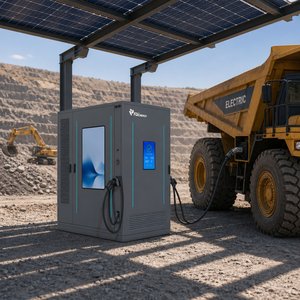
Commercial electric trucks and pickups servicing high-altitude mining enclaves (e.g., Ancash, Apurímac, Pasco) operate under extreme thermal cycles and steep gradients. Our 120kW All-In-One Solar & Battery Storage Mobile Stations provide autonomous off-grid rapid recharging for stranded heavy-duty EVs along remote mountain passes where local electrical grids are either unstable or completely non-existent.
Long-distance highway travel between Lima, Paracas, Ica, and Trujillo often tests the maximum range limits of private electric vehicles. Recovery operators stationed along North and South Pan-American corridors utilize our dual CCS2 floor-mounted and truck-integrated fast-charging stations (LC-480) to provide a 15-minute emergency charge, adding up to 100 km of driving range so drivers can safely reach the next permanent charging station.
Combining car-grade engineering precision, robust supply chains, and extensive OEM/ODM manufacturing capability to power South America's electric revolution.
Our systems leverage automotive-grade high-voltage architecture (HV), lowering operational current, minimizing heat build-up, and ensuring sustained power delivery during prolonged recovery operations.
We back our core power modules with up to an 8-year or 80,000 km battery performance cover, establishing unmatched reliability for Peruvian fleet operators and service exporters.
Full compliance with international CCS Combo 2 standard, CHAdeMO, and OCPP 1.6J/2.0.1 protocols ensures seamless interoperability with European, American, and Asian EV models imported into Peru.
Hardware integrates out-of-the-box with real-time GPS telemetry, mobile app diagnosis, remote geofencing, and over-the-air (OTA) firmware updates for continuous operational optimization.
Manufactured in state-of-the-art facilities subjected to rigorous thermal shock, vibration, high-altitude breakdown, and IP67 waterproof validation testing prior to global export shipping.
Tailored engineering customization for Peruvian B2B buyers, including bilingual UI (Spanish/English), customized branding, localized custom clearance documentation, and technical support.
Addressing essential technical, tariff, legal, and operational inquiries common among Peruvian automotive importers, emergency assistance providers, and logistics managers.
Equip your enterprise fleet, municipal emergency response team, or automotive dealership network in Peru with high-voltage roadside assistance solutions, fast chargers, and smart telematics systems engineered for extreme reliability.

