Engineered for extreme desert environments, heavy commercial operations, and smart urban transport across the Kingdom of Saudi Arabia.
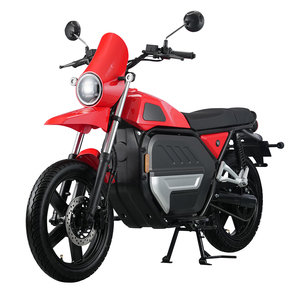

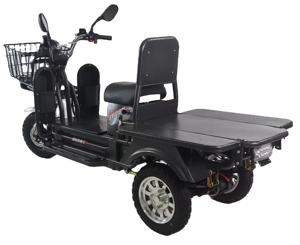
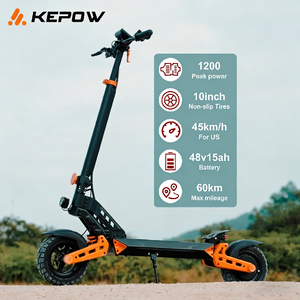
Analyzing how localized thermal protocols, solar storage integration, and fleet electrification drive demand for high-reliability BMS OEM/ODM manufacturing.
Gigaprojects like NEOM, THE LINE, and Red Sea Global require zero-emission transportation systems and decentralized energy storage (BESS) governed by smart, CANbus-connected BMS units with remote IoT monitoring.
Saudi Arabia's aggressive deployment of desert solar farms demands industrial BESS units capable of handling high-current active cell balancing during peak sunlight periods exceeding 50°C ambient temperatures.
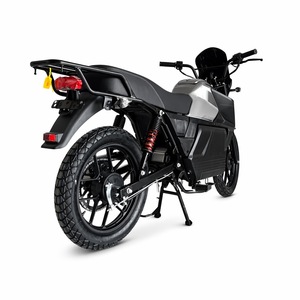
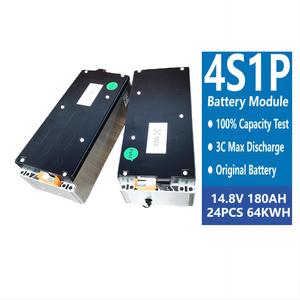
Rapid e-commerce growth in Riyadh, Jeddah, and Dammam has escalated demand for heavy-duty electric cargo bikes, trikes, and light commercial EVs operating on dual high-capacity lithium battery modules.
Operating energy storage systems or electric fleets in Saudi Arabia introduces harsh realities: ambient summer temperatures exceeding 55°C, fine silica sand dust, high humidity along coastal regions like Jeddah, and long-distance operational corridors.
Standard off-the-shelf BMS hardware routinely fails under these stresses due to thermal runaway, cell imbalancing, or dust ingress. Our BMS manufacturing architecture integrates car-grade high-voltage (HV) topology, active thermal dissipation modeling, and conformal-coated IP67 electronics tailored specifically for GCC operational profiles.
Combining automotive-grade engineering standards with agile OEM/ODM manufacturing capacity for global and Saudi Arabia market leaders.
Unlike low-voltage systems prone to thermal stress, our high-voltage BMS architecture reduces current draw for identical power output, eliminating heat spikes during prolonged high-speed operation or rapid charging.
Engineered to integrate seamlessly with public electric car fast-charging stations across Saudi Arabia. Supported by onboard intelligence that manages 20–80% charging cycles in ~36 minutes.
Advanced algorithmic estimation for State-of-Charge (SoC) and State-of-Health (SoH). Built-in Bluetooth 5.0, CAN-BUS 2.0B, and optional 4G cloud telematics ensure zero downtime for fleet operations.
Every Battery Management System circuit board leaving our automated SMT facility undergoes rigorous End-of-Line (EOL) testing, thermal shock simulation (-40°C to +85°C), vibration resistance profiling, and high-voltage isolation validation.
We maintain comprehensive compliance with international electro-technical standards including IEC 62619, UN38.3, CE, RoHS, and national certification pathways required by the Saudi Standards, Metrology and Quality Organization (SASO) and GCC Standardization Organization (GSO).
Addressing essential technical, regulatory, and logistics queries for Saudi enterprise clients and importers.
Our Saudi-spec Battery Management Systems feature active thermal protection circuits and auto-derating algorithms. When internal cell temperatures approach threshold limits, the BMS intelligently adjusts current output to protect battery longevity without abruptly cutting off power. Additionally, high-transistor MOSFET arrays and custom aluminum heatsinks ensure passive thermal dissipation even in high ambient heat.
Yes. We provide complete technical documentation, IEC 62619 safety reports, UN38.3 transport safety testing, and RoHS compliance certificates required to clear Saudi Customs (SABER platform) via SASO (Saudi Standards, Metrology and Quality Organization) approved certification bodies.
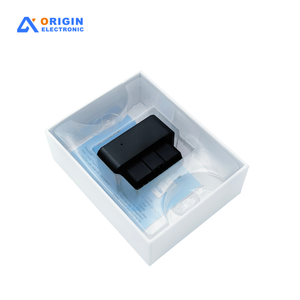
Absolutely. Our smart BMS hardware supports standardized CANbus 2.0B, RS485, and Modbus protocols. Paired with our 4G OBD II telematics modules, fleet operators in Saudi Arabia can transmit live battery data (SoC, cell voltages, temperature, GPS location, fault codes) directly to their centralized enterprise software or our cloud-based monitoring platform.
We provide manufacturer-backed warranties ranging from 3 years on standalone smart BMS control boards to an industry-leading 8 years or 80,000 km on complete high-voltage automotive/industrial battery assemblies, supported by replacement parts availability and technical engineer support.
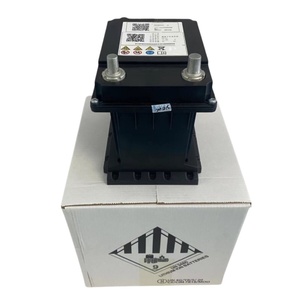
Standard OEM sample evaluation units ship via express air freight within 7–10 days. Bulk production orders typically require 20–30 days for automated manufacturing and EOL testing. Shipments to King Abdulaziz Port (Dammam) or Jeddah Islamic Port take approximately 18–25 days via sea freight, supported by full hazardous goods (DG Class 9) documentation.
Yes, our R&D engineering team works directly with Saudi integrators, EV manufacturers, and project developers to design custom PCB layouts, enclosure dimensions, communication protocols, and firmware parameters tailored to specific operational requirements.
Accelerate your electric mobility or renewable energy storage initiatives with high-voltage, thermally resilient Battery Management Systems.

