High-performance electric vehicles, fast-charging infrastructure, and smart IoT hardware engineered for New Zealand conditions
Decoding car-grade high-voltage architecture, electrothermal stability, and total cost of ownership across Australasia
As New Zealand accelerates toward its net-zero carbon targets, commercial fleet operators, vehicle distributors, and municipal transport providers face a critical hurdle: long-term battery degradation and total cost of ownership (TCO) predictability. Traditional light electric vehicles (LEVs) and two-wheelers have historically relied on low-voltage (48V–72V) lead-acid or unmanaged lithium-ion packs. Under high current demands and variable weather conditions—ranging from Auckland's humid subtropical climate to the freezing sub-alpine winter passes of the South Island—these low-voltage packs suffer from severe thermal stress, rapid capacity fading, and premature cell breakdown.
Our enterprise-grade electric powertrain architecture transforms this dynamic. By implementing automotive-grade High-Voltage (HV) power distribution paired with a 5.4 kWh lithium-nickel-manganese-cobalt (NCM) / LFP battery module, we guarantee an industry-leading 8-year or 80,000 km battery warranty maintaining over 80% State of Health (SOH). Designed specifically for export suppliers serving New Zealand, this technology integrates universal CCS2 DC fast-charging compatibility, telematics-driven dynamic thermal management, and full compliance with AS/NZS electrical safety directives.
Unlike standard low-voltage e-bikes that generate extreme heat under high amperage, our car-grade high-voltage system reduces electric current draw by over 60% for equivalent power output. Lower current yields significantly less heat generation ($P = I^2 R$), maintaining peak discharge efficiency and eliminating thermal throttling during steep elevation climbs along NZ State Highway 1 or the Crown Range.
Battery longevity depends directly on thermal uniformity across individual battery cells. Our pack enclosure utilizes structural liquid-cooling plates combined with phase-change material (PCM) insulation. This safeguards cell chemistry during rapid 36-minute CCS2 DC fast charging and ensures consistent operation in ambient temperatures ranging from -5°C in Queenstown to +35°C in Northland.
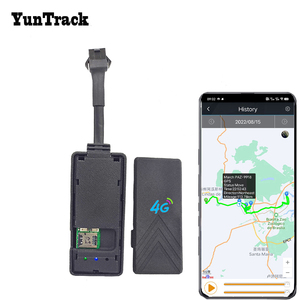
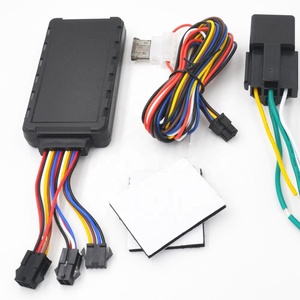
Equipped with an integrated 4G LTE IoT gateway, the dynamic Battery Management System (BMS) measures individual cell voltages, temperature gradients, and internal resistance 100 times per second. Cloud-based predictive algorithms upload real-time diagnostics to fleet managers, allowing remote firmware optimization via Over-The-Air (OTA) updates across New Zealand's cellular networks.
In New Zealand, where vehicle import standards require strict environmental compliance and Road User Charges (RUC) apply to electric transport, longevity is the primary driver of commercial ROI. An 8-year or 80,000 km factory-backed warranty eliminates capital expenditure anxiety for importers, commercial logistics fleets, and motorcycle rental operators. It shifts the EV procurement equation from high-risk early adoption to bankable infrastructure asset management.
Detailed comparative metrics for New Zealand fleet buyers, commercial distributors, and OEM partners
| Engineering Vector | Standard Low-Voltage EV Systems | Our High-Voltage (HV) NZ-Spec Platform | Commercial Benefit for NZ Buyers |
|---|---|---|---|
| Battery Warranty Period | 1 – 3 Years (Limited Cycles) | 8 Years / 80,000 km | Guaranteed residual value & minimized fleet amortisation cost |
| Battery Capacity & Chemistry | 1.5 kWh – 3.2 kWh Lead-Acid / Standard NMC | 5.4 kWh High-Density Car-Grade Pack | 200 km IDC estimated range for long inter-city routes |
| Charging Protocol | Proprietary Slow AC Adapter (4 – 8 Hours) | Universal CCS2 DC Fast Charger Compatible | Plugs directly into ChargeNet NZ & public EV networks (20-80% in 36m) |
| Powertrain Architecture | 48V – 72V Low-Voltage Hub / Mid Motor | Automotive-Grade High-Voltage (HV) Engine | Sustained high-speed cruise (135 km/h) without thermal shutdown |
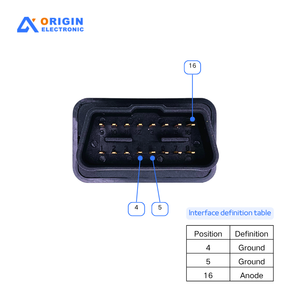
| IoT & Telematics Capability | None or basic Bluetooth App | 4G LTE CAT1 / OBD2 / OTA Remote Control | Real-time geofencing, remote lock, and anti-theft tracking across NZ |
| NZ Regulatory Readiness | Requires local modification | AS/NZS 60335, CE, RoHS, UN38.3 Certified | Streamlined Customs clearance & instant commercial deployment |
Tailored deployment blueprints for urban corridors, regional agricultural hubs, and eco-tourism networks
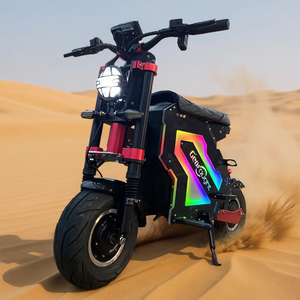
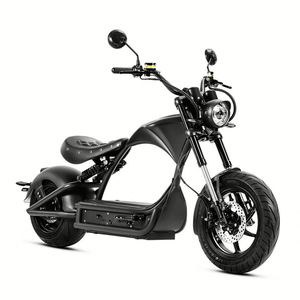
Metropolitan areas such as Auckland, Wellington, and Christchurch face increasing traffic congestion and stringent emissions reduction goals. Delivery logistics firms and daily urban commuters demand light electric vehicles capable of keeping pace with fast motorway traffic on the Auckland Northern Busway or Wellington's steep urban hills. Our 72V dual-motor scooters and 22 kW electric motorcycles deliver top speeds up to 135 km/h with instant 70 Nm torque. Integrated 4G OBD2 telematics allow delivery logistics managers to monitor live location, optimize courier delivery routes, and enforce geofencing boundaries via a consolidated iOS/Android fleet portal.
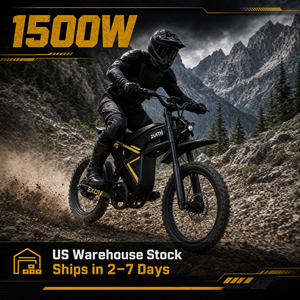
New Zealand's agri-business sector relies on rugged, low-maintenance transport across expansive farms, vineyards, and forestry stations. Traditional petrol farm bikes incur high fuel delivery costs and frequent mechanical upkeep. Our heavy-duty dual-battery electric motorbikes and off-road pit bikes (such as the ZUMI 1500W and EAhora M1P Pro series) offer up to 110 miles (177 km) of dual-battery range. Dustproof and waterproof (IP65/IP67 rated) enclosures protect vital electronics from mud, rain, and agricultural washdowns, while quiet electric drive minimizes stress on livestock during daily farm inspections.
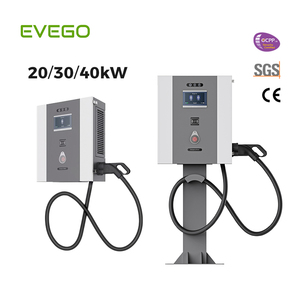
New Zealand boasts one of the most comprehensive public EV charging footprints in the Southern Hemisphere, spearheaded by ChargeNet NZ and local lines companies. Our high-voltage EV platform natively incorporates the CCS2 (Type 2 Combo) fast-charging inlet. Riders traversing State Highway 1 between Hamilton, Taupō, and Napier can seamlessly connect to public DC car charging pillars. A 15-minute fast charge replenishes up to 50 km of highway range, while a complete 20–80% replenishment takes approximately 36 minutes—eliminating range anxiety for long-distance Kiwi touring.
Tourism operators in Queenstown, Wanaka, and Rotorua are rapidly transitioning hire fleets to zero-emission electric vehicles to align with New Zealand’s clean, green brand image. The 8-year battery warranty guarantees that rental fleet operators avoid sudden battery replacement capital costs. Coupled with low maintenance requirements—no oil changes, no clutches, and fewer moving parts—rental operators experience up to 70% lower servicing downtime. Smart touchscreen cockpits featuring turn-by-turn navigation keep international tourists safe and on track.
Why establishing a Tier-1 supplier partnership now secures competitive advantage in Australasia
The NZ Ministry of Transport enforces strict CO2 emission targets on vehicle importers under the Clean Car Standard. Importing high-efficiency zero-emission electric motorcycles, scooters, and chargers allows vehicle distributors to build positive CO2 credits, offsetting penalties on commercial internal combustion engine (ICE) vehicles while positioning their brand at the forefront of sustainable transport.
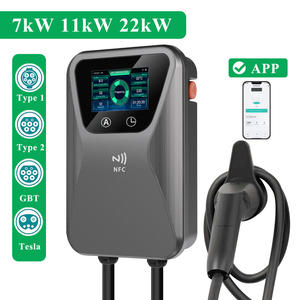
With hydro, geothermal, and wind energy generating over 85% of New Zealand's electricity, charging an EV in NZ delivers genuine, lifecycle zero-emission mobility. Commercial fleet buyers actively prefer vehicles featuring smart AC/DC charging station compatibility (OCPP WiFi/NFC compliant) that can perform smart grid charging during off-peak overnight hours.
With the transition of light EVs into New Zealand's Road User Charges (RUC) framework, fleet operators are evaluating Total Cost of Ownership down to the cent per kilometer. The extreme electrical efficiency of our high-voltage powertrain, coupled with minimal mechanical wear, ensures that the overall operating cost per kilometer remains dramatically lower than petrol equivalents even when accounting for RUC contributions.
Why leading New Zealand importers and distributors choose us as their primary EV technology partner
Engineered and assembled in our specialized automotive R&D hub in Chennai, India, our product lines represent the convergence of high-voltage automotive engineering and agile micro-mobility innovation. Operating under ISO 9001 and IATF 16949 quality control standards, our facilities manage every stage of vehicle development—from robotic battery pack welding and automated electrothermal testing to SMT surface mounting of telemetry circuit boards.
We partner directly with tier-1 battery cell manufacturers, incorporating advanced lithium chemistry that undergoes rigorous vibration, drop, thermal runaway, and salt-spray corrosion testing. This ensures that every battery module shipped to Auckland, Wellington, or Lyttelton ports withstands the harsh marine logistics environment and long-term coastal operating conditions of New Zealand.
We offer end-to-end OEM and ODM services customized for New Zealand brand owners, distributor networks, and corporate fleet clients:
Clear, authoritative answers addressing compliance, warranty execution, logistics, and local NZ servicing
Our 8-year or 80,000 km battery warranty is backed directly by the factory manufacturer via formal Master Distribution Agreements. We provide certified replacement battery modules and internal BMS units directly to our authorized NZ partners. In the event of an validated capacity drop below 80% SOH within the warranty period, replacement modules are shipped fast-track from our regional spare parts hubs. Real-time telemetry data captured via the onboard 4G IoT gateway allows remote diagnosis of cell health, speeding up warranty approvals without requiring expensive physical teardowns.
Yes. All exported vehicles, electric chargers, and telematics hardware are designed to satisfy relevant Australian/New Zealand Standards (AS/NZS). Our AC wallboxes and DC fast chargers comply with AS/NZS 61000 electrical safety and EMC requirements, featuring OCPP 1.6J protocols for seamless integration with NZ network software. Vehicles meet international braking, lighting, and structural safety standards, carrying CE, RoHS, and UN38.3 battery transport certifications required for importation through Waka Kotahi NZ Transport Agency guidelines.
Absolutely. Engineered around automotive high-voltage architecture, our premium vehicles include a standard CCS2 (Type 2 Combo) charging inlet. This enables riders to plug directly into public DC fast-charging stations operated by ChargeNet NZ, BP pulse, Z Energy, and Vector across both the North and South Islands. There is no need to carry cumbersome external adapters—simply plug into any standard public electric vehicle charging pillar.
Sub-zero temperatures temporarily reduce lithium-ion chemical activity in basic unmanaged batteries. However, our smart high-voltage battery modules feature integrated internal PTC pre-heating circuits managed by the active BMS. When plugged into a charger in cold climates (e.g., -5°C in Queenstown or Tekapo), the system automatically warms the battery cells to an optimal 20°C before commencing rapid charge cycles. This prevents lithium plating, preserves full power delivery, and protects the battery’s 8-year service life.
We support both flexible trial orders for prospective regional distributors and full container loads (20ft / 40ft HQ) for established importers. Standard lead times for customized OEM production range from 30 to 45 days, with direct ocean freight delivery to Auckland, Tauranga, Wellington, or Lyttelton ports taking approximately 18 to 25 days. Complete shipping documentation, hazardous goods UN38.3 battery declarations, and custom HS code classifications are provided for seamless NZ Customs clearance.
New Zealand is establishing mandatory product stewardship schemes for large industrial and EV batteries under the Ministry for the Environment. Our modular battery pack design simplifies second-life storage conversion and end-of-life material recovery. Individual cylindrical or prismatic cells can be easily unbolted and sorted for energy storage system (ESS) repurposing or sent to certified Australasian battery recyclers (such as Phoenix Metalman or local e-waste partners) to extract valuable nickel, cobalt, and lithium.
Accelerate your commercial growth in New Zealand with automotive high-voltage technology, CCS2 fast charging compatibility, and enterprise OEM/ODM support. Request our complete wholesale product catalog and technical specification dossier now.