Explore our export-ready, high-performance urban scooters and high-voltage motorcycles engineered for global fleets, B2B distributors, and municipal transport networks.
As a top trusted smart electric two-wheeler supplier and global exporter, our OEM/ODM operations merge high-voltage automotive engineering with advanced micro-mobility manufacturing.
Headquartered in Chennai, India—one of Asia's most prominent automotive manufacturing hubs—our state-of-the-art production facility operates under rigorous international quality management systems (ISO 9001, ISO 14001, and IATF 16949). By transitioning two-wheeler powertrains from legacy low-voltage (48V–72V) architectures to modern Car-Grade High-Voltage (HV) Ecosystems, we solve the industry-wide challenges of thermal throttling, restricted charging infrastructure, and rapid battery degradation.
Unlike conventional electric scooters operating on low voltage with excessive current heat, our HV platforms reduce current draw for identical power outputs. This minimizes thermal stress on conductors, extending motor and pack lifespan significantly.
Eliminating proprietary wall chargers, our flagship platforms (such as the Raptee.HV T30) feature native CCS2 DC fast-charging compatibility, plugging directly into public electric car charging stations worldwide for a 20–80% charge in ~36 minutes.
Our vehicles are fully pre-certified for global entry, complying with European EEC / CE standards, US DOT safety frameworks, and regional regulatory specifications, ensuring friction-free customs clearance for international importers.
Selecting the optimal electric two-wheeler inventory requires aligning market intent with powertrain capability. B2B importers must categorize fleet procurement based on performance tiers, duty cycles, and regional charging infrastructure:
1. Premium Urban & Highway Performers (High-Voltage Streetfighters):
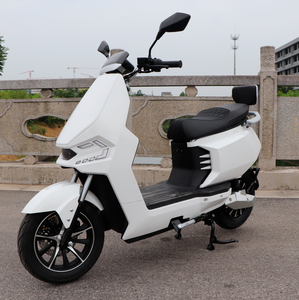
For markets demanding highway speeds and long-distance commuting, platforms like the Raptee.HV T30 lead the industry. Powered by a 22 kW peak electric motor generating 70 Nm of instant torque, it achieves 0 to 60 km/h acceleration in 3.5 seconds and a top speed of 135 km/h. Fitted with a 5.4 kWh automotive battery pack, it delivers an IDC range of 200 km. Its primary advantage is dual charging versatility: an onboard charger for standard home sockets and CCS2 compatibility for public car fast chargers.
2. Commercial Delivery & Fleet Mobility Solutions:
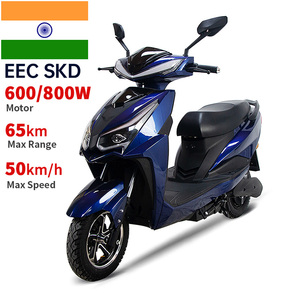
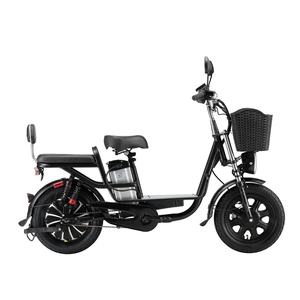
For last-mile logistics, food delivery, and rental fleets, reliability and low Total Cost of Ownership (TCO) are paramount. Models equipped with high-capacity 72V 40Ah-100Ah lithium packs, 3000W to 8000W brushless motors, and heavy-duty braking systems (such as the 2026 R8 Delivery Scooter series) provide continuous duty operation up to 100 km/h with high payload thresholds.
3. Portable Micro-Mobility & Campus Commuters:
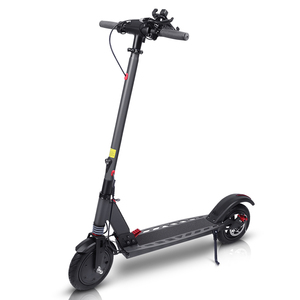
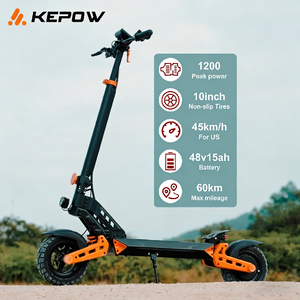
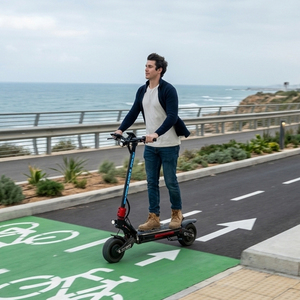
Lightweight 350W–800W foldable scooters featuring IP65 waterproof ratings, app-controlled BMS diagnostic monitoring, and fat-tire suspension offer turn-key mobility for corporate campuses, tourist rentals, and short-trip commuting.
The global EV two-wheeler supply chain is undergoing a fundamental structural transition. Procurement directors and mobility distributors are shifting away from generic low-cost assembly to highly integrated, tech-forward manufacturing platforms. B2B buyers must evaluate the following four macro procurement trends:
Historical reliance on proprietary charging bricks created fragmented user experiences. Future-proof fleets now mandate standard EV interfaces like CCS2 or Type 2, enabling two-wheelers to utilize established car charging networks without adaptor bottlenecks.
Modern commercial procurement prioritizes smart connectivity. Embedded CAN-bus telematics, 7-inch TFT touchscreens running custom OS, real-time geofencing, remote battery diagnostic alerts, and Over-The-Air (OTA) firmware updates are now standard RFP prerequisites.
To reduce asset depreciation, enterprise importers require robust manufacturer warranties. Enterprise suppliers must provide extended battery warranties (such as 8 years or 80,000 km), backed by advanced thermal management and active cell balancing BMS software.
To stay competitive in the rapidly evolving e-mobility sector, suppliers are implementing cutting-edge technological advancements across mechanical, chemical, and digital domains:
• High-Voltage Power Electronics: Transitioning from 48V/72V DC systems to high-voltage architectures (100V–300V+) reduces current by over 60% for the same kilowatt output. This drastically reduces copper wire mass, improves overall powertrain efficiency, and virtually eliminates heat-induced power cuts during continuous high-speed cruising (110–120 km/h).
• Advanced Battery Chemistries & Liquid Thermal Management: Next-generation platforms incorporate customized Lithium Iron Phosphate (LFP) and high-density NMC cells paired with active thermal management. Liquid cooling jacket modules keep cell temperatures within optimal windows (25°C–35°C), preventing thermal runaway even under aggressive DC fast charging and tropical ambient conditions.
• Software-Defined Vehicles (SDV) Architecture: Modern electric motorcycles have evolved into mobile computing hubs. Operating systems like Raptee OS integrate vehicle control units (VCU), motor controllers, and infotainment into a single unified telemetry system. Riders and fleet managers benefit from predictive maintenance notifications, real-time State-of-Health (SoH) metrics, custom ride modes, and smartwatch lock/unlock capabilities.

