Explore our industrial portfolio engineered for high-speed urban delivery, enterprise logistics, modular DC fast-charging setups, and real-time fleet telematics integration.

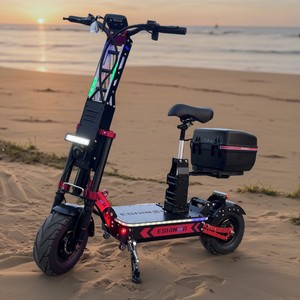
The global light electric vehicle (LEV) industry is undergoing a systemic transition. For over two decades, low-voltage (48V–72V) lead-acid and rudimentary lithium-ion architectures dominated urban mobility. However, commercial logistics fleets, last-mile delivery operators, and discerning retail commuters now demand higher operational duty cycles, highway speed capabilities, and rapid energy replenishment. As leading China fast charge two-wheeler manufacturers & factories, OEM plants are pioneering the migration toward automotive-grade High-Voltage (HV) architectures (96V up to 300V+) combined with universal CCS2 / Type 2 DC Fast Charging protocols.
This technical white paper outlines the core engineering capabilities, manufacturing standards, telematics integration strategies, and sourcing frameworks required for global distributors, brand owners, and enterprise fleet managers evaluating Chinese OEM/ODM production partners for next-generation electric streetfighters, urban roadsters, and commercial delivery e-scooters.
The fundamental physical limitation of legacy low-voltage (48V/60V/72V) e-scooters is Joule heating ($P_{loss} = I^2 R$). To achieve high motor outputs (e.g., 15kW to 25kW peak power), a low-voltage system requires extreme current draw ($I$), leading to severe thermal stress across cables, BMS Mosfets, and stator windings. This forces early power throttling and renders fast charging (above 1C rates) catastrophic to battery lifespan.
By engineering automotive-grade HV powertrains, OEM factories operate at higher voltages and significantly lower currents. This shift yields critical technological dividends:
| Engineering Metric | Legacy Low-Voltage (48V–72V) | Next-Gen High-Voltage (96V–300V+) | Operational Advantage |
|---|---|---|---|
| Current Draw @ 22kW Peak | ~305 Amperes (Extreme Heat) | ~73 Amperes (Negligible Thermal Rise) | Sustained Top Speed (135+ km/h) without Throttling |
| Fast Charging Standard | Proprietary Wall Adapters (0.2C - 0.5C) | CCS2 / Type 2 DC Fast Charge (2C - 4C) | 20% to 80% State of Charge (SoC) in ~15 to 36 Mins |
| Harness & Copper Mass | Heavy, thick gauge copper cabling | Slim automotive-grade shielded wire harness | Vehicle mass reduction & improved energy density |
| BMS Thermal Management | Passive Air Cooling (Thermal Runaway Risk) | Active Liquid / Phase-Change Material (PCM) | 8-Year / 80,000 km Warranty Viability |
| Telematics Integration | Basic Standalone GPS trackers | Integrated CAN-bus (SAE J1939/Modbus) 4G/5G | Real-time FOTA, Remote Geofencing & Diagnostics |
Analysis of key technical innovations reshaping the OEM manufacturing landscape in China for international distribution networks.
Proprietary chargers create infrastructure lock-in. Future-ready Chinese factories are embedding ISO 15118 and DIN 70121 compliant communication controllers (SECC) into two-wheelers, allowing them to tap directly into public EV passenger car charging grids worldwide.
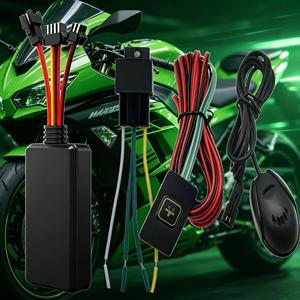
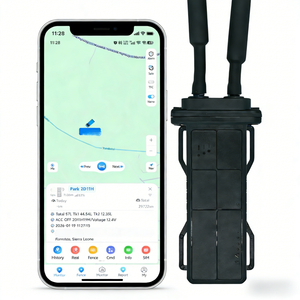
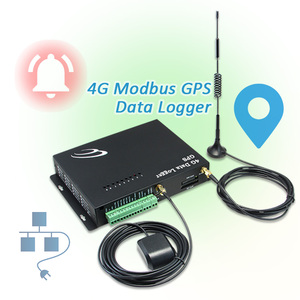
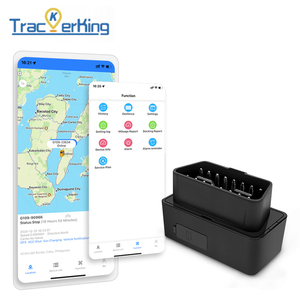
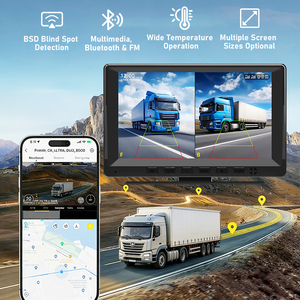
Integration of 4G LTE/5G telematics modules with Modbus/CAN interface enables cloud-level battery health monitoring, driver behavior profiling, automated theft lockdown, and over-the-air (FOTA) firmware calibration.
Transition from high-cobalt NMC cells to high-density LFP (Lithium Iron Phosphate) and semi-solid-state cells. Provides structural safety against penetration tests, zero thermal runaway propagation, and 3,000+ full charge-discharge cycles.
When sourcing fast-charging two-wheelers and telematics hardware from Chinese manufacturing hubs (such as Jiangsu, Zhejiang, and Guangdong provinces), B2B importers must evaluate vendors across four critical technical pillars:
Ensure the supplier maintains complete compliance for your target destination market. Key certifications include EEC/e-Mark (L3e-A1/A3 category) for Europe, DOT/FMVSS for North America, UN38.3 & IEC 62133 for lithium battery transport safety, and CE/EMC for onboard telematics recorders and 30kW DC charging stations.
To optimize import tariffs and local assembly incentives in LATAM, SEA, and European markets, top factories provide Completely Knocked Down (CKD) and Semi Knocked Down (SKD) kit configurations. This includes customized packaging jigs, serialized component tracking, and technical factory guidance for setting up local assembly operations.
Professional factories support deep white-label customization: custom VCU (Vehicle Control Unit) torque mapping, customized TFT cluster UI, multi-language Android/iOS telematics apps, branded CAN protocols, and custom body panel molding.
Discover the rigorous engineering and testing processes implemented inside high-capacity production lines.
High-precision Surface Mount Technology (SMT) lines for BMS board production, combined with automated laser welding lines for battery module interconnects to guarantee consistent resistance and structural robustness.
Every manufactured two-wheeler undergoes 100% chassis dynamometer validation, simulating 100+ km/h sustained speeds, extreme regen braking loads, and thermal stress under fast DC charging inputs.
Adhering to automotive supply chain standards (IATF 16949, ISO 9001, ISO 14001). Rigorous incoming material control (IQC), in-process quality control (IPQC), and full traceability for battery cells and telematics chips.
Addressing essential technical inquiries from fleet buyers, distributors, and OEM brand partners.
Our fast-charging architectures utilize high-voltage system topologies (96V–300V+) paired with active CAN-bus BMS communication. By elevating system voltage, current levels during 2C-4C charging rates are kept within safe thermal limits. The onboard BMS continuously monitors individual cell temperatures, adjusting charging currents dynamically via ISO 15118 protocol exchanges with public DC chargers to prevent lithium plating and thermal runaway.
Standard trial orders for standardized CBU units start at 20 units (1x20GP container). For full custom OEM branding (custom color schemes, customized firmware, branded telematics app integration, and tailored packaging), typical MOQs are 50 to 100 units. Production lead time is generally 30–45 days post-homologation approval.
Yes. All included 4G telematics recorders, Modbus logging devices, and OBD units support open API integration and standard TCP/UDP protocols (such as GT06, JT808, and custom JSON/MQTT streams). We supply complete SDK documentation allowing seamless ingestion into your proprietary dispatch or enterprise fleet dashboard.
Standard commercial warranty terms cover the high-voltage battery pack and powertrain for up to 8 years or 80,000 km (retaining ≥70% initial capacity). Core electronics including the VCU, MCU, DC-DC converter, and telematics modules carry a 3-year warranty. We provide 1%–2% free spare parts kits with every container order for immediate dealer service support.
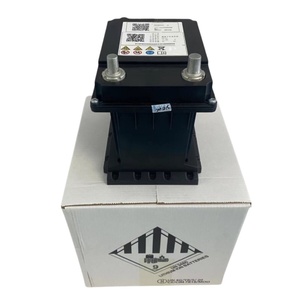
All battery packs are certified under UN38.3 testing standards and packaged inside fire-resistant, certified UN hazard containers. Vehicles are shipped under dangerous goods classification (DG Class 9, UN3481 / UN3171), complete with MSDS documentation, sea freight safety approval certificates, and specialized shock-absorbing iron-frame crating.
Schedule a technical consultation with our engineering team. Accelerate your market entry with certified high-voltage platforms, customized telematics, and direct factory pricing.
Inquire Now
