

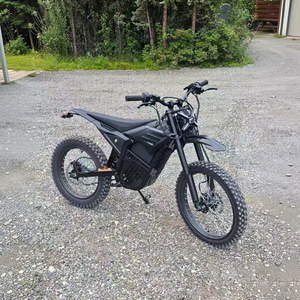
Explore our flagship brushless EV motors, automotive battery packs, and smart vehicle telematics designed for high-efficiency commercial and personal mobility applications.
Global electric mobility is undergoing a fundamental transformation. As OEMs push for higher energy density, sustained thermal management, and rapid vehicle acceleration, traditional low-voltage Permanent Magnet Direct Current (PMDC) systems are being displaced by high-voltage Brushless DC (BLDC) and Permanent Magnet Synchronous Motors (PMSM).
By shifting from legacy 48V/72V systems to high-voltage (>300V) architectures, current density is reduced exponentially for equivalent power output ($P = V \times I$). This dramatic reduction in current minimizes Joule heating ($I^2R$ thermal losses), preventing thermal derating during high-speed highway cruising and enabling sustained peak acceleration without efficiency drop-off.
Next-generation China BLDC motor factories utilize automated flat-copper hairpin winding instead of traditional random round wire. Hairpin winding elevates the slot fill factor from ~45% to over 70%, boosting power density by 20%, enhancing thermal conductivity through direct copper-to-stator contact, and significantly reducing copper mass.
Integration of Wide Bandgap (WBG) Silicon Carbide MOSFET inverters allows switching frequencies exceeding 20 kHz while reducing switching losses by up to 70%. When paired with custom IPM (Interior Permanent Magnet) rotors, system-level energy conversion efficiency reaches a staggering 97.5% across city and highway test cycles.
Benchmarking Chinese manufacturing capabilities for light commercial vehicles, electric motorcycles, urban delivery fleets, and heavy-duty electric trucks.
| Motor Category | Rated Voltage Range | Peak Power / Torque | Stator & Cooling Topology | Peak Efficiency | Target EV Platforms |
|---|---|---|---|---|---|
| High-Torque Hub BLDC | 48V - 72V DC | 3.5 kW - 8.0 kW / 180 Nm | Outer Rotor / Air Cooled | 91.5% | E-Scooters, Cargo Tricycles, E-Bikes |
| Mid-Drive IPM Synchronous | 72V - 120V DC | 10 kW - 25 kW / 70 Nm | Round Wire / Forced Air or Liquid | 95.2% | High-Speed E-Motorcycles, Light Utility Vehicles |
| High-Voltage Hairpin PMSM | 300V - 400V DC | 50 kW - 120 kW / 310 Nm | Hairpin Flat-Wire / Water-Glycol Jacket | 97.6% | Passenger EVs, Commercial Van Fleets, Light Trucks |
| Heavy-Duty Commercial Traction Motor | 600V - 800V DC | 180 kW - 350 kW / 2,400 Nm | Distributed Hairpin / Direct Oil Spray Cooling | 98.1% | Heavy Logistics Trucks, City Transit Buses, Mining EV |
For global procurement directors and B2B buyers, partnering with top China EV motor factories requires understanding the shift toward sustainable, highly integrated, and digitized motor manufacturing.
Due to raw material price volatility and stringent ESG standards, leading Chinese suppliers are pioneering Dysprosium (Dy) and Terbium (Tb) free NdFeB permanent magnets. Utilizing grain boundary diffusion (GBD) technology, factories maintain high coercivity ($H_{cj} > 25\text{ kOe}$) and thermal stability up to 180°C while drastically lowering magnet cost and environmental impact.
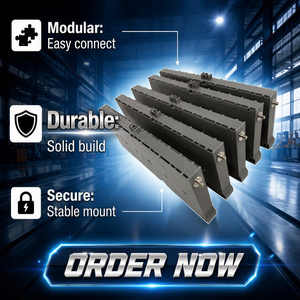
Procurement is shifting away from standalone motor components toward completely integrated 3-in-1 electric drive modules (combining motor, motor controller/inverter, and precision reducer into a single housing). This modular design eliminates high-voltage cabling, reduces system volume by 30%, and lowers total bill-of-materials (BOM) sourcing costs for vehicle OEMs.
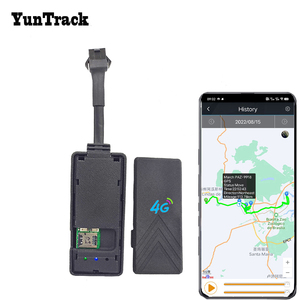
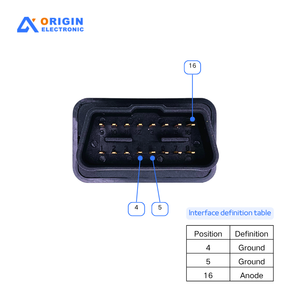
Modern BLDC drive systems feature native integration with vehicle smart terminals and telematics modules. Real-time monitoring of phase currents, winding temperatures via NTC/PT100 sensors, rotor angle position via high-resolution resolvers, and predictive fault diagnostics are transmitted seamlessly to cloud platforms via 4G OBD2 terminals for over-the-air (OTA) firmware tuning.
We blend automotive-grade quality standards with agile custom manufacturing capabilities, providing end-to-end turnkey OEM/ODM engineering support for worldwide EV brands.
Our manufacturing facilities adhere strictly to automotive quality management systems. Every motor batch undergoes 100% End-of-Line (EOL) testing on dynamic load test benches, evaluating back-EMF, vibration (NVH), cogging torque, insulation resistance (Hi-Pot test), and thermal dissipation limits.
From custom shaft geometries, splines, and mounting flanges to specific stator slot configurations, winding turns, voltage ratings (48V to 800V), and thermal sensor integration—our R&D team delivers prototype samples in as few as 21 business days.
With direct vertical integration spanning raw silicon steel stamping, automated copper wire winding, vacuum pressure impregnation (VPI) insulation, and precision CNC aluminum die-casting, we shield global customers from supply chain disruptions and lead-time delays.
Get definitive technical and commercial answers regarding minimum order quantities, custom prototyping, testing protocols, thermal derating, and international trade compliance.
While both utilize permanent magnets on the rotor and a brushless design, the fundamental difference lies in their stator winding distribution and back-EMF waveform. BLDC motors typically feature trapezoidal back-EMF and are driven by six-step block commutation, making them cost-effective for light electric vehicles. PMSM motors feature sinusoidal back-EMF and require Field-Oriented Control (FOC) vector inverters. PMSM systems offer smoother torque delivery, lower cogging ripple, superior NVH characteristics, and higher peak efficiency, making them ideal for high-speed electric motorcycles, passenger cars, and heavy commercial transport.
We employ a multi-layered thermal dissipation strategy. First, we utilize Class H (180°C) or Class C (200°C) high-temperature enamel wire and premium VPI (Vacuum Pressure Impregnation) resin to eliminate air voids. Second, for high-power motors (>10kW), we implement direct stator water-glycol cooling jackets or direct oil spray channels targeted at the winding end-turns. Third, real-time NTC/PT100 temperature sensors provide continuous feedback to the motor controller to optimize current limits before critical thermal thresholds are reached.
For standard catalog products or minor shaft/flange modifications, our standard MOQ starts at 50 to 100 units, with production lead times of 15 to 25 business days. For full custom ODM designs requiring bespoke stator tooling, rotor laminations, or custom housing dies, prototyping takes approximately 21 to 35 days, followed by mass production validation within 30 to 45 days after sample sign-off.
Our manufacturing system is certified under IATF 16949 and ISO 9001. Product-level compliance includes ISO 26262 ASIL-B/D functional safety capability, UN ECE R85 (electric powertrain performance validation), UN ECE R10 (EMC electromagnetic compatibility), CE, RoHS, and REACH. Ingress protection testing confirms IP67 dust/water immersion resilience, with specialized marine or heavy truck motors rated to IP69K high-pressure washdown standard.
Yes. We specialize in supplying matched, factory-calibrated powertrain packages comprising the BLDC/PMSM motor, Field-Oriented Control (FOC) inverter, smart wire harness, and optional CAN-bus vehicle control units (VCU). Purchasing pre-matched systems ensures optimal phase angle alignment, eliminates field-weakening tuning issues, and reduces integration time for vehicle manufacturers.
We maintain strict intellectual property protection protocols. Prior to receiving technical drawings or CAD files, we execute legally binding Non-Disclosure Agreements (NDAs). Client engineering files are stored on isolated, encrypted servers with strict role-based permission access. Mold tooling and custom rotor/stator dies are registered exclusively under the client’s ownership and used solely for authorized production runs.
Connect directly with our engineering and procurement team. Receive detailed technical datasheets, CAD 3D models, efficiency maps, and custom wholesale quotation within 24 hours.