OEM/ODM High Voltage E-Motorcycle Manufacturer & Exporter

Pioneering Next-Generation Automotive-Grade High-Voltage Powertrains, Universal CCS2 Fast Charging, & Turnkey B2B Electric Two-Wheeler Solutions

Featured EV Products & Components

Explore our industrial-grade electric motorcycles, battery packs, fast chargers, and smart fleet modules
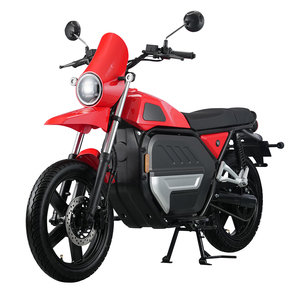
Adults High Power 4000W Electric Motorcycle
Adults High Power 4000W Electric Motorcycle 80KM/H Off-Road E-Motor Dual Battery 120KM Range
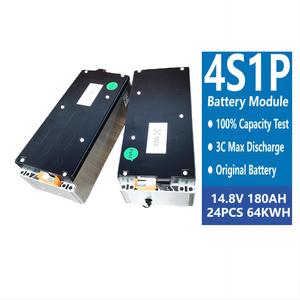
Starmax Catl Lithium Battery Module Pack
Starmax Catl 4S1P 153Ah 174Ah 180Ah 14.8V Nissan Leaf Battery Pack 62Kwh NCM Lithium Cell Module
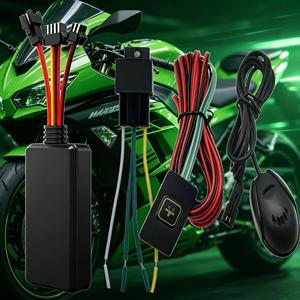
4G Vehicle GPS Tracker Fleet Management
SOS Voice Monitoring Car & Truck 4G Vehicle Tracker 8 Wire Connection GPS Para Autos Fleet Tracker
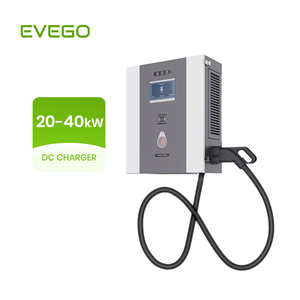
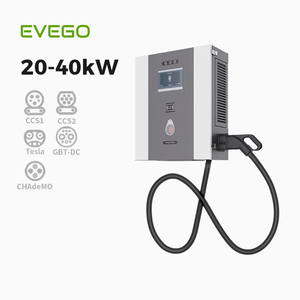
Wall-Mount DC Fast Charger CCS2 GBT 20kW
Customizable Dual / Single Gun 20kW GB/T CCS2 Wall-Mount DC Fast Charger EV Charging Station
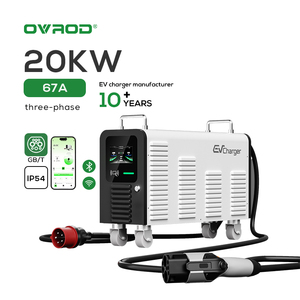
Movable DC EV Charger 20kW Fast Charging Station
Ovrod GB/T Movable DC EV Charger 20kW Electric Vehicle Fast Charging Station Floor-Mounted Pile
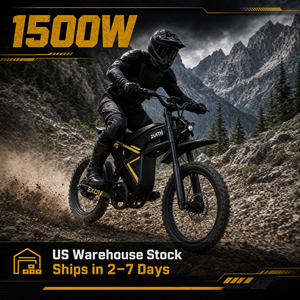
ZUMI Electric Pit Bike 1500W Dual Battery
ZUMI Electric Pit Bike 1500W 52V Dual Battery Motocross Off Road Adult Ebike 19 Inch Wheel
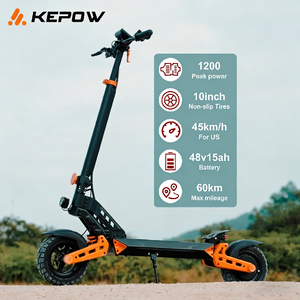
Electric Two Wheeler Offroad Scooter
Factory Wholesale Electric Two-Wheelers Adults 10 Inches Offroad Electric Scooter Vehicles
30kW Wall-Mount DC Charger CCS2 GBT OCPP
Wall-Mount DC Electric Car Charger 30kW CCS2 GBT OCPP Charging Station 400VAC Input Voltage
135 KM/H
Highway Top Speed
3.5 SEC
0-60 KM/H Acceleration
200 KM
IDC Range Capacity
8 YRS / 80K KM
Automotive Battery Cover

Architectural Paradigm Shift: High-Voltage E-Motorcycle Manufacturing

Bridging Automotive Electric Car DNA with Agility & Engineering Precision

The global light electric vehicle (LEV) sector is undergoing a profound structural evolution. For over two decades, electric two-wheelers have relied on legacy low-voltage (48V to 72V) busbar architectures. While sufficient for low-speed urban mobility, low-voltage systems face severe physical limitations when applied to high-performance motorcycles: elevated current draw (Joule heating, I²R losses), massive thermal stress on power electronics, heavy copper cable harnesses, and an absolute incompatibility with public DC fast-charging infrastructure.

As a leading OEM/ODM High-Voltage E-Motorcycle Manufacturer and Exporter, our engineering paradigm directly adapts automotive-grade High-Voltage (HV) power systems for two-wheelers. By increasing system operating voltages to car-level thresholds, we dramatically reduce electrical current requirements for the same power output. This architectural innovation results in virtually zero thermal derating during sustained highway cruising, minimal copper weight, enhanced system efficiency, and direct plug-and-play integration with global public CCS2 (Combined Charging System Type 2) DC fast chargers.

Key Engineering Fact: Operating at higher bus voltages reduces current ($I$) proportionally for a given power ($P=V \times I$). Because resistive heat dissipation scales quadric-wise ($P_{loss} = I^2 R$), transitioning to High-Voltage architecture yields up to a 75% reduction in thermal stress across the motor controller, battery BMS, and power interconnects.

Designed and built within world-class automotive manufacturing hubs, our flagships—such as the high-performance urban streetfighter platform—feature robust 5.4 kWh lithium-ion battery assemblies, 22 kW peak-power permanent magnet synchronous motors (PMSM), and 70 Nm of instantaneous shaft torque. Our comprehensive B2B turn-key services enable international distributors, brand importers, and fleet operators to deploy market-ready, fully certified electric motorcycles optimized for global compliance (EU Whole Vehicle Type Approval, US DOT/EPA, and Indian AIS-156 Standards).

Enterprise OEM/ODM Capabilities & Manufacturing Excellence

End-to-end custom engineering, modular platform sharing, and automotive quality systems

Modular HV Platform Customization

We provide full-spectrum ODM solutions including custom aluminum trellis or cast alloy chassis design, tailored body ergonomics (Streetfighter, Naked Roadster, Adventure Tourer), and customizable motor power profiles from 4 kW up to 22 kW peak output.

CCS2 Fast-Charging Power Electronics

Our in-house R&D team pioneers onboard CCS2 interface controllers, high-efficiency DC-DC converters, and integrated liquid or forced-air cooling systems that allow 20% to 80% public fast-charging in under 36 minutes directly from electric car chargers.

Automotive-Grade Quality Standards

Operating under ISO 9001 and IATF 16949 compliant manufacturing environments, our production lines utilize Automated Optical Inspection (AOI), end-of-line (EOL) computerized dyno testing, and IP67/IP69K environmental chamber validation.

Proprietary BMS & Battery Packaging

We build robust battery modules utilizing premium NCM or LFP prismatic and 21700 cells featuring active thermal control, cell-balancing microcontrollers, UN38.3 certification, and anti-thermal runaway barrier insulation.

Turnkey Global Homologation Support

We streamline market entry for international partners by providing comprehensive technical documentation packages, EMC/EMI laboratory reports, and dedicated homologation engineering support for EEC, DOT, ADR, and ARAI certifications.

Smart IoT Telematics & Raptee OS Integration

Empower your brand with custom-branded smartphone apps, smartwatch connectivity, 7-inch TFT touchscreen instrument clusters, GPS geofencing, remote diagnostics, and cloud-based Over-The-Air (OTA) firmware update architecture.

Global Procurement Trends: What B2B Buyers & Distributors Must Know

Strategic Insights into Market Shifts, Total Cost of Ownership (TCO), and Standardized Charging Networks

The global motorcycle distribution channel is experiencing a permanent shift toward electrification. However, commercial buyers—including national importers, dealership franchises, and last-mile logistics fleets—are quickly discovering that first-generation low-voltage electric bikes present significant commercial challenges. High warranty claim rates due to battery overheating, fragmented proprietary charging plugs, and rapid performance degradation are forcing buyers to reconsider their sourcing strategies.

Over the next decade (2025–2035), procurement trends in the electric two-wheeler market will be dominated by four critical pillars:

1. Charging Infrastructure Convergence

B2B buyers are moving away from proprietary home wall-chargers toward public EV charging interoperability. High-voltage motorcycles equipped with CCS2 (Type 2 Combo) connectors eliminate range anxiety by granting riders instant access to over 29,000 public car-charging stations nationwide and hundreds of thousands globally.

2. Extended Warranty & Asset Longevity

Commercial buyers require bankable warranties to protect their capital investment. High-voltage engineering drastically lowers thermal stress, allowing manufacturers to offer automotive-grade warranties (e.g., 8 Years or 80,000 KM on battery systems), creating an unbeatable sales argument for retail dealerships.

3. Connected Telematics & Fleet SaaS

Modern motorcycle distributors no longer sell hardware alone; they distribute connected mobility solutions. Procurement contracts increasingly demand embedded 4G IoT telematics, remote anti-theft immobilizers, predictive battery maintenance alerts, and geofencing capabilities integrated out of the box.

By partnering with an experienced OEM exporter like our enterprise, international importers bypass years of costly prototyping and trial-and-error. Our turnkey production solutions deliver fully homologated, high-voltage vehicles that match the performance specs of traditional 300cc–400cc internal combustion engine (ICE) motorcycles while offering up to 85% lower daily operational costs.

Technological Evolution: The Next Era of E-Motorcycle Engineering

Innovation Vectors Shaping High-Voltage Electronics, Battery Chemistry, & Powertrain Dynamics

As an industry leader in R&D, our engineering facility consistently tracks and integrates state-of-the-art technologies into our OEM production lines. High-voltage two-wheeler development is advancing along four primary technological vectors:

  • ✔ Silicon Carbide (SiC) & GaN Inverters: Replacing conventional Silicon IGBTs with wide-bandgap Silicon Carbide (SiC) MOSFETs increases inverter switching efficiency above 98.5%. This reduces inverter volume by 40% and yields an additional 5-7% overall real-world range boost.
  • ✔ Direct Cell-to-Pack (CTP) & Structural Battery Enclosures: By eliminating intermediate module housings, CTP packaging increases volumetric energy density ($Wh/L$) by up to 25%. The battery casing serves as a stress-bearing structural member of the chassis, enhancing torsional stiffness while reducing curb weight.
  • ✔ Predictive AI Thermal Management & Cloud BMS: Edge-computing algorithms inside the BMS continually analyze internal cell resistance, ambient temperatures, and throttle behavior. Connected to cloud telemetry, the system dynamically adjusts charge acceptance curves during fast charging to prevent lithium plating and extend total pack lifespan beyond 1,500 full charge cycles.
  • ✔ Unified Onboard Chargers (OBC) with Dual-Mode AC/DC Logic: Integrating home AC charging electronics directly into the powertrain eliminate heavy external charging bricks. Riders simply carry a lightweight cable to plug into standard 15A wall sockets or connect directly to commercial DC fast-charging stations.

Frequently Asked Questions (FAQ) for Global Sourcing Partners

Essential answers regarding OEM/ODM collaboration, technical compliance, ordering, and logistics

Q What defines a High-Voltage (HV) electric motorcycle compared to conventional 48V/72V e-bikes?
High-voltage electric motorcycles utilize car-grade power distribution architectures operating at significantly elevated voltage levels (typically exceeding 100V–300V+). Higher voltage allows the motor to draw far lower electrical current to achieve equivalent or greater power output (e.g., 22 kW peak). Lower current reduces thermal stress, prevents thermal power throttling, enables sustained high speeds (135 km/h+), and supports native CCS2 DC fast charging using public electric vehicle infrastructure.
Q Can your high-voltage motorcycles use standard public EV car chargers globally?
Yes. Our high-voltage platforms are engineered with standardized CCS2 (Combined Charging System Type 2) inlet protocols. This allows riders to plug directly into the universal DC fast-charging stations utilized by electric automobiles. A 20% to 80% charge takes approximately 36 minutes, and a brief 15-minute charge session provides up to 50 km of additional range. Home charging is equally simple via standard wall sockets using our lightweight portable cable.
Q What OEM/ODM customization services do you offer for regional brand owners?
We offer end-to-end turnkey customization options:
• Branding & Aesthetics: Custom fairing designs, colorway paint schemes, graphics packages, and custom logo badging.
• Powertrain Tuning: Custom torque curves, top speed limiters, and ride mode calibration (Eco, City, Sport, Track).
• Software & App White-Labeling: Customized 7-inch TFT dashboard UI, mobile application branding (iOS/Android), and localized language integration.
• Hardware Options: Adjustable suspension systems, brake package selections, dual-channel ABS, and storage accessories.
Q What warranties and quality assurances are provided for bulk export shipments?
We back our high-voltage powertrains with industry-leading manufacturer warranties: 8 years or 80,000 km for the battery pack assembly, and 3 years or 30,000 km for the core vehicle and motor drive system. All export vehicles undergo rigorous Quality Control (QC), including 100% computerized EOL dyno checks, rain chamber ingress testing, high-voltage insulation dielectric testing, and complete diagnostic log validation prior to container loading.
Q How do you assist international distributors with regional homologation and certification?
We provide a complete technical documentation package required for international homologation. This includes UN38.3 test reports for lithium batteries, ISO 26262 functional safety compliance documentation, EEC / CE certificates, EMC test records, and CAD schematics. Our dedicated compliance engineering team works directly with your accredited local testing authorities (such as TÜV, VCA, DOT, or ARAI) to ensure seamless approval.
Q What is your Minimum Order Quantity (MOQ) and production lead time for OEM projects?
For standard production models with localized branding, our minimum order quantity starts at 20 units (one 40ft High Cube container). For full ODM projects requiring custom frame or body tooling, MOQs and development timelines are evaluated based on project scope. Standard sample evaluation units are available within 30 days, while mass production orders typically ship within 45–60 days upon contract confirmation.

Accelerate Your Market Entry with High-Voltage Technology

Partner with an industry-leading OEM/ODM exporter to launch high-performance, CCS2-compatible electric motorcycles in your target market today.