Engineered to integrate seamlessly with custom Regenerative Braking Systems (RBS). Our factory-certified modules deliver maximum energy recovery, high thermal stability, and vehicle-level CAN-bus synchronization.

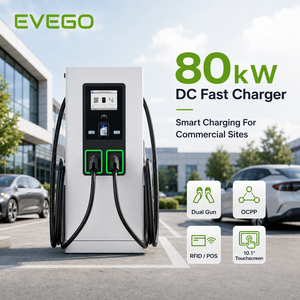
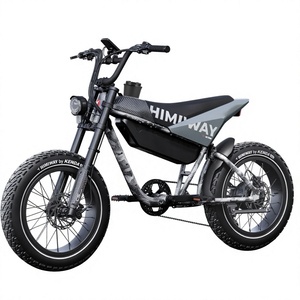
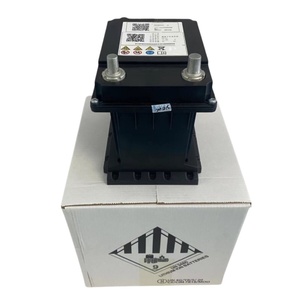
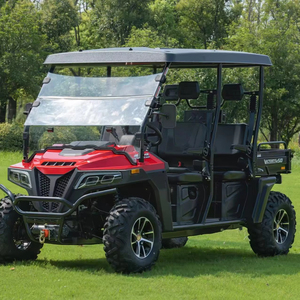

In modern electric vehicles (EVs), hybrid electric vehicles (HEVs), and high-performance electric motorcycles, the Regenerative Braking System (RBS) is no longer merely an auxiliary retarding device. It is a fundamental cornerstone of total powertrain efficiency, driving dynamics, functional safety, and thermal management.
As a global OEM manufacturer, our manufacturing facilities engineer two distinct architectural topologies tailored for automotive tier-1 supply chains:
The core IP of our OEM manufacturing process resides within our proprietary software control stack. When a driver initiates deceleration, conventional friction braking converts kinetic energy directly into waste heat. Our custom OEM controller dynamically balances friction torque and electrical regenerative torque across varied road friction coefficients ($\mu$).
By constantly monitoring State-of-Charge (SoC), cell temperature gradients, and inverter thermal limits, our system prevents wheel locking, mitigates pedal kickback, and maximizes energy recovery under high-voltage architectures (compatible with 400V, 800V, and emerging 1000V traction platforms).
From low-voltage light electric vehicles (LEVs) to high-voltage commercial fleets and performance passenger vehicles, we provide full-stack custom engineering.
Dual-core AUTOSAR architecture with custom CAN-FD and FlexRay communication support. Fully customizable torque blending maps for tailored pedal feel and sport/eco driving modes.
Custom OEM hydraulic valve blocks manufactured in ISO Class 8 cleanrooms. High-speed solenoid valves offer pressure modulation precision within ±0.05 MPa for ultra-smooth transitions.
Built to the highest automotive functional safety standards. Integrated redundancy across pedal position sensors, pressure transducers, and MCU logic channels ensures zero single-point failures.
Compare conventional off-the-shelf braking solutions against our factory-customized Tier-1 OEM electro-hydraulic and electromechanical architectures.
| System Architecture Parameter | Generic / Aftermarket RBS | Standard Hydraulic Braking | Our Custom OEM Braking System |
|---|---|---|---|
| Energy Recovery Efficiency | 10% – 18% recovery | 0% (Heat Waste) | 28% – 35% Total Energy Recovery |
| Pedal Feel & Transition | Noticeable step-change / Jerky | Fixed hydraulic feel | Seamless Torque Blending (Customizable curve) |
| Response Time ($\Delta t$) | > 250 milliseconds | 150 – 200 milliseconds | < 90 milliseconds (Brake-by-Wire) |
| Functional Safety Architecture | Basic QM / ASIL-B | Mechanical Redundancy Only | Hardware ASIL-D Dual-Loop Redundancy |
| High-Voltage Bus Compatibility | Fixed 48V / 72V low voltage | N/A | Universal (48V to 800V HV Platforms) |
| Diagnostic Protocols | Standard OBD-II | None | UDS via CAN-FD / OTA Telematics Ready |
As global automotive OEMs shift toward Software-Defined Vehicles (SDVs) and high-voltage platform standardization, sourcing requirements for braking systems are undergoing massive structural changes.
Next-generation battery electric vehicles are rapidly transitioning from 400V to 800V silicon carbide (SiC) inverter architectures. This transition allows braking energy to be pushed back into the battery pack at substantially higher currents with reduced resistive heat ($I^2R$ losses). OEM buyers must prioritize factories capable of manufacturing high-voltage insulated solenoid coils and high-current transient busbars.
Modern vehicle platforms require Over-the-Air (OTA) updatable brake tuning. Automotive engineers demand open AUTOSAR architecture enabling fleet managers and OEMs to adjust regenerative braking intensity over the vehicle's lifespan, compensating for battery degradation or adapting to localized terrain requirements.
To meet strict ESG and vehicle weight target parameters, OEM buyers are favoring brake actuators forged from high-tensile lightweight aluminum alloys and carbon-ceramic composite interfaces. Reducing unsprung mass directly improves suspension telemetry while enhancing energy recuperation efficiency.
Our fully automated manufacturing facilities deliver end-to-end solutions from initial CAD/FEA simulation to mass production with zero defect quality control.
Every single electro-hydraulic unit undergoes automated End-Of-Line (EOL) testing verifying pressure response, dynamic leakage, noise vibration harshness (NVH), and electrical insulation integrity.
Our factories operate strictly under IATF 16949 and ISO 9001 guidelines, maintaining rigorous Advanced Product Quality Planning (APQP) and PPAP Level 3 documentation for automotive clients.
We utilize dSPACE and NI Hardware-in-the-Loop (HIL) simulators to validate control firmware against extreme vehicle dynamics prior to physical tooling creation, dramatically reducing tooling lead time.
Get direct technical clarity regarding our factory capabilities, custom development cycles, and supply chain logistics.
We offer complete end-to-end ODM/OEM co-development including custom hydraulic manifold design, valve sizing, custom PCB layout, software control strategy development (C/C++ Matlab Simulink model-based design), vehicle CAN protocol matching, and complete system validation (HIL, bench, and track testing).
When the vehicle traction battery reaches 100% State of Charge (SoC) or exceeds thermal thresholds, battery BMS flags prevent further current acceptance. Our control ECU smoothly seamlessly fades out electrical regenerative torque while proportionally ramping up hydraulic friction braking pressure within milliseconds. The driver experiences zero loss of pedal feel or deceleration performance.
Yes. In addition to 400V/800V passenger vehicles, we engineer ultra-compact 48V-96V low-voltage Electro-Hydraulic and Regenerative Controllers optimized for lightweight electric roadsters, side-by-side off-road ATVs, and urban electric motorcycles.
Rapid prototype samples with functional firmware are typically delivered within 6 to 8 weeks. Complete production tooling, validation testing, and PPAP (Production Part Approval Process) Level 3 documentation standard lead times range from 16 to 24 weeks depending on component complexity.
Our engineering teams implement dual-core lockstep microcontrollers, redundant pressure sensor arrays, independent watchdog monitoring, and fail-silent hardware architectures certified up to ASIL-D. Full safety case documentation and hazard analysis risk assessments (HARA) are provided for vehicle-level integration.
Partner with an industry-leading manufacturer of high-efficiency regenerative braking systems, battery energy storage modules, and electric vehicle power electronics.

