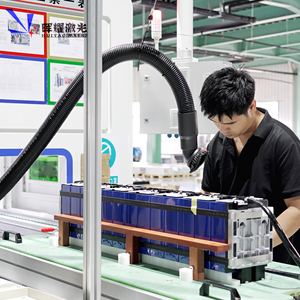
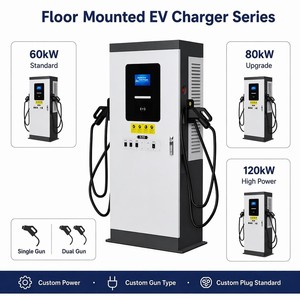
Explore our high-performance electric motorcycles, commercial DC fast chargers, lithium battery assemblies, and IoT telematics modules directly sourced from certified tier-1 Chinese manufacturing lines.
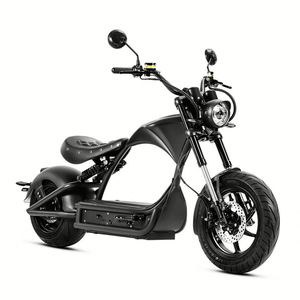
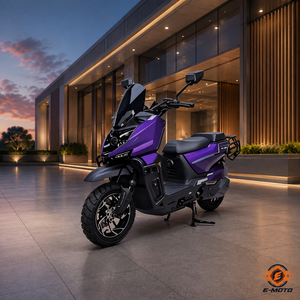
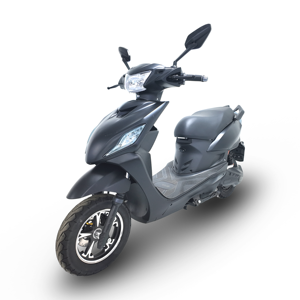
As global electrification accelerates across urban transport, fleet operations, and high-performance sport riding, global importers, brand owners, and OEM distributors are fundamentally pivoting away from legacy hub-motor configurations toward central mid-drive powertrain architectures. China has solidified its position as the premier manufacturing ecosystem for high-voltage, high-torque mid-drive electric motorcycles.
Centralizing heavy powertrain components—such as the Permanent Magnet Synchronous Motor (PMSM) and gear reduction unit—near the motorcycle frame center-of-gravity dramatically reduces unsprung mass, unlocking superior cornering stability and rider safety.
Unlike wheel hub motors that suffer from thermal throttling under heavy incline loads, frame-mounted mid motors leverage liquid-cooling or high-surface-area CNC heat sinks to sustain peak power outputs up to 22kW and wheel torque exceeding 350Nm.
Mid-drive configurations seamlessly integrate multi-ratio gearboxes, belt drives (Gates Carbon Drive), or heavy-duty chain final drives, providing unmatched adaptability across commercial cargo delivery and high-speed highway commuting.
For enterprise procurement officers and engineering evaluation teams, selecting the optimal drivetrain dictates total warranty liability, brand prestige, and rider satisfaction.
| Evaluation Parameter | Mid-Drive Powertrain (Frame Integrated) | Direct-Drive Hub Motor (Rear Wheel) | B2B Advantage / ROI Impact |
|---|---|---|---|
| Unsprung Mass Ratio | Low (Centralized Frame Weight) | High (Heavy Motor in Rear Rim) | Significantly improved suspension response & tire longevity |
| Continuous Thermal Limits | Sustained High Load (Up to 150°C) | Prone to Rapid Thermal Throttling | Eliminates power drop during steep climbs or long highway runs |
| Wheel Torque Output | 280 Nm – 450+ Nm (Gear Multiplied) | 80 Nm – 180 Nm (Direct 1:1 Ratio) | Allows superior gradeability (>30%) for commercial loads |
| Maintenance & Tire Changes | Standard Rear Wheel Disassembly | Complex Wiring & Motor Removal | Decreases fleet maintenance labor hours by over 40% |
| Ingress Protection (IP) | IP67 / IP69K Sealed Units | IP65 (Axle Seal Vulnerabilities) | Ensures high reliability in severe monsoon/flood conditions |
Understanding emerging technical standards is essential to future-proofing your supply chain. Leading OEM suppliers in China are driving innovation across four core vector pillars:
Moving from legacy low-voltage 72V packs to automotive-grade high-voltage systems (96V, 144V, up to 300V automotive platforms) enables dramatically lower phase currents, minimal copper heat loss, and native integration with automotive CCS2 DC Fast Charging stations. This reduces 20-80% charge cycles down to 36 minutes.
Next-generation Field Oriented Control (FOC) vector motor controllers utilize Silicon Carbide (SiC) MOSFETs, pushing inverter efficiency beyond 99%. Real-time machine learning algorithms adapt flux weakening parameters dynamically, unlocking high top speeds without sacrificing initial off-the-line launch torque.
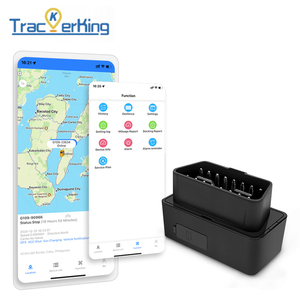
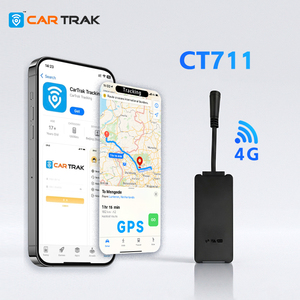
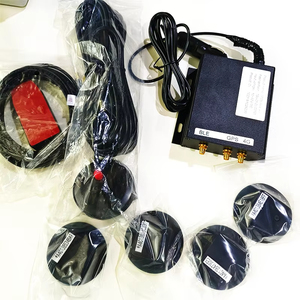
Modern fleet procurement contracts demand end-to-end telematics. Chinese manufacturers are standardizing integrated 4G/5G OBD-II GPS modules, remote geofencing, real-time TPMS tire pressure tracking, and cloud-based OTA (Over-The-Air) firmware updating capabilities directly embedded in the main harness.
Eliminating intermediate module hardware, CTP designs integrate high-density prismatic LiFePO4 or NCM cells directly into the chassis frame as a structural stressed member. This boosts volumetric energy density by 30%, enhances torsional rigidity, and significantly extends overall vehicle range.
Navigating China's industrial vendor landscape requires evaluating verified production engineering metrics, quality assurance protocol adherence, and regulatory compliance standards.
In-house surface-mount technology (SMT) production lines ensure BMS boards, vehicle control units (VCU), and TFT display modules meet rigorous vibration and moisture ingress standards under IATF 16949 audit benchmarks.
Hydroformed 6061 aluminum alloy and high-tensile steel frames welded by multi-axis ABB robotic arms guarantee zero dimensional distortion, perfect motor mount concentricity, and long-term fatigue durability.
Every finished mid-drive unit undergoes 100% dynamometer benchmarking for power curves, thermal imaging, IP67 rain spray chamber validation, and high-voltage insulation dielectric testing prior to shipping.
Exporting electric vehicles to North America, Europe, Australia, and Southeast Asia requires absolute alignment with local motorized transport authority requirements.
Full Whole Vehicle Type Approval (WVTA) compliant with EU Regulation 168/2013. Equipped with CBS or ABS brake systems, EN15194 electrical safety, and official Certificate of Conformity (CoC) documents for immediate dealer registration.
Compliance with Federal Motor Vehicle Safety Standards (FMVSS), NHTSA 17-digit VIN assignment, SAE J1772 / CCS1 charge port integration options, and UL2271 battery safety pack certification.
Flexible shipment formatting: Completely Knocked Down (CKD) to minimize import tariff rates in countries supporting local assembly, or Semi-Knocked Down (SKD) for rapid 15-minute final dealer assembly.
Key technical and commercial answers tailored for volume importers, distributors, fleet operators, and OEM brand buyers.
For standard catalog configurations with custom logo branding and color schemes, typical MOQs start at 10 to 20 units (filling a 20-foot shipping container). For deep OEM projects involving custom tooling, unique frame geometry, or bespoke plastics mold development, MOQs generally start at 50 to 100 units depending on component amortization schedules.
While the initial purchasing cost of a mid-drive vehicle is 15% to 25% higher, total cost of ownership (TCO) over 50,000 km is up to 35% lower. Mid-drive systems eliminate direct wheel impact shocks to the motor, vastly reduce tire wear through optimal weight balance, prevent heat-induced demagnetization of permanent magnets, and allow quick tire swaps without disconnecting high-voltage cabling.
Yes, all exported battery assemblies undergo rigorous safety testing and hold full UN38.3, MSDS, and IEC 62133 compliance certifications. They are shipped in drop-tested hazmat-approved wooden cases or heavy-duty corrugated cartons compliant with IMO dangerous goods maritime shipping protocols.
Absolutely. Our vehicle control units (VCU) communicate over standard open CAN-bus protocols (CAN 2.0B / J1939). We offer complete API/SDK integration packages allowing your engineering team to flash custom IoT telemetry, enabling real-time remote immobilizers, battery health tracking, geofencing alerts, and mobile app connectivity.
We offer comprehensive tiered warranty coverage: 3 to 5 years (or 50,000 km) on main frame structures, 2 to 3 years on mid-drive motors and vector controllers, and 2 years (or 1,500 full charge cycles at >80% capacity retention) on battery packs. Fast-moving spare parts packages (brake pads, belts, relays, optical lenses) are included with every bulk container shipment.
Standard production cycles for a 40-foot High Cube container (approx. 50-70 fully assembled units or 120-150 SKD units) run between 30 and 45 calendar days following engineering sample approval and deposit confirmation. Expedited component staging is available for recurring contract clients.
Connect directly with our engineering and export team. Get technical datasheets, full OEM pricing structures, sample evaluation protocols, and factory audit reports tailored to your target market.