


Next-Generation Automotive Energy Storage: Navigating China’s EV Lithium Battery Ecosystem
The global transition to electric mobility has placed high-voltage energy storage systems at the center of automotive engineering. As global OEMs, commercial fleet integrators, and electric vehicle manufacturers search for high-density, thermally stable, and cost-effective battery packs, China’s lithium battery manufacturing sector remains the indisputable epicenter of technology innovation and raw material processing scale.
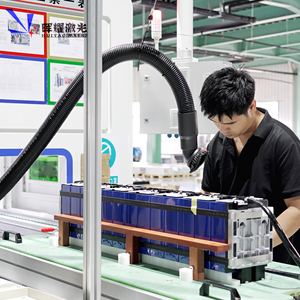
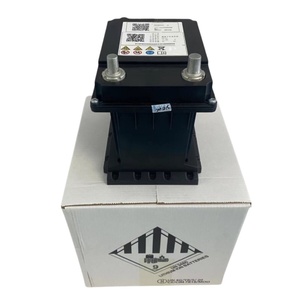
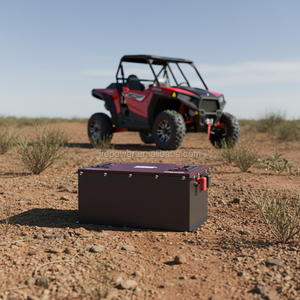
Operating as a premier OEM/ODM manufacturer in China, our engineering facilities utilize fully automated cell assembly lines, advanced smart BMS integration, and zero-defect quality protocols to deliver customized battery solutions. From standard 12V auxiliary power packs for luxury EVs to 400V/800V high-voltage traction batteries for passenger cars, off-road buggies, and heavy commercial buses, our production matrix fulfills stringent automotive-grade standards including IATF 16949, UN38.3, IEC 62619, and UL 2580.
High-Nickel NCM 811 Chemistry
Delivering specific energy density exceeding 280-300 Wh/kg, our NCM 811 prismatic cells provide long-range performance with optimized nickel-cobalt-manganese ratios for electric cars and passenger fleets.
LFP & Semi-Solid State Innovations
Utilizing high-safety LiFePO4 (LFP) and pioneering Li2S-electrolyte solid-state technologies for ultimate thermal resistance, zero thermal runaway propagation, and cycle lifetimes reaching 3,500+ deep discharges.
Automotive Smart BMS Architecture
Equipped with intelligent CANbus / RS485 communication protocols, real-time cell balancing, active thermal management, and multi-tier protection against overcharge, short circuits, and ambient temperature swings.
Electrochemical Cell Architecture: Prismatic vs. Pouch vs. Cylindrical for Commercial EV Fleets
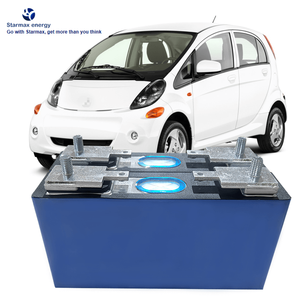
Selecting the optimal battery cell form factor represents one of the most critical decisions for EV procurement directors and powertrain engineers. While cylindrical cells (e.g., 21700, 4680) offer mechanical simplicity, prismatic lithium-ion cells have emerged as the gold standard for electric cars, commercial delivery vehicles, and energy storage systems (ESS).
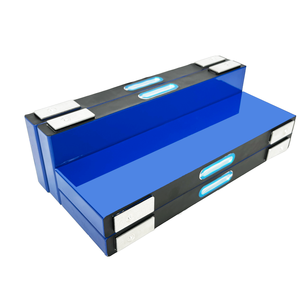
Prismatic aluminum-cased cells combine structural rigidity with superior volumetric stacking efficiency. Unlike pouch cells that require elaborate structural frames to prevent swelling or cylindrical cells that create interstitial dead space within modules, prismatic architectures maximize energy density within the physical battery compartment. Furthermore, laser-welded terminal busbars reduce internal resistance, minimizing heat generation during high-C-rate fast charging sessions.
| Battery Chemistry / Type | Gravimetric Energy Density | Cycle Life (80% DoD) | Thermal Runaway Temp | Primary EV Applications |
|---|---|---|---|---|
| NCM 811 Prismatic | 270 – 300 Wh/kg | 2,000 – 2,500 Cycles | ~210 °C | Long-range passenger EVs, High-performance sports sedans |
| LiFePO4 (LFP) Prismatic | 160 – 190 Wh/kg | 3,500 – 5,000 Cycles | ~270 °C | Urban EVs, Electric Buses, Heavy Commercial Buggies, ESS |
| Semi-Solid State (Li2S) | 320 – 350 Wh/kg | 1,800 – 2,200 Cycles | >300 °C (Ultra Safe) | Next-gen premium EVs, eVTOL, Special-purpose military buggies |
| NiMH Hybrid Replacement | 80 – 110 Wh/kg | 1,500 – 2,000 Cycles | High Thermal Tolerance | Hybrid vehicle retrofits (HEV replacement packs for Lexus/Toyota) |
2025–2035 EV Battery Procurement Trends: What Global Buyers Must Anticipate
Procuring lithium EV batteries from China requires a forward-looking understanding of supply chain dynamics, technical standardization, and regulatory compliance. Over the coming decade, global procurement strategies are shifting from simple component sourcing to integrated technology partnerships.
1. Structural Battery Design: Transitioning to Cell-to-Pack (CTP) & Cell-to-Chassis (CTC)
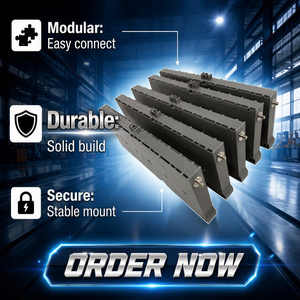
Traditional EV battery module housings add up to 30% of inactive structural weight to a pack. Advanced manufacturing trends in China are rapidly moving toward Cell-to-Pack (CTP 3.0) and Cell-to-Chassis (CTC) integration. By eliminating intermediate module enclosures, volumetric utilization rises from 55% to over 72%, directly increasing vehicle driving range without altering the footprint. Our manufacturing lines support customizable CTP prismatic module dimensions tailored to OEM chassis geometries.
2. Solid-State and Sulfide-Based Electrolyte Scaling
Liquid organic electrolytes carry inherent flammability risks during severe mechanical impact or internal short circuits. The industrialization of sulfide-based solid-state electrolytes (Li2S) solves this challenge by replacing liquid solvents with non-flammable solid matrices. Solid-state technology enables ultra-fast charging capabilities (10% to 80% SOC in under 12 minutes) while dramatically improving low-temperature discharge efficiency down to -30°C.
3. Circular Economy & Carbon Passport Compliance
With regulations like the European Union Battery Passport taking effect, international procurement officers must ensure that supplier cell production complies with strict carbon footprint disclosures. Leading Chinese tier-1 battery suppliers are adopting renewable energy microgrids for gigafactory operation, recycled cathode materials (up to 95% nickel and cobalt recovery), and digitized traceability from raw lithium extraction down to final pack assembly.
Manufacturing Mastery & Quality Assurance Protocols
Quality reliability in EV power packs is non-negotiable. A single cell defect can compromise an entire 800V battery network. As a leading supplier based in China, our manufacturing methodology incorporates a zero-defect quality management matrix:
- Automated Laser Terminal Welding: High-precision fiber laser welding guarantees sub-millimeter contact stability across module busbars, lowering contact impedance.
- 100% EOL (End-of-Line) Testing: Every completed battery pack undergoes dynamic load testing, insulation resistance checks (>500MΩ @ 1000V DC), and active thermal imaging under high-current discharge.
- Environmental Simulation: Modules are subjected to thermal shock (-40°C to +85°C), 3-axis mechanical vibration simulation, and IP67/IP68 dust and water immersion testing.