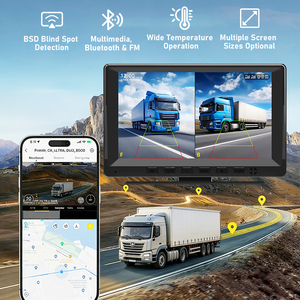
Rigorously tested, EEC/COC and CE-certified electric motorcycles, high-capacity battery units, telematics modules, and fast-charging infrastructure optimized for enterprise fleet deployment.
In the rapidly evolving landscape of commercial urban logistics and fleet electrification, conventional low-voltage (48V–72V) two-wheeler systems are hitting severe thermal and performance bottlenecks. As global B2B delivery platforms, courier services, and municipal fleets scale operations, the imperative for automotive-grade reliability, extended thermal headroom, and standard fast-charging compliance becomes paramount.
"Transitioning from legacy low-voltage architectures to car-grade High-Voltage (HV) powertrains fundamentally changes commercial fleet economics by eliminating thermal degradation, extending battery pack life, and leveraging universal CCS2 public DC fast-charging infrastructure."
The physics behind high-voltage electric motorcycles is straightforward yet transformative: electrical power is the product of voltage and current ($P = V \times I$). Standard electric two-wheelers operate under low-voltage constraints, requiring immense current (amperage) to deliver peak motor output (e.g., 18kW to 22kW). High current generates exponential resistive heat dissipation ($P_{loss} = I^2 R$) within battery cells, busbars, motor controllers, and phase wires. Thermal throttling inevitably forces the ECU to cut power during continuous highway cruising or heavy delivery cycles.
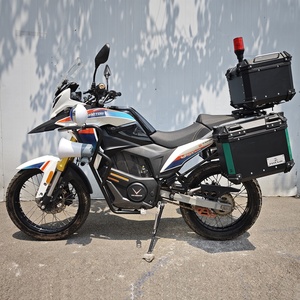
Our specialized OEM factories build electric motorcycles around a car-grade high-voltage powertrain architecture. By operating at significantly elevated voltage thresholds, the system delivers up to 22 kW peak power and 70 Nm instant torque while keeping current draw at a fraction of low-voltage systems. The results are undeniable: continuous high-speed cruising at 110–120 km/h without thermal derating, extended battery lifecycles backed by an 8-year or 80,000 km manufacturer warranty, and direct compatibility with public CCS2 DC fast-charging networks standard across automotive EV infrastructure.
As a verified OEM manufacturer, our production facilities operate under strict ISO 9001:2015 quality management systems, ISO 14001 environmental protocols, and automotive-grade IATF 16949 assembly standards. Commercial fleet buyers importing into Europe, North America, and Latin America require full legal compliance and international homologation certification:
Full European Whole Vehicle Type-Approval (EU 168/2013). Equipped with Certificate of Conformity (COC) enabling seamless vehicle registration across all EU member states.
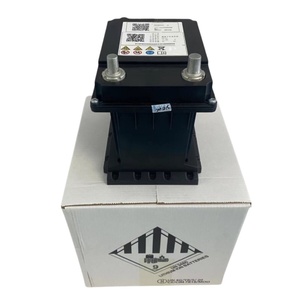
Lithium-ion battery packs undergo rigorous thermal abuse, mechanical drop, vibration proofing, and altitude simulation testing to ensure zero hazard risk during international maritime and road freight.
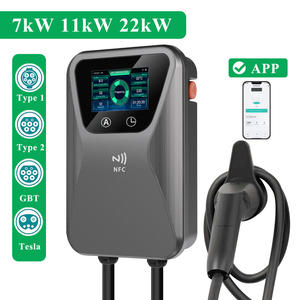
Integrated onboard charger compliant with IEC 62196-3 and DIN 70121 / ISO 15118 fast-charging communications protocols for seamless handshake with public DC chargers.
How last-mile logistics providers, fleet leasing conglomerates, and commercial transport operators are reshaping their procurement criteria.
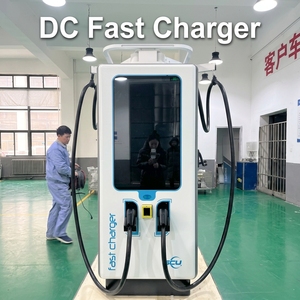
While swappable battery stations served early low-speed delivery scooters, enterprise fleets are shifting toward standardized CCS2 DC fast-charging. Plugging into existing electric car charging networks removes the need for capital-intensive proprietary battery swap infrastructure, allowing 20% to 80% fast tops in approximately 36 minutes.
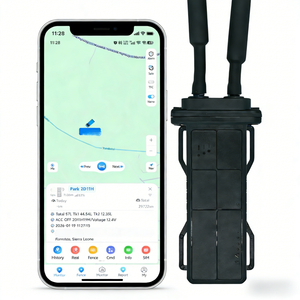
Modern fleet operators mandate embedded telematics over simple standalone GPS units. Vehicles must feature 4G LTE IoT gateways, CAN-bus integration, real-time battery cell state-of-health (SOH) monitoring, remote geofencing, immobilizers, and REST API/MQTT protocol support to synchronize seamlessly with enterprise dispatch software.
Total Cost of Ownership (TCO) has replaced upfront purchase price as the key procurement KPI. Enterprise buyers calculate energy efficiency per kilometer, brake pad wear from regenerative braking systems, maintenance downtime, and battery warranty longevity. High-voltage platforms consistently demonstrate up to 35% lower operating costs over 5 years.
Procurement officers evaluating factory partnerships for the next 5 to 10 years must look beyond aesthetic body panels and focus on core powertrain scalability. The next decade of commercial fleet electrification will be defined by three distinct technological evolutions:
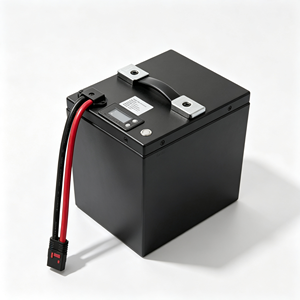
Next-generation Lithium-ion battery packs (incorporating high-density NMC or thermal-stable LFP chemistry) are no longer isolated passive energy storage units. Modern factory-installed BMS boards feature microcontrollers that continuously broadcast individual cell voltages, temperatures, and internal impedance metrics via CAN-bus to cloud analytics platforms. This allows fleet managers to detect cell degradation weeks before a failure occurs, optimizing vehicle maintenance schedules and preventing on-road delivery breakdowns.
Hardware-defined vehicles are rapidly giving way to software-defined mobility platforms. Through OTA software upgrades powered by custom operating systems (like Raptee OS), factory support teams can remotely alter torque maps, adjust regenerative braking aggressiveness based on terrain or driver profiling, and update public charger handshake protocols without requiring the vehicle to return to a service depot.
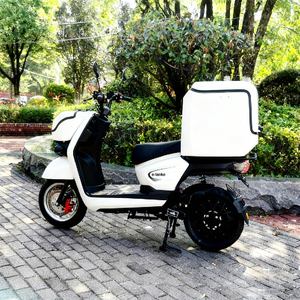
To minimize manufacturing tooling expenses and inventory SKU complexity, leading OEM factories utilize modular space-frame platforms. A single core high-voltage powertrain and chassis frame can be factory-configured into an urban streetfighter for express commuter transit, an extended-rack cargo utility bike for last-mile delivery operations, or an dual-battery ADV version for rugged rural mail delivery.
Detailed technical and commercial answers addressing certification, factory OEM customization, shipping logistics, and warranty coverage.
Our manufacturing facilities maintain ISO 9001:2015, ISO 14001, and IATF 16949 accreditations. Our vehicle models carry full European Whole Vehicle Type-Approval under EEC/COC (Category L3e-B), US DOT compliance, and UN38.3 battery shipping safety certifications. CE certificates are standard across all electronic subsystems, chargers, and telematics units.
High-voltage systems reduce the current ($I$) required to achieve high power output ($P = V \times I$). Lower amperage minimizes resistive heat generation in motor windings and battery cells ($I^2 R$ heat loss). This prevents thermal throttling, enables continuous 120km/h+ speeds, drastically slows battery degradation, and allows direct integration with automotive CCS2 DC fast chargers.
Yes. We provide comprehensive OEM/ODM manufacturing services. Enterprise buyers can request custom chassis paint schemes, branded bodywork, custom ECU throttle mapping, bespoke cargo rack attachments, and direct telematics integration into third-party fleet management platforms via MQTT/RESTful APIs.
Our CCS2-compatible electric motorcycles plug directly into standard public electric car charging stations (IEC 62196-3 / Combined Charging System 2). A standard 20% to 80% fast charge takes approximately 36 minutes. Furthermore, each vehicle features an onboard AC charger allowing standard home or depot socket charging in about 1 hour.
For commercial procurement contracts, the high-voltage Lithium-ion battery pack is backed by an extensive 8-year or 80,000 km warranty (whichever comes first). The vehicle chassis, drivetrain, and primary electronic modules are covered under a 3-year or 30,000 km manufacturer warranty, supported by factory spare parts replacement protocols.
All battery packs are tested and certified under UN38.3, MSDS, and dangerous goods (DG) Class 9 transportation regulations. Vehicles are packed in ocean-freight steel crate frames with waterproof protective wrapping, optimized for high-density 20ft and 40ft HQ container loading while adhering strictly to international maritime hazmat guidelines.
Standard sample evaluations begin at 2 to 5 units for fleet testing and local homologation verification. Full OEM production runs typically carry an MOQ of one 20ft container (approx. 24–32 units depending on model packaging). Factory lead times average 35 to 45 days from deposit confirmation and sample sign-off.
The integrated telematics module continuously transmits real-time GPS positioning, speed metrics, battery state-of-charge (SOC), diagnostic error codes, and crash detection alerts to your central dashboard. Remote immobilizers prevent unauthorized vehicle usage, while predictive maintenance alerts prevent costly road failure breakdowns, maximizing total fleet uptime.
Request factory specifications, B2B wholesale pricing matrices, or schedule a technical consultation with our engineering and export homologation team.