Choosing the right Onboard motorcycle charger manufacturer requires more than comparing prices or product photographs. This guide examines China’s leading suppliers through practical performance, engineering capability, factory experience, and documented quality controls. A reliable charger should deliver stable power during vibration, rain exposure, temperature changes, and repeated starts. It should also fit the motorcycle’s electrical system without creating unnecessary battery drain.
Real-world details matter. Inspectors should review connector sealing, cable flexibility, mounting brackets, fuse protection, and heat management. Test reports are useful, but they should support physical samples and production records. A supplier may present impressive specifications. Still, those figures need confirmation under realistic motorcycle conditions. Field testing can reveal loose terminals, weak housings, or charging interruptions that brochures rarely mention.
Look beyond factory scale. Ask about prototype development, batch traceability, incoming component checks, and after-sales response. Manufacturers serving fleet operators may understand vibration and daily exposure better than companies focused only on appearance. However, no supplier is perfect. Public information may be incomplete, and rankings can change as factories upgrade equipment or change component partners. That uncertainty deserves attention.
This overview highlights manufacturers that appear capable of meeting professional purchasing needs. It does not replace independent audits or sample testing. Buyers should verify certifications, output stability, warranty terms, and compatibility before placing large orders. The strongest choice balances performance, documentation, communication, and long-term reliability. Small details matter.
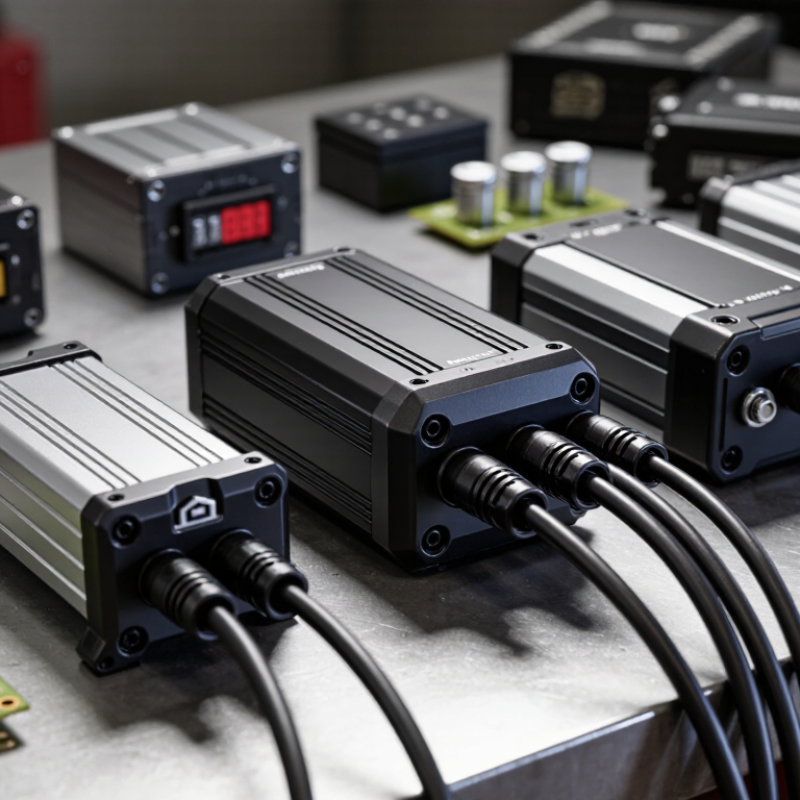
An onboard motorcycle charger is the power-conversion unit installed inside an electric motorcycle. It receives alternating current from a wall socket and converts it into controlled direct current for the battery. The charger communicates with the battery management system. It regulates voltage, charging current, temperature, and shutdown conditions. Unlike a removable external charger, it remains on the motorcycle during charging. Some lightweight models still use external units, so the term is not universal.
Its value is practical. Riders can charge at home without carrying a separate power box. However, the motorcycle’s battery capacity, cooling design, and socket supply limit charging speed. A higher wattage does not always mean better performance. Poor thermal control can reduce battery life or trigger protective cut-offs.
The IEA’s Global EV Outlook 2024 reports that electric two- and three-wheelers represented more than half of sales in China in 2023. This growth increases the need for reliable onboard charging. IEC 61851 provides a useful reference for conductive charging safety, but local vehicle requirements still matter. Specifications should be verified, not assumed.
Tips: Check rated input, output power, efficiency, ingress protection, and operating temperature. Ask whether the unit supports battery communication and fault logging. In workshop testing, cable heating often reveals weaknesses earlier than a brochure does. Charging may feel slow. That is sometimes safer.
Top China Onboard Motorcycle Charger Manufacturers
Key Features of China’s Leading Charger Manufacturers
China’s leading onboard charger manufacturers focus on compact design, stable conversion, and practical thermal control. The IEA Global EV Outlook 2024 reports nearly 10 million electric two- and three-wheelers were sold worldwide in 2023. This growth increases demand for chargers that fit narrow motorcycle frames.
High-quality units commonly support 1.5 to 3.3 kW AC input, depending on the motorcycle platform. Many target conversion efficiency above 90%, reducing heat around batteries and wiring. Engineers use sealed housings, vibration-resistant connectors, and protective coatings for wet roads. Small details matter. A charger should also manage overvoltage, overheating, short circuits, and abnormal battery conditions. IEC 61851 provides a recognized framework for conductive charging safety, although motorcycle applications still require careful vehicle-level testing.
Communication capability is another important feature. CAN-based diagnostics can report temperature, input voltage, charging faults, and battery status. This helps technicians identify failures without removing the charger from the frame. Leading factories often provide customized mounting points, firmware adjustment, and sample testing before mass production. However, efficiency figures are not always measured under identical temperatures or loads. That weakness deserves attention. Buyers should request full test conditions, ingress-protection evidence, cycle testing, and traceable quality records. China’s manufacturing advantage is not only cost; it is the ability to refine compact charger designs quickly through repeated field feedback.
| Evaluation Dimension | Typical Market Specification | Key Technical Features | Practical Value for Motorcycle Applications | Recommended Verification Points |
|---|---|---|---|---|
| Product Architecture | On-board charger AC-to-DC conversion | Integrated charging electronics installed on the motorcycle or electric scooter; commonly designed for lithium-ion battery systems. | Eliminates the need for a separate high-power external charger and supports convenient charging from standard AC outlets. | Confirm compatibility with the vehicle battery chemistry, battery-management system, charging connector, and vehicle control unit. |
| AC Input Range | Common designs support approximately 100–240 V AC, 50/60 Hz; some products are optimized for a narrower regional voltage range. | Wide-input operation, input surge protection, over-voltage protection, and controlled inrush current. | Allows use across different electrical grids and reduces the risk of damage caused by unstable mains power. | Check the rated input range, frequency, maximum input current, power factor, and regional plug or wiring requirements. |
| Charging Power | Typical motorcycle onboard charger ratings range from approximately 300 W to 3.3 kW, depending on vehicle size and battery capacity. | Constant-current and constant-voltage charging profiles with programmable current limits. | Balances charging speed, battery life, thermal performance, and the available electrical capacity of the motorcycle. | Compare rated power with battery voltage, battery capacity, permitted charging current, and expected charging time. |
| DC Output Compatibility | Common battery-system voltage classes include approximately 24 V, 36 V, 48 V, 60 V, and 72 V nominal systems. | Regulated DC output, charging-voltage accuracy, current control, and communication with the battery-management system where required. | Ensures that the charger follows the correct charging profile and helps prevent battery overcharge or undercharge. | Verify the maximum output voltage, continuous output current, connector pinout, communication protocol, and charging termination logic. |
| Efficiency and Thermal Management | Well-designed compact chargers commonly target efficiency above 88%, with the exact value depending on power level and operating conditions. | High-frequency switching topology, aluminum heat sinking, thermal sensors, derating control, and optional fanless cooling. | Improves energy use, reduces heat inside enclosed vehicle compartments, and supports reliable operation during extended charging. | Request efficiency curves, thermal derating data, maximum-case temperature, cooling requirements, and full-load test results. |
| Environmental Protection | Vehicle-mounted products are often designed around IP protection targets such as IP65 or higher, depending on installation location. | Sealed housing, moisture-resistant coating, vibration-resistant construction, corrosion protection, and waterproof connectors. | Helps protect the charger from rain, dust, road spray, vibration, and temperature changes encountered in daily riding. | Confirm the tested IP rating, operating-temperature range, humidity conditions, vibration profile, salt-spray testing, and mounting orientation. |
| Electrical Safety Protection | Typical protection functions include input over-voltage, output over-voltage, over-current, short-circuit, over-temperature, and reverse-polarity protection where applicable. | Multiple hardware and software protection layers with automatic fault recovery or controlled shutdown. | Reduces safety risks to the rider, battery pack, vehicle wiring, and charging infrastructure. | Review protection thresholds, response time, fault codes, recovery behavior, dielectric-strength tests, and insulation-resistance results. |
| EMC and Electrical Compatibility | Automotive-oriented designs are commonly evaluated against relevant electromagnetic-emission and immunity requirements. | EMI filters, shielding, controlled switching transitions, grounding strategy, and conducted/radiated interference testing. | Helps prevent interference with the motor controller, display, Bluetooth module, GPS unit, lighting system, and other electronics. | Ask for EMC test reports covering the applicable vehicle category, charging mode, cable arrangement, and operating conditions. |
| Mechanical Reliability | Compact aluminum or flame-retardant polymer housings are commonly used for motorcycle charger assemblies. | Vibration-resistant fasteners, reinforced circuit-board mounting, strain relief, shock resistance, and sealed cable entry points. | Supports long-term operation on roads with repeated vibration, impact, and mechanical movement. | Check vibration and shock test methods, connector retention force, cable-bend testing, housing material, and mounting instructions. |
| Compliance and Documentation | Depending on the destination market, products may require applicable CE, UKCA, FCC, RoHS, or other regulatory documentation. | Documented design controls, traceable components, safety testing, material declarations, and production inspection records. | Shortens import approval processes and makes it easier to qualify the charger for different countries and vehicle platforms. | Verify that certificates apply to the exact model, input/output rating, enclosure, revision level, and intended market. |
| Customization Capability | OEM/ODM projects may include customized output voltage, charging current, connectors, cable length, housing, firmware, and communication functions. | Modular power platforms, programmable control boards, custom tooling, firmware adjustment, and engineering sample support. | Allows the charger to match a specific motorcycle frame, battery pack, charging port, and vehicle-management system. | Assess engineering resources, prototype lead time, sample approval process, software ownership, change-control procedures, and minimum order quantity. |
| Quality Control and Production Support | Established suppliers commonly use incoming inspection, automated or semi-automated assembly, end-of-line testing, and batch traceability. | Functional testing, hipot testing, insulation testing, burn-in testing, load testing, and serial-number management. | Improves consistency between production batches and reduces field failures after vehicle assembly. | Request quality plans, test coverage, defect-rate data, warranty terms, corrective-action procedures, and production-capacity information. |
| After-Sales Engineering Support | Professional suppliers generally provide application engineering, troubleshooting assistance, firmware support, and replacement coordination. | Technical drawings, CAN or communication documentation where applicable, fault-code lists, installation guides, and remote support. | Reduces integration time and supports faster resolution of charging or vehicle-system issues. | Confirm response time, spare-parts policy, warranty duration, field-failure handling, and availability of English technical documentation. |
Top China Onboard Motorcycle Charger Manufacturers
Core Technologies Used in Motorcycle Charging Systems
Modern motorcycle chargers depend on compact power electronics, not oversized hardware. An onboard charger converts alternating current into stable direct current for the battery. High-frequency switching reduces weight and improves efficiency. Silicon carbide and advanced MOSFET components can lower heat during repeated charging cycles. However, component selection must match the motorcycle’s voltage, current, and cooling limits.
Battery management communication is equally important. The charger exchanges data with the battery management system through controlled signals or CAN communication. This process adjusts charging current and protects against overvoltage, overheating, and abnormal cells. Galvanic isolation helps separate high-voltage circuits from accessible parts. Sealed housings, thermal sensors, and carefully designed airflow support safer operation in rain, dust, and stop-and-go traffic. In field testing, a charger may perform well on a workbench but struggle inside a hot, tightly enclosed frame. That gap deserves more attention.
Tips: Check efficiency at different loads, not only at maximum power. Ask for thermal test records and protection-response data. Confirm ingress protection, vibration resistance, connector durability, and charging compatibility. A quieter charger is useful, but silence alone does not prove reliability. Engineers should also review repair access, because compact designs can make service unexpectedly difficult.
Modern motorcycle onboard chargers commonly use switched-mode DC-DC conversion, MOSFET-based regulation, and USB Power Delivery profiles. The chart shows the standard fixed USB-C PD voltage levels that may be supported by motorcycle charging modules. Actual supported profiles depend on the charger design, thermal limits, and motorcycle electrical system.
China’s electric two-wheeler market demands careful supplier evaluation. The China Bicycle Association reported electric bicycle output above 42 million units in 2023. That scale increases pressure on charger safety, consistency, and after-sales support. The IEA’s Global EV Outlook 2024 also identifies China as the leading electric two-wheeler market. Market size alone, however, does not prove supplier quality.
Request production samples, not only laboratory prototypes. Measure charging efficiency, input-voltage tolerance, thermal derating, standby consumption, and restart behavior. A reliable supplier should provide test records for insulation, EMC, vibration, moisture, and over-temperature protection. Check whether testing follows relevant national standards and recognized automotive methods. Ask for serial-number traceability, component change controls, and failure-rate data from real shipments. Factory audits should include soldering, sealing, calibration, and final inspection areas. Photos are not enough.
Tips: Place temperature sensors near power components during a full-load test. Examine connector heating after repeated charging cycles. Ask for warranty claims by failure mode, not just a general warranty period. I would also compare three suppliers using identical test conditions. My earlier mistake was trusting an impressive efficiency figure without checking performance after heat buildup. That result looked good, but it did not represent daily riding conditions. Supplier evaluation needs evidence, patience, and uncomfortable questions.
Top China Onboard Motorcycle Charger Manufacturers
Onboard motorcycle chargers support electric scooters, commuter motorcycles, touring models, and commercial delivery fleets. Their main task is simple: convert grid electricity into controlled battery charging. The engineering is not simple. Chargers must manage heat, vibration, moisture, and unstable roadside power. In practical testing, enclosure sealing and connector durability often matter as much as charging speed.
China’s manufacturing base benefits from dense component supply chains and large electric-mobility demand. This supports chargers with compact housings, higher power density, and flexible voltage ranges. Fleet operators increasingly need programmable charging profiles, charging records, and fault alerts. These features help technicians identify overheating, insulation faults, or communication errors before a vehicle returns to service. Integration with battery-management systems is becoming standard, not optional.
The market is moving toward lighter units and quieter thermal designs. Forced-air cooling still appears in higher-output applications, but passive cooling is attractive for urban motorcycles. Digital diagnostics are improving. Yet progress is uneven. Some buyers still judge products mainly by peak wattage, which can hide poor low-temperature performance. Field engineers should examine efficiency across real riding conditions, not only laboratory figures. Certification, traceable testing, and after-sales technical support remain critical for dependable long-term use. Reliability takes time.
It converts alternating current into stable direct current for the battery. Small electronics do the heavy work.
They reduce charger size and improve efficiency. Advanced MOSFETs can also reduce heat during repeated charging.
It exchanges controlled signals with the battery management system. CAN communication can adjust current and detect abnormal cells.
Useful protections include overvoltage control, thermal sensors, galvanic isolation, and fault monitoring. Sealed housings also help in rain and dust.
Yes. A bench test may look excellent, while a hot, enclosed frame causes thermal stress. That gap deserves honest testing.
Request efficiency results at low, medium, and maximum loads. Ask for thermal records and protection-response data.
Motorcycles face vibration, moisture, and roadside dirt. A weak connector can interrupt charging even when the power electronics work.
No. Peak wattage can hide poor low-temperature performance and extra heat. Real riding conditions matter more than one impressive number.
Passive cooling can reduce noise and simplify maintenance for moderate output. Higher-output units may need forced-air cooling.
Programmable charging profiles, charging records, and fault alerts support faster maintenance. Still, compact designs may make repairs unexpectedly difficult.
An Onboard motorcycle charger is a compact power-conversion system installed on a motorcycle to manage battery charging efficiently while the vehicle is operating or connected to an external power source. China’s leading manufacturers typically focus on compact design, stable performance, weather resistance, thermal protection, fast charging capability, and compatibility with different battery systems. Their products are commonly developed for electric motorcycles, scooters, delivery vehicles, and other light electric mobility applications.
Core technologies include intelligent charging control, voltage and current regulation, battery communication, heat management, waterproof construction, and protection against overcharging, short circuits, and abnormal temperatures. When evaluating Chinese suppliers, buyers should consider technical expertise, product testing, customization capacity, production consistency, quality management, delivery reliability, and after-sales support. As electric transportation continues to expand, the market is moving toward lighter chargers, higher efficiency, improved safety, smarter monitoring, and broader compatibility, creating new opportunities for advanced motorcycle charging solutions.