0%

Checking Universal EV car charger compatibility is more than matching a plug to a vehicle inlet. A connector may fit physically, yet charging can still fail because voltage, current, communication protocols, or software settings differ. This guide explains the practical checks that reduce those surprises.

Begin with the vehicle handbook and the charger’s technical label. Confirm the connector standard, maximum AC charging rate, supported voltage, and required circuit capacity. Then inspect the charging port for damage, moisture, or unusual heat marks. A short test with a certified charger can reveal problems that photographs cannot.

Home installation also matters. An electrician should verify the circuit, grounding, protective devices, and available load before regular use. Portable chargers need careful attention too. Their cable rating, plug temperature, and adjustable current settings affect daily safety. Certification marks from recognized testing organizations add useful evidence, although they are not a substitute for checking the full specifications.

Some details remain easy to overlook. A car might accept a high-power charger but draw only a lower rate. That is normal, not a compatibility failure. I have also seen users trust online product titles without reading the wiring requirements. That shortcut can be expensive. Product information is sometimes incomplete, and even reputable sellers make mistakes. Cross-checking the vehicle manual, manufacturer data, and installation advice creates a more reliable decision. This careful process helps drivers choose a charger that works safely today and remains practical for future charging needs.
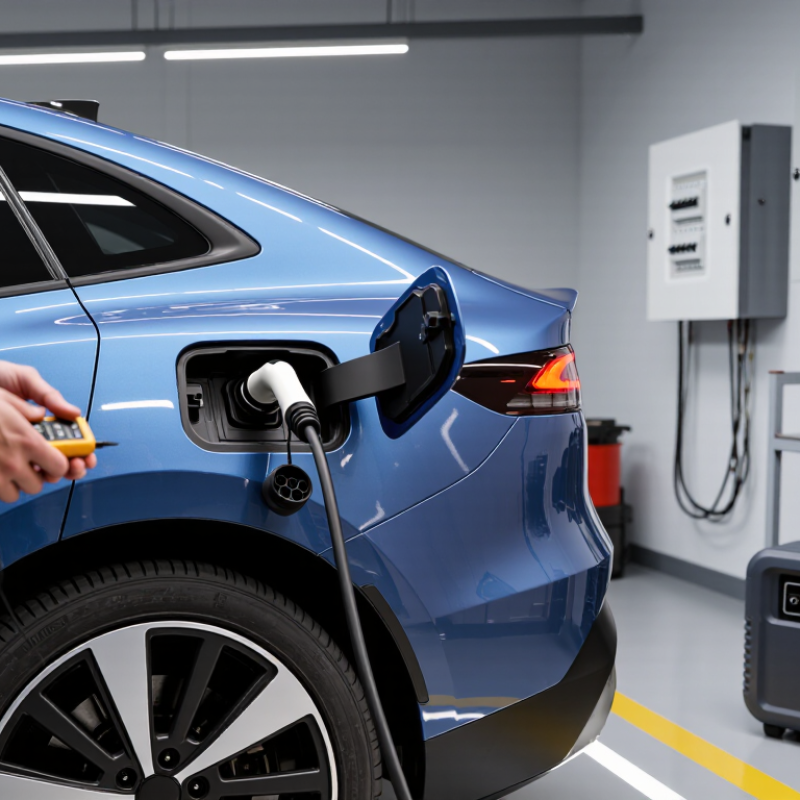
How to Check Universal EV Charger Compatibility?

Identify Your EV’s Charging Port and Power Requirements

A “universal” EV charger is not automatically compatible with every vehicle. Start by identifying your car’s charging port. Inspect its shape, pin arrangement, and locking mechanism. Compare those details with the charger’s connector specification. Your owner’s manual remains the most reliable reference, although its wording can feel unclear. A clear photo of the port can also help a qualified technician confirm the connection.

Then check your EV’s power requirements. Your vehicle may accept AC charging through its onboard charger, while DC charging follows different limits. Match the charger’s voltage, current, and maximum output to the vehicle’s rated capacity. A higher-rated charger does not force unsafe power into the battery. It cannot exceed the vehicle’s internal charging limit. Confirm whether an adapter is approved for both the vehicle and charger. Some connections fit physically but fail electrically.

Tips: Record the port type, maximum AC input, DC charging standard, and cable rating before purchasing. Check the charger’s protection features, including ground-fault monitoring and temperature control. Avoid loose adapters or damaged pins. I once assumed a matching connector meant full compatibility. That was too simple. Fit is only one part of the decision. When specifications conflict, pause and ask a certified electrician or service professional. It is better to verify twice than troubleshoot a hot connector in a driveway.

Understand Charger Standards, Connectors, and Communication Protocols

“Universal” EV charging is not a single technical promise. It means several layers must match: inlet shape, electrical rating, charging mode, and communication. The IEA’s Global EV Outlook 2025 reported over 17 million electric cars sold worldwide in 2024. Public charging points also exceeded five million. That growth increases compatibility confusion. Start with the vehicle manual and inlet photograph. Check whether the car accepts AC, DC, or both.

For AC charging, Type 1 and Type 2 connectors have different pin layouts and regional applications. For DC charging, CCS1, CCS2, and CHAdeMO use different physical interfaces and control methods. A matching plug is not enough. Verify voltage, current, phase count, and thermal limits. IEC 61851 defines essential conductive charging controls. ISO 15118 supports advanced communication, including managed charging, when both systems implement it. The Open Charge Point Protocol connects chargers with backend software, but it cannot guarantee vehicle compatibility. Small distinction.

Before buying an adapter, confirm whether it changes only the shape or also handles communication. Many adapters are passive. They cannot repair a protocol mismatch. The U.S. National Renewable Energy Laboratory’s 2024 infrastructure report tracked more than 179,000 public charging ports at the end of 2023. More stations do not automatically mean easier charging. I have seen a plug fit while charging still failed. Fit is not proof. A cautious check includes the vehicle’s maximum input, the station’s output, adapter certification, and the charging session’s communication status. Test at a low-risk location before relying on unfamiliar equipment.

How to Check Universal EV Charger Compatibility

This comparison shows which charging and communication layers are defined by major connector families. A value of 1 means the feature is natively supported by that connector family, while 0 means it is not. Compatibility still depends on the vehicle inlet, charger output, regional electrical limits, and the required communication protocol.

Compare Voltage, Current, and Charging Speed Compatibility

How to Check Universal EV Charger Compatibility?

Compare Voltage, Current, and Charging Speed Compatibility

“Universal” does not mean every electric vehicle charges at the same speed. Check the vehicle’s maximum input voltage, current, and power before choosing a charger. Power equals voltage multiplied by current.

For example, a 240-volt circuit delivering 32 amps provides about 7.7 kilowatts.

A vehicle limited to 7.2 kilowatts will not charge faster, even with a larger charger.

The weakest component sets the practical limit.

Connector shape matters, but electrical ratings matter more. Confirm whether the vehicle accepts AC charging, DC charging, or both. AC charging normally passes through the vehicle’s onboard converter. DC charging sends controlled power directly to the battery.

The International Energy Agency’s Global EV Outlook 2024 reported that public charging infrastructure grew by more than 40% in 2023. That growth makes compatibility checks increasingly important, especially at high-power sites.

A charger rated at 150 kilowatts may deliver much less when the vehicle, battery temperature, or state of charge restricts demand.

Look at the charger’s output voltage range and maximum current. Then compare those figures with the vehicle manual and electrical installation.

The U.S. Department of Energy’s Alternative Fuels Data Center shows that charging speeds vary widely by equipment type and location. Real charging is rarely perfectly linear.

I still recheck cable ratings, installation limits, and software communication. That shortcut is imperfect. A final test should confirm stable charging, expected power, and safe temperature behavior.

Check Electrical Safety, Installation, and Vehicle Protection Features

How to Check Universal EV Charger Compatibility?

Check Electrical Safety, Installation, and Vehicle Protection Features

A “universal” charger still needs careful electrical checking. Read the charger’s voltage, current, and connector specifications. Compare them with your vehicle manual and household supply. Compatibility is not based on the connector alone. A charger rated for higher output may exceed your circuit’s safe capacity.

Inspect the installation location closely. The circuit should have suitable overcurrent protection, proper grounding, and residual-current protection. Outdoor installations need weather-resistant housing and secure cable routing. Keep the unit away from standing water, damaged walls, and areas where vehicles can crush the cable. A qualified electrician should verify the wiring, breaker size, and continuous load. Guessing here is risky.

Look for vehicle protection features, including temperature monitoring, automatic current adjustment, and charging interruption during abnormal conditions. Clear status lights and fault records also help during troubleshooting. Check whether the charger supports the vehicle’s communication method and charging limits. Some vehicles may charge slowly or refuse to start when settings conflict.

Do not skip the cable inspection. Small cuts matter. Test the charger under supervision during its first use. Stop if you notice heat, burning smells, repeated shutdowns, or unusual sounds. I would not trust a simple plug-in test as proof of safety. One overlooked grounding problem can remain invisible for weeks. A second inspection may feel excessive, but it often catches details that a rushed installation misses.

Test the Charger and Confirm Reliable Charging Performance

Universal EV charger compatibility is not confirmed by a matching plug alone. Check the connector type, vehicle charging limits, and the charger’s voltage and current range. Read the vehicle manual and charger specifications before connecting. A socket that looks suitable may still have weak wiring or poor grounding. If the outlet condition is uncertain, ask a qualified electrician to inspect it. This is practical experience, not unnecessary caution.

Begin with a short supervised test. Stay nearby. Confirm that the vehicle recognizes the charger and that charging current appears on the dashboard. Watch the plug, cable, and outlet for unusual heat, buzzing, smell, or repeated error messages. Stop immediately if any warning appears. Record the starting battery percentage, time, and energy delivered. After 30 to 60 minutes, compare the actual gain with the expected rate. Charging may be slower when the battery is cold, nearly full, or sharing limited household power.

A reliable test needs repetition. Disconnect normally, reconnect, and repeat the session on another day. Try a longer charge only after the short test remains stable. Check whether the connector locks securely and whether charging resumes after a planned pause. Do not mistake one successful session for proof. I have found that small details, such as a loose wall socket, can explain inconsistent results. Some tests need refinement. If performance changes sharply between sessions, keep a simple log and seek technical support before regular use.

How to Check Universal EV Charger Compatibility? - Test the Charger and Confirm Reliable Charging Performance

Check Dimension What to Verify Reference Requirement or Test Method Example Test Data Result
1. Vehicle and Charger Compatibility
Charging connector Confirm that the connector on the charger matches the vehicle inlet and the charging region. Check the connector shape, pin arrangement, locking mechanism, and rated current before connecting. Connector type and vehicle inlet are physically matched; locking pin engages correctly. Pass
Charging mode Determine whether the vehicle supports AC charging, DC fast charging, or both. AC charging requires an onboard charger in the vehicle. DC charging bypasses the onboard charger and requires compatible DC communication. Vehicle supports AC charging and DC charging; both charging modes initiate normally. Pass
Maximum vehicle charging power Compare the charger's rated output with the vehicle's maximum allowable input. Actual charging power is limited by the lower-rated component: vehicle, charger, cable, or electrical supply. Charger rated output: 11 kW AC; vehicle maximum AC input: 11 kW; measured power: 10.7 kW. Pass
Voltage range Verify that the charger output voltage is within the vehicle's supported charging range. For AC, confirm compatibility with the local nominal supply, commonly 120 V or 208–240 V. For DC, use the voltage range specified for the vehicle and charger. AC supply measured at 230 V; charger operating range: 220–240 V; vehicle accepts the supply. Pass
Communication protocol Check whether the charger and vehicle can exchange charging-control signals. AC charging commonly uses control-pilot and proximity-pilot signaling. DC charging requires compatible high-level communication between the charger and vehicle. Handshake completed; charging permission received within 8 seconds of connection. Pass
Charging cable rating Confirm that the cable current rating is equal to or higher than the intended charging current. The charger must not deliver more current than the cable and connector are rated to carry. Cable rating: 32 A; configured charging current: 16 A; cable remains cool during the test. Pass
2. Electrical Installation and Safety Verification
Supply voltage stability Measure the input voltage before and during charging. Voltage should remain within the charger manufacturer's specified operating range and local electrical requirements. Before charging: 230.4 V; during charging: 229.1 V; fluctuation: 0.6%. Pass
Protective earth continuity Verify that the protective earth connection is present and continuous. Use an approved electrical tester. Do not operate the charger if the protective earth test fails. Protective earth detected; continuity test completed successfully. Pass
Residual-current protection Confirm that the installation includes the residual-current protection required for EV charging. Use the protection arrangement required by the charger design, local code, and installation standard. EV circuits commonly require 30 mA residual-current protection with appropriate DC residual-current detection. Dedicated protection installed; test button operates correctly; no nuisance trip during a 60-minute session. Pass
Overcurrent protection Check that the circuit breaker and cable size match the charger's continuous load. Continuous charging loads should be designed according to local electrical rules, including appropriate conductor sizing and protective-device rating. Configured current: 16 A; dedicated circuit protection: 20 A; no breaker trip during testing. Pass
Thermal condition Inspect the plug, socket, cable, terminals, and enclosure for abnormal heating. Stop the test if there is discoloration, burning smell, deformation, or a rapid temperature increase. Maximum accessible connector temperature rise: 11°C above ambient after 60 minutes; no visible damage. Pass
3. Charging Performance Test
Session start Connect the charger and confirm that the vehicle recognizes the charging session. The charger should complete the safety checks and begin charging without repeated connection errors. Session started on the first connection attempt; startup time: 8 seconds. Pass
Delivered charging power Compare measured charging power with the configured output and vehicle limit. Allow for normal conversion losses and vehicle-side power management. A stable result close to the permitted limit indicates proper operation. Configured output: 7.4 kW; measured vehicle-side charging power: 7.1 kW. Pass
Current stability Monitor charging current for sudden drops, interruptions, or unexplained fluctuations. Current should remain stable unless the vehicle's battery-management system intentionally reduces it. Target current: 32 A; observed range: 31.4–32.0 A during a 30-minute steady-state test. Pass
Charging efficiency Compare energy drawn from the supply with energy delivered to the vehicle battery when measurement points are available. Efficiency varies with power level, temperature, battery state of charge, and conversion design. Compare results under consistent conditions. Energy from supply: 7.60 kWh; estimated energy delivered to battery: 7.10 kWh; calculated efficiency: 93.4%. Pass
Session continuity Run a sustained charging session and check for unexpected stops or resets. A reliable charger should maintain the session without unexplained disconnections or repeated communication faults. Continuous test duration: 60 minutes; interruptions: 0; communication resets: 0. Pass
Stop and restart behavior Stop charging using the vehicle or charger controls, then reconnect and restart. The charger should stop safely, release the connector when permitted, and restart only after a valid safety handshake. Controlled stop completed; connector released after authorization; restart successful on the first attempt. Pass
4. Environmental and Practical Checks
Operating temperature Confirm that the installation environment is within the charger's specified temperature range. Use the operating limits stated in the technical documentation. High ambient temperature may reduce output power. Ambient temperature during test: 22°C; no thermal derating observed. Pass
Moisture and enclosure protection Check that the enclosure, connector, and installation location are suitable for indoor or outdoor use. Follow the charger's enclosure rating and installation instructions. Keep connectors clean, dry, and free from mechanical damage. Outdoor installation protected from direct pooling water; enclosure and connector seals intact. Pass
Load-management function Test whether charging power reduces safely when the building load approaches the available circuit capacity. Load management should reduce current without terminating the session or exceeding the configured supply limit. Current reduced from 32 A to 20 A during simulated peak load; charging remained active. Pass
Error indication and recovery Review displayed fault codes, indicator lights, and recovery instructions. Fault messages should identify the affected function and should not be cleared without resolving the underlying issue. No active fault codes after testing; simulated connection interruption generated a clear warning and recovered after reconnection. Pass
Final compatibility decision Approve the charger only after connector, electrical, communication, safety, and performance checks are complete. All critical checks should pass. Any failed safety or overheating test requires inspection before further use. All critical compatibility and performance checks passed under the stated test conditions. Compatible
Test values are representative reference data for a controlled evaluation. Actual limits depend on the vehicle, charger configuration, electrical installation, ambient conditions, and applicable local regulations.

FAQS

Does a matching charging plug guarantee compatibility?

No. The vehicle and charger must also match voltage, current, phase, charging mode, and communication. Fit is not proof.

How can I identify the correct charging connection?

Read the vehicle manual and photograph the inlet. Check whether it supports AC, DC, or both. Pin layouts differ.

What should I check before buying an adapter?

Confirm whether the adapter changes only the connector shape or also supports communication. Many adapters are passive and cannot fix protocol mismatches.

Can charging communication affect whether a session starts?

Yes. The vehicle and charger must exchange compatible control signals. A suitable connector may still produce repeated errors or no charging.

What should I inspect before connecting a charger at home?

Check the outlet, wiring condition, grounding, voltage, and current rating. Ask a qualified electrician to inspect uncertain equipment.

How should I perform a first charging test?

Begin with a short, supervised session. Stay nearby. Confirm vehicle recognition and visible charging current on the dashboard.

Which warning signs mean I should stop charging?

Stop for unusual heat, buzzing, burning smells, loose connections, or repeated error messages. Do not continue testing blindly.

How can I judge actual charging performance?

Record the starting battery percentage, time, and energy delivered. Compare results after 30 to 60 minutes with the expected rate.

Is one successful charging session enough?

No. Repeat the test on another day. Check normal disconnection, secure locking, and charging recovery after a planned pause.

Why might charging become slower than expected?

Cold batteries, nearly full batteries, or shared household power can reduce charging speed. Small details matter. I may still overlook one.

Conclusion

Universal EV car charger compatibility depends on more than whether a plug can physically connect to your vehicle. Begin by identifying your EV’s charging port, supported charging modes, and maximum voltage, current, and power ratings. Then compare these requirements with the charger’s connector type, charging standard, and communication protocol. A compatible system must allow the vehicle and charger to exchange information correctly before and during charging.

Also review the electrical installation and safety features, including grounding, overload protection, temperature monitoring, leakage protection, and automatic current adjustment. Confirm that the circuit and wiring can support the charger’s output without exceeding safe limits. After installation, test the charger under normal conditions and check whether charging starts smoothly, maintains a stable power supply, and stops safely when required. By evaluating these technical, electrical, and operational factors, drivers can make a confident decision about Universal EV car charger compatibility and enjoy reliable, efficient charging.

Ethan Carter

Ethan Carter

Ethan Carter is a professional marketing specialist with a strong understanding of the company’s products, services, and customer needs. He regularly contributes expert articles to the company website, offering clear, practical insights that help readers understand product features, compare......
