An 8-year EV battery warranty can look reassuring on a showroom screen, but the headline rarely tells the whole story. In 2026, comparing warranties means checking what the clock, mileage limit, and coverage threshold actually mean for your driving. Eight years is only one part.
Look for the battery capacity level that triggers coverage, and confirm how the manufacturer measures it. A warranty may cover repair or replacement when capacity falls below a stated threshold, rather than normal, gradual range loss. Read the official warranty booklet for exclusions, diagnostic procedures, and whether coverage transfers to a later owner. Small details matter. A mileage cap can arrive well before the time limit for high-mileage drivers.
Compare the terms alongside your likely use: a daily commute, cold winters, frequent fast charging, or long highway trips. These conditions can affect real-world range, though they do not automatically determine whether a claim qualifies. Keep service records and save the warranty documents; they can help when questions arise. Ask the dealer to explain vague wording in writing. Then verify it against the manufacturer’s published terms. Independent battery specialists can offer useful context, but the written warranty remains the key reference. Even careful buyers may miss a footnote. That is worth admitting. No single warranty is best for every driver, so this guide focuses on practical comparisons, not promises about future battery performance.
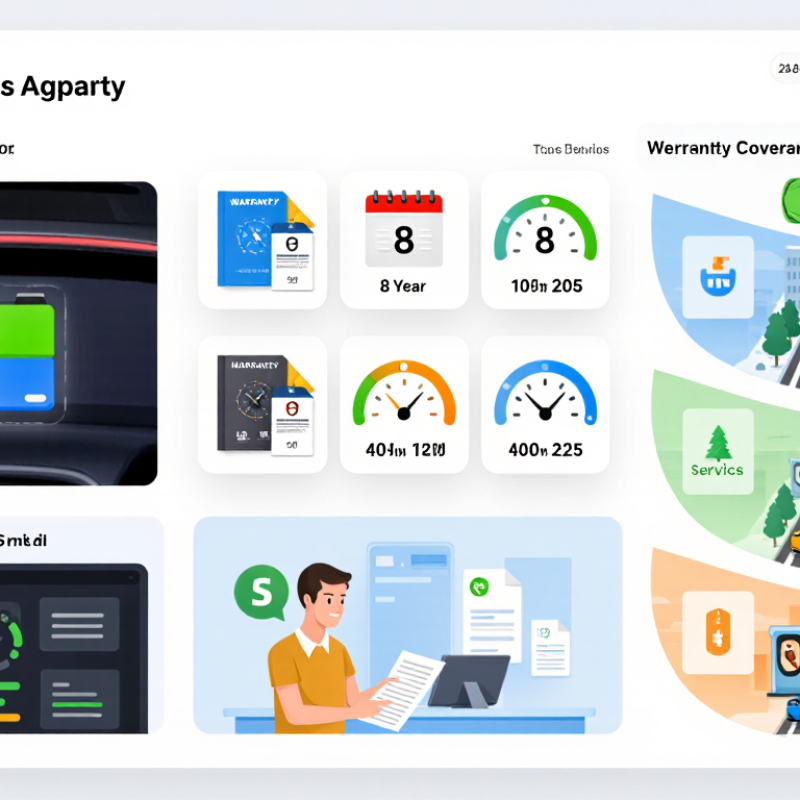
An eight-year EV battery warranty generally protects against specified battery defects and excessive capacity loss during a defined period. The clock often starts on the vehicle’s original sale or delivery date, not the day a second owner buys it. Some warranties also set a mileage limit, so coverage may end when either limit is reached. Details matter.
Capacity coverage usually depends on a stated minimum, such as a percentage of the battery’s original usable capacity. If the battery falls below that threshold under the warranty’s testing method, the manufacturer may repair or replace affected components. That does not always mean receiving a brand-new battery pack. The contract may allow refurbished parts or other remedies. This threshold is easy to misread: ordinary range changes with temperature, speed, and cabin heating, and do not by themselves prove a warranty claim.
Check what the document excludes, including damage from improper charging, physical impact, or missed maintenance where those terms apply. Ask how capacity is measured and whether a diagnostic report is available. Keep the warranty booklet, service records, and charging or range notes; a dated record is more useful than memory. Coverage can vary by vehicle, market, and contract, so read the actual terms rather than relying on a general eight-year claim.
When comparing an eight-year EV battery warranty in 2026, treat time and mileage as separate clocks. An “eight years or 100,000 miles” term generally ends when either limit is reached. At 15,000 miles a year, a driver could reach the mileage cap well before year eight. At 7,000 miles a year, the calendar limit is more likely to matter. That distinction is easy to miss.
Check what the warranty covers: a battery defect, loss of capacity, or both. For capacity coverage, find the stated minimum capacity threshold and how it is measured. A dashboard range estimate may fluctuate with temperature, speed, and cabin heating; it is not necessarily the warranty test. Geotab’s 2024 EV Battery Health Report analyzed more than 10,000 vehicles and estimated average annual battery degradation at 1.8%. That is fleet-level context, not a prediction for an individual car or a guarantee of coverage.
Read the exclusions and claim procedure, too. Note whether the mileage limit uses the odometer and whether service records or diagnostic checks are required. Keep your documents. The fine print matters. I would not assume that “eight years” means eight years of protection against every battery problem; warranty wording can be less clear than the headline.
An eight-year battery warranty does not guarantee the same protection from every vehicle. Check the capacity threshold, mileage limit, and exact start date. Some warranties cover a battery only after its measured capacity falls below a stated percentage of its original usable capacity. Others define coverage differently. Read the threshold closely. A dashboard range estimate alone may not prove a claim; temperature, speed, and cabin heating can change that number.
Look for the warranty’s testing method. Does the service center measure the whole battery, or compare usable energy with a recorded baseline? Ask whether the test must be repeated, and who pays for diagnosis. A capacity guarantee may apply only when the battery falls below the contract’s limit during its coverage period. A defect clause may cover a different problem, such as a failed module or charging fault. The wording matters.
Check exclusions and claim steps, too. Collision damage, neglected maintenance, unauthorized repairs, or operation outside stated conditions may affect coverage, depending on the terms. Keep service and repair records, and note any warning messages before they disappear. One awkward point: battery capacity can be hard to judge from ordinary driving. I would not rely on a salesperson’s verbal estimate; ask for the written threshold and test procedure. A clear answer is more useful than a reassuring promise.
Comparison guide: Warranty terms differ by vehicle, market, and contract. The figures below are common examples, not universal requirements or a guarantee of coverage. The written warranty for the specific vehicle controls.
| What to compare | Common wording or benchmark | When a claim may qualify | Check before relying on it |
|---|---|---|---|
| Coverage period | 8 years from the warranty start date, often the original in-service date. | The covered defect or capacity shortfall occurs within the stated period. | Confirm the start date, transfer rules, and whether coverage ends earlier at a mileage limit. |
| Mileage limit | A limit such as 100,000 miles is a common example; some warranties specify a different limit, such as 120,000 miles. | The claim is made before either the time limit or mileage limit is reached, if the contract uses “whichever comes first.” | Do not assume every 8-year warranty has the same mileage allowance. |
| Minimum battery capacity | A capacity-retention floor of 70% is a commonly seen example, but the stated percentage and measurement method vary. | An authorized test finds usable capacity below the contract’s specified threshold during the coverage period. | Check whether the threshold applies to usable energy, how it is measured, and whether a minimum test procedure is required. |
| Normal capacity loss | Gradual battery degradation may be covered only if it crosses the warranty’s capacity threshold; lesser loss is often treated as normal wear. | The measured capacity is below the specified minimum—not merely lower than when the vehicle was new. | A shorter driving range alone may not establish a qualifying capacity loss; weather, speed, tires, and heating or cooling use can affect range. |
| Battery defect or failure | Coverage commonly addresses defects in materials or workmanship and certain battery failures, subject to contract terms. | A diagnosis identifies a covered defect or failure in the battery or a specifically listed component. | Check whether modules, control electronics, cooling components, and high-voltage connections are included or covered separately. |
| Testing and proof | The warranty provider may require an inspection or diagnostic test using its approved procedure. | The required test confirms the covered failure or capacity level, and the vehicle meets claim conditions. | Ask about diagnostic fees, appointment requirements, test results, and any process for disputing a measurement. |
| Exclusions and maintenance | Contracts may exclude damage from accidents, misuse, unauthorized repairs or modifications, or failure to follow specified instructions. | The problem is not attributable to an exclusion, and any applicable service or operating requirements have been met. | Read the exclusions and required records; do not assume every charging habit automatically voids coverage. |
| Remedy if approved | The remedy may be repair, module replacement, battery replacement, or another remedy specified in the contract. | The claim is accepted under the warranty’s conditions and the provider authorizes the stated remedy. | Check whether replacement parts may be new, repaired, or reconditioned, and whether the remedy restores capacity to a stated level. |
Practical comparison: Compare the exact time and mileage limits, capacity-retention percentage, official test method, exclusions, and available remedy. Warranty laws and minimum coverage differ by jurisdiction; consult the vehicle’s warranty booklet and local rules for the terms that apply.
In 2026, an eight-year battery warranty is only comparable when you read its conditions, not just its duration. Check whether coverage ends after a mileage limit, and how the contract defines a qualifying battery failure. Some warranties require capacity to fall below a stated threshold; others cover specific defects. Small wording differences matter.
Exclusions can change the practical value of coverage. Look for rules about collision damage, flooding, unauthorized repairs, maintenance records, or commercial use. Then check transfer terms if the vehicle is sold: coverage may follow the car, but deadlines, fees, or paperwork can apply. Keep the original contract and service receipts. Details matter.
Claim procedures deserve equal attention. A warranty may require an inspection at an approved repair facility before work begins. Ask what documents are needed, who pays for diagnosis, and whether temporary transportation is covered. Photograph the odometer and save any dashboard warning messages when a problem appears. A warning alone may not establish eligibility. Even careful readers can miss a requirement buried in the fine print, so confirm uncertain terms in writing before relying on them.
When comparing eight-year EV battery warranties in 2026, look beyond the headline term. Check the mileage limit, since coverage may end when either the time or distance limit is reached. Then identify what the warranty covers: manufacturing defects, battery failure, or capacity loss. The minimum capacity threshold can differ between models. Details matter.
Compare how each maker measures battery capacity and whether testing must happen at an authorized service center. Check when coverage begins, whether it transfers to a later owner, and what happens if a battery repair is declined. Read the full warranty document, not only a summary page. I would not assume similar wording means similar protection; the test procedure can change the practical value of a promise.
Tips: Put the mileage cap, capacity threshold, and testing process side by side. Ask a dealer to point to each term in writing. Keep a copy of the warranty and service records. They may be useful later.
No. Coverage may depend on mileage, battery capacity, failure type, and the warranty’s start date. Read the threshold.
The warranty may require capacity to fall below a stated percentage. A service center might compare usable energy with a recorded baseline.
Not necessarily. Cold weather, high speeds, and cabin heating can reduce the displayed range. The estimate alone may not establish eligibility.
Not always. A capacity guarantee may use a percentage threshold, while a defect clause may cover a failed module or charging fault. Check both.
Review terms for collision damage, flooding, unauthorized repairs, maintenance records, and commercial use. Keep repair receipts.
It may follow the vehicle, but paperwork, fees, or deadlines could apply. Confirm the transfer terms in writing.
Photograph the warning and odometer. Save service records, then ask whether an approved inspection is required before repairs begin.
The contract may specify who pays for testing and whether transportation is included. Ask before booking an inspection. Details matter.
I would not rely on it alone. Request the written threshold and test procedure; even careful readers can miss a clause.
An 8-year EV battery warranty can offer long-term protection, but the time limit alone does not tell the whole story. Compare how each warranty defines covered battery components, when a defect or failure qualifies, and whether coverage depends on the battery retaining a specified portion of its original capacity. Check how the eight-year period interacts with any mileage limit, including which limit ends coverage first and when the warranty clock begins.
Terms can also differ in their exclusions, transfer rules, and claim procedures. Review what situations may not be covered, whether protection passes to a subsequent owner, and what inspections or documentation may be required when making a claim. To compare EV models fairly, consider all these details together rather than focusing only on the headline duration. A clear comparison helps reveal the practical scope of coverage and the conditions that could affect support over the vehicle’s lifetime.