0%

A 5.4 kWh EV battery can suit a compact electric vehicle, conversion project, or specialized mobility platform, but capacity alone cannot show whether it fits. Buyers need to compare the battery’s voltage, usable energy, dimensions, connector type, and discharge limits with their vehicle and charger. Small mismatches matter. A connector that looks familiar may still use a different pinout, and a stated capacity may not equal the energy available in real operation.

This guide introduces seven practical checks for buyers sourcing across borders. Request a current datasheet, battery management system details, and test conditions behind cycle-life claims. Ask how the pack handles temperature, vibration, and storage, and confirm which documents apply in the destination market. Certification needs can differ by product type and location, so verify requirements with qualified local professionals rather than relying on a supplier’s general assurance. Review warranty coverage, spare-part access, lead times, packaging, and shipping arrangements before paying a deposit. Keep written records.

Look closely at the evidence. Clear labels and consistent specifications help; polished photos do not prove performance. If test results are missing, treat that as an open question, not a minor detail. There is no perfect checklist, and supplier answers may leave gaps. A careful comparison can still reveal whether the battery’s specifications, support, and stated use match your project.
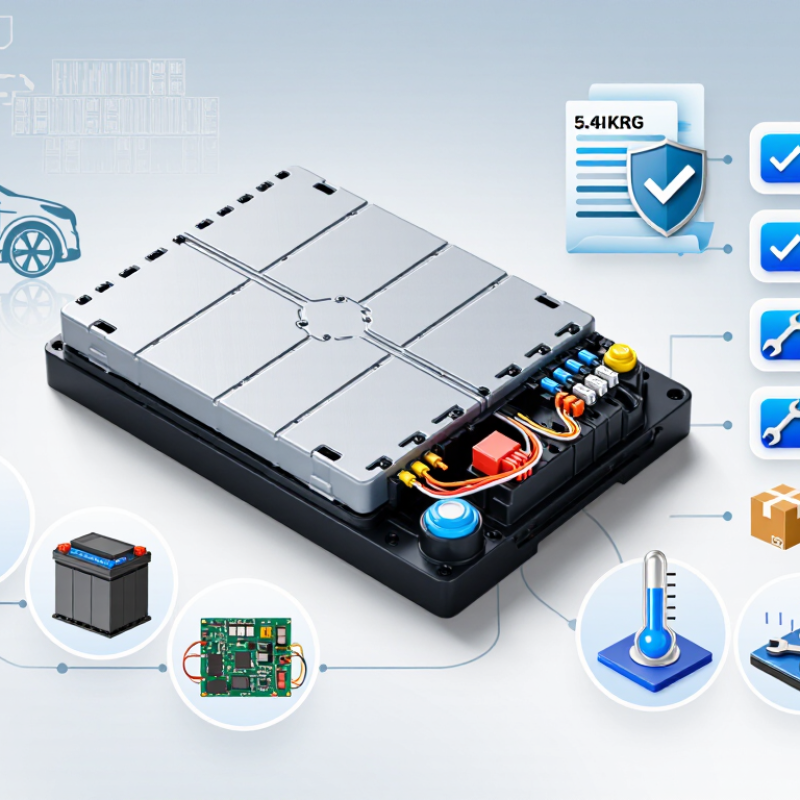
5.4 kWh EV Battery 7 Tips for Global Buyers?

Understanding 5.4 kWh EV Battery Capacity and Use Cases

Understanding 5.4 kWh EV Battery Capacity and Use Cases

A 5.4 kWh battery stores a modest amount of energy compared with packs in most passenger cars. It may suit compact electric vehicles, neighborhood transport, mobility equipment, or utility carts. The actual fit depends on vehicle weight, motor efficiency, terrain, speed, and weather. A flat, slow route can use far less energy than steep streets on a cold day. Capacity alone does not promise a specific travel distance.

Usable energy may also be lower than the stated capacity because battery systems reserve energy for protection. Charging losses matter, too. For buyers, ask for tested range under conditions close to your expected use, along with charging time and cycle-life information. A short daily commute may be a good match. Frequent long trips probably are not. I would not plan around the best range figure; real driving can be less predictable than a test route.

Tips: Compare watt-hours per kilometer, not just battery size. Check whether the quoted 5.4 kWh is nominal or usable capacity. Leave a practical energy margin for detours, hills, and battery aging. Keep in mind that these estimates can still miss the mark.

5.4 kWh EV Battery: Capacity and Practical Use Cases

A 5.4 kWh battery can typically support about 27–45 km of travel, depending on vehicle efficiency. At an average consumption of 150 Wh/km, the usable range is approximately 36 km before charging losses and reserve capacity.

Checking Compatibility with EV Voltage, Motor, and Battery Systems

5.4 kWh EV Battery: 7 Tips for Global Buyers

Checking Compatibility with EV Voltage, Motor, and Battery Systems

A 5.4 kWh battery is not automatically compatible with every electric vehicle. Check the vehicle’s nominal voltage first, then compare the battery’s operating range. A small voltage mismatch can damage the controller or reduce performance. Tip one: confirm voltage. Tip two: calculate usable capacity, not only the advertised figure. Tip three: inspect the connector shape, polarity, and cable rating. A neat fit can still be wrong.

The motor and controller need equal attention. Tip four: compare the battery’s continuous and peak current with the motor controller’s requirements. A battery may show enough energy but still struggle during hill climbs or heavy loads. Tip five: verify communication between the battery management system and the vehicle controller. Some systems require specific data signals, not just positive and negative cables. Ask for wiring diagrams, fault codes, and charging limits. Do not trust one brochure number.

Physical and charging details often cause delays. Tip six: measure the battery compartment, mounting points, and ventilation space before ordering. Leave room for cables and service access. Tip seven: confirm charger voltage, charging current, temperature limits, and protection functions. A qualified technician should review the installation. Regional climate matters too; cold mornings can reduce available power. I would also request cycle-test records and warranty conditions in writing. The imperfect part is that published specifications may vary by test method, so real vehicle testing remains necessary.

Comparing Battery Chemistry, Lifespan, Performance, and Warranty

5.4 kWh EV Battery: 7 Tips for Global Buyers

Comparing Battery Chemistry, Lifespan, Performance, and Warranty

Choose chemistry carefully. Lithium iron phosphate cells usually offer strong thermal stability and long cycle life. Nickel-based cells can deliver higher energy density, but they often require stricter temperature control. Tip 1: Match chemistry with climate. Tip 2: Check usable capacity, not only the 5.4 kWh headline. Tip 3: Ask for tested energy at 25°C. Cold weather can reduce output noticeably.

Performance also depends on current demand. Tip 4: Compare continuous and peak discharge ratings. A small battery may support brief acceleration but weaken under repeated loads. The International Energy Agency reported global EV battery demand near 750 GWh in 2023. That scale encourages better testing, yet small packs still receive less public data. I would not assume laboratory figures equal daily results.

Lifespan deserves a practical reading. Tip 5: Request cycle-life data at realistic depth-of-discharge levels. Tip 6: Examine warranty limits, including years, mileage, retained capacity, and approved service locations. Many market warranties use eight years or 160,000 kilometers, but terms differ by region. Tip 7: Confirm replacement procedures and transport responsibilities before payment. The U.S. Department of Energy identifies heat, high charging rates, and deep cycling as major degradation factors. My checklist is still imperfect; warranty language can hide important exclusions. Ask for the complete document.

Reviewing Global Safety Standards, Certifications, and Shipping Rules

5.4 kWh EV Battery: 7 Tips for Global Buyers

Reviewing Global Safety Standards, Certifications, and Shipping Rules

A 5.4 kWh EV battery needs more than a capacity label. Check its chemistry, nominal voltage, usable energy, cycle rating, and operating temperature. The International Energy Agency reported global electric-vehicle battery demand above 750 GWh in 2023, rising about 40% year on year. This growth increases quality differences between suppliers. Tip one: request a cell-level specification sheet. Tip two: verify the battery passed UN 38.3 transport testing. Ask for the complete test summary, not a certificate image.

Safety evidence should match the battery’s use. IEC 62619 supports industrial lithium battery safety evaluation, while UNECE R100 addresses rechargeable electrical energy storage systems in road vehicles. Tip three: confirm the applicable vehicle approval route in the destination market. Tip four: review BMS protections for overcharge, overheating, short circuits, and deep discharge. Tip five: inspect traceability records for cells, production batches, and firmware versions. Missing data is not a small issue.

Shipping can create unexpected delays. Under IATA dangerous-goods rules, standalone lithium-ion batteries are commonly limited to 30% state of charge for air transport, subject to exceptions and approvals. Tip six: confirm UN 3480 classification, packaging instructions, labels, and emergency contacts before booking freight. Tip seven: check import documents, battery recycling obligations, and port restrictions with a local customs specialist. A 5.4 kWh pack may look manageable, but its transport paperwork is not. Some suppliers still provide incomplete declarations; buyers should treat that as a warning, not an inconvenience.

5.4 kWh EV Battery: 7 Tips for Global Buyers

A practical checklist for reviewing safety standards, certifications, and shipping requirements for a nominal 5.4 kWh electric-vehicle battery. Requirements depend on battery chemistry, design, destination market, and whether the battery is shipped alone or with a vehicle.

Tip What to Review Buyer Checklist Relevant Standard or Rule
1 Confirm the exact battery specification Request the chemistry, nominal and maximum voltage, rated capacity, watt-hour rating, cell configuration, mass, and intended vehicle application. Check that the product label and transport documents describe the same battery. Transport classification uses the battery’s characteristics and configuration, not capacity alone. A 5.4 kWh rating is not enough to determine every shipping or regulatory requirement.
2 Check UN 38.3 transport test evidence Ask for the UN 38.3 test summary for the specific battery type. Verify that its model, configuration, manufacturer details, and test information match the goods being offered. UN Manual of Tests and Criteria, subsection 38.3. Lithium batteries offered for transport generally must meet the applicable testing requirements. A test summary is not the same as a safety certification.
3 Review vehicle and battery safety scope Establish whether the battery is sold as a component, a replacement pack, or part of a complete vehicle. Request test reports covering the relevant product and installation scope, including electrical, mechanical, and thermal safety where applicable. UNECE Regulation No. 100 addresses electric power-train and rechargeable energy storage system safety for vehicle type approval in applicable markets. Its applicability depends on vehicle category and approval route.
4 Match standards to the destination market Ask which national or regional rules apply and whether the evidence covers the complete battery pack or only its cells. Obtain the full report or certificate scope rather than relying on a logo or an unspecified claim of compliance. IEC 62660 series covers performance, reliability, and abuse testing of lithium-ion cells for propulsion applications. ISO 12405 series provides test specifications for lithium-ion traction battery packs and systems. Neither reference automatically replaces market approval requirements.
5 Verify market-specific conformity documents For each destination, confirm the applicable approval process, required technical documentation, labeling, importer obligations, and any testing or registration needed before sale. Check that documents are current and issued for the exact product configuration. Requirements vary by jurisdiction. In the European Union, the Battery Regulation (EU) 2023/1542 introduces battery-related requirements in phases. CE marking applies only where relevant EU legislation requires it; it is not a universal battery safety certificate.
6 Classify the shipment correctly Tell the freight forwarder whether the battery is shipped alone, packed with equipment, or contained in equipment. Confirm the UN number, dangerous-goods description, packing instruction, marks, labels, and documentation against the exact shipment arrangement. Lithium-ion batteries shipped alone are generally assigned UN 3480; batteries packed with or contained in equipment generally fall under UN 3481, subject to the applicable rules and configuration. Air, sea, and road transport use different requirements.
7 Plan packaging, state of charge, and route Before booking, confirm packaging design, protection against short circuit and damage, state-of-charge limits, carrier acceptance, and emergency information. Use the current rules for the transport mode and route, and verify any transit-country restrictions. Air shipments are governed by the current ICAO Technical Instructions and IATA Dangerous Goods Regulations; sea shipments by the IMDG Code; and international road shipments in covered regions by ADR. Requirements and exceptions can change by edition, shipment type, and carrier.

Important: This table is a buyer’s screening guide, not a declaration of compliance or shipping authorization. Have a qualified dangerous-goods specialist and the relevant approval body confirm the current requirements for the battery, vehicle, destination, and transport route.

Evaluating Suppliers, Total Costs, Installation, and After-Sales Support

A 5.4 kWh EV battery may suit a compact vehicle or a specific replacement need, but capacity alone tells little. Ask suppliers for a datasheet showing usable capacity, voltage range, continuous and peak current, cycle-life test conditions, and operating temperatures. Request recent test records and clear warranty terms, not just a headline lifespan. Check whether the battery management system communicates with your vehicle’s controller. Small incompatibilities can become expensive.

Compare the landed cost, not only the quoted battery price. Include shipping, import charges where applicable, installation labor, compatible cables, protective equipment, and any required inspection. Ask who handles damage in transit. Get that answer in writing. Before installation, have a qualified technician check mounting space, connector polarity, cooling needs, and vehicle-specific procedures. A battery that fits the compartment may still need different brackets or wiring. That detail is easy to miss.

After-sales support matters when a warning light appears far from the supplier. Confirm response hours, diagnostic steps, replacement-part availability, and how warranty claims are assessed. Keep the invoice, serial number, installation record, and battery readings together. A simple log helps. Ask whether support is available in your time zone and language. Some suppliers sound excellent before payment; I would still test their technical response with a specific question before choosing.

FAQS

What can a 5.4 kWh EV battery power?

It may suit a compact electric vehicle, neighborhood transport, mobility equipment, or a utility cart. The right fit depends on vehicle weight, motor efficiency, terrain, and weather.

How far can a vehicle travel with 5.4 kWh?

Capacity alone cannot predict travel distance. Usable energy may be lower, and hills, cold mornings, and faster driving can increase consumption. Ask for test results that match your route.

Is a 5.4 kWh battery suitable for long trips?

It may work for a short daily commute, depending on the vehicle and route. Frequent long trips are probably a poor match. Leave energy for detours.

How do I check whether the battery matches my vehicle?

Compare the battery’s nominal voltage and operating range with the vehicle’s requirements. Also check connector shape, polarity, cable rating, and compartment dimensions. A neat fit can still be wrong.

What motor and controller details should I verify?

Compare continuous and peak current with the controller’s requirements. Check whether the battery management system communicates with the vehicle. A battery with enough stored energy may still struggle on steep hills.

What charging information should I request?

Confirm charger voltage, charging current, temperature limits, and protection functions. Ask for charging time and charging limits in writing. Small details matter.

What costs should I include beyond the battery price?

Include shipping, applicable import charges, installation labor, compatible cables, and any required inspection. Ask who handles transit damage. Get that answer in writing.

What should I check before and after installation?

Have a qualified technician review mounting points, ventilation space, wiring, and vehicle-specific procedures. Keep the invoice, serial number, installation record, and battery readings together. A simple log helps.

How can I assess supplier support?

Ask about response hours, diagnostic steps, replacement parts, warranty claims, and support in your time zone. Test their technical response with a specific question. I would not rely on polished promises alone.

Conclusion

Choosing a 5.4 kWh EV battery starts with understanding what its capacity can realistically support. Consider the vehicle’s intended use, expected range, and energy demands, then check that the battery’s voltage, motor, and existing electrical systems are compatible. Compare available battery chemistries by weighing factors such as lifespan, performance, operating conditions, and warranty coverage rather than focusing on capacity alone.

Before buying, review relevant safety certifications and confirm that packaging and shipping arrangements meet the requirements for the destination. Compare suppliers using the full cost of ownership, including installation, accessories, maintenance, and after-sales support. Clear technical documentation, a suitable warranty, and access to qualified installation assistance can help reduce compatibility issues and make the purchase more reliable for buyers in different regions.

Amelia Rose

Amelia Rose

Amelia Rose is a dedicated marketing professional with a strong understanding of modern business strategy, customer needs, and product communication. As a key contributor to the company’s content and marketing initiatives, she regularly updates the corporate website with insightful blog articles......
