The 2026 EV market will be more connected, measurable, and demanding. The International Energy Agency reported that global electric car sales exceeded 17 million in 2024, representing more than one-fifth of new car sales. This growth creates pressure on fleets, manufacturers, and mobility providers. They need live visibility, not delayed spreadsheets.
Real-time EV telematics connects vehicles, batteries, chargers, drivers, and service teams through continuous data. It can show a battery’s state of charge, charging location, energy consumption, route efficiency, and emerging faults. Geotab founder Neil Cawse captured the wider opportunity simply: “Data is the new oil.” The comparison is useful, although incomplete. Raw data has little value without reliable sensors, secure platforms, skilled interpretation, and practical action.
Reports from the IEA, BloombergNEF, and Berg Insight point toward rapid EV adoption and expanding connected-fleet infrastructure. Yet global buyers face uneven charging networks, different vehicle protocols, privacy requirements, and unstable data quality. A dashboard may look impressive. It may still miss a failing thermal sensor in a remote vehicle. This guide examines leading 2026 solutions through coverage, API capability, battery analytics, cybersecurity, charging integration, and total operating cost. The ranking cannot remove every regional limitation. Buyers should test platforms with real vehicles, real routes, and real winter conditions before signing a large contract.
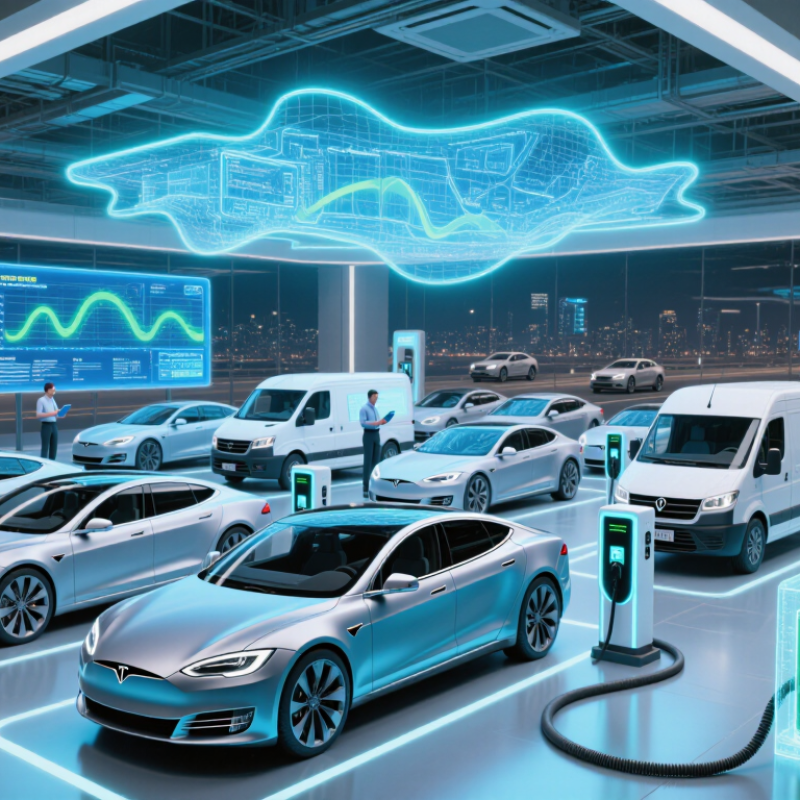
Electric vehicle telematics solutions connect vehicles, drivers, charging assets, and cloud systems through continuous data exchange. They typically capture location, state of charge, battery temperature, energy use, charging status, and diagnostic alerts. For fleet buyers, this changes telematics from a tracking tool into an operational control layer. A vehicle arriving with 18% battery charge needs a different dispatch decision from one arriving with 72%.
The International Energy Agency’s Global EV Outlook 2025 reported that global electric car sales exceeded 17 million in 2024. This scale increases pressure on fleet operators to monitor vehicles beyond ordinary mileage records. Real-time data can identify inefficient routes, delayed charging, abnormal battery heat, or repeated energy loss before these issues disrupt deliveries. The U.S. Department of Energy also emphasizes data-driven fleet management as a way to improve charging coordination and vehicle utilization.
Speed matters, but accuracy matters more. A dashboard showing stale battery data can create false confidence. That is a serious weakness. Buyers should examine update intervals, sensor quality, data security, API compatibility, and performance across different regions. The International Organization for Standardization’s ISO 15118 work also highlights the importance of structured communication between vehicles and charging systems. In practice, a useful platform should turn a live alert into a clear action: reroute the vehicle, reserve a charger, contact the driver, or schedule inspection. Perfect data is unrealistic. Transparent limitations are better.
A buyer-oriented comparison of major electric-vehicle telematics solution categories, their live data value, technical dependencies, and practical deployment considerations.
| Solution Category | Primary Data Sources | Typical Real-Time Data | Indicative Update or Alert Speed | Business Value | Key Standards or Interfaces | Deployment Dependencies | Best-Fit Buyers | Important Buyer Checks |
|---|---|---|---|---|---|---|---|---|
| Vehicle Health and Battery Telematics | Vehicle control units, battery-management system, Controller Area Network data, diagnostic interfaces | State of charge, state of health, battery temperature, pack voltage, charging status, diagnostic trouble codes, odometer | Usually 1–60 seconds for connected live feeds; critical fault alerts can be event-driven | Early fault detection, battery warranty support, preventive maintenance, residual-value assessment | CAN, UDS, OBD-II where supported, secure cloud APIs | Vehicle data access, gateway permissions, compatible data mapping, regional connectivity | Fleets, leasing operators, insurers, service networks, used-EV evaluators | Confirm signal definitions, battery-data ownership, diagnostic access rights, and coverage across vehicle models |
| Live Location and Fleet Tracking | GNSS receiver, cellular modem, inertial sensors, digital maps | Position, heading, speed, route history, geofence entry and exit, ignition or movement status | Approximately 5–60 seconds while moving, depending on configuration and network availability | Dispatch optimization, theft recovery, utilization analysis, driver safety, route compliance | GNSS, cellular networks, HTTPS or MQTT data transport, geofencing software | Satellite visibility, mobile-network coverage, device power management, map quality | Delivery fleets, passenger transport, rental operations, field-service organizations | Check indoor and underground performance, roaming coverage, location accuracy, and privacy controls |
| Charging Session and Energy Management | Vehicle charging controller, charging station, energy meter, fleet management system | Plug-in state, charging power, delivered energy, session duration, connector status, target state of charge | Near-real-time session status commonly ranges from 1–30 seconds; billing records are finalized after the session | Reduced charging cost, improved vehicle availability, energy forecasting, charging-fault management | OCPP for charging-station communication, ISO 15118 for vehicle-to-charger communication where implemented | Compatible charger hardware, tariff data, site electrical capacity, vehicle and charger interoperability | Depot operators, workplace charging managers, public-charging administrators, energy managers | Verify meter accuracy, offline behavior, roaming support, session reconciliation, and load-management functions |
| Route, Range, and Remaining-Energy Intelligence | Battery state of charge, vehicle position, road topology, traffic, weather, payload, driving history | Estimated remaining range, energy consumption per distance, arrival state of charge, charging-stop recommendations | Recalculated every few seconds to several minutes, depending on sensor and traffic inputs | Fewer range-related delays, better trip planning, higher fleet utilization, lower energy consumption | GNSS, map APIs, vehicle telemetry APIs, predictive analytics models | Reliable battery signals, current traffic data, elevation and weather data, model calibration | Long-haul fleets, last-mile delivery, taxis, emergency services, cold-chain logistics | Test accuracy under payload, temperature, terrain, speed, and battery-aging conditions |
| Predictive Maintenance and Remote Diagnostics | Fault codes, sensor trends, thermal data, charging history, maintenance records | Fault severity, abnormal temperature trend, insulation warning, brake or tire alert, service probability | Event-driven alerts can arrive within seconds to minutes; predictive scoring is commonly refreshed periodically | Lower unplanned downtime, better parts planning, safer operation, improved workshop scheduling | UDS, CAN, diagnostic data models, secure remote-service interfaces | Authorized diagnostic access, trained service teams, validated fault logic, safe remote-command controls | Commercial fleets, workshops, public-transport operators, high-utilization vehicle owners | Separate advisory alerts from safety-critical commands and require human approval for remote actions |
| Driver Safety and Usage Analytics | Speed, acceleration, braking, cornering, seat-belt or vehicle-status signals, trip context | Harsh braking, rapid acceleration, speeding, distraction-related events where supported, trip risk score | Event detection is generally immediate on the device; cloud reporting may take seconds to minutes | Reduced collision risk, driver coaching, insurance analytics, lower energy use through smoother driving | GNSS, accelerometer, vehicle signals, mobile data, configurable event rules | Accurate sensor calibration, clear driver policy, local labor and privacy requirements | Fleet safety managers, insurers, logistics operators, corporate mobility programs | Use transparent scoring, minimize unnecessary personal data, and distinguish coaching from disciplinary use |
| Vehicle-to-Cloud Connectivity Platform | Embedded telematics control unit, cellular modem, vehicle gateway, cloud ingestion service | Secure vehicle messages, connectivity status, data freshness, device health, remote configuration status | Typically seconds to minutes; buffering supports delayed synchronization during network outages | Centralized global operations, scalable data integration, over-the-air configuration, service continuity | LTE, 5G, Wi-Fi, MQTT, HTTPS, TLS, device-management protocols | SIM or eSIM provisioning, roaming agreements, cloud-region selection, cybersecurity operations | Global fleets, manufacturers, mobility platforms, multi-country asset operators | Assess roaming continuity, lifecycle support for older cellular networks, data residency, and API limits |
| Over-the-Air Software and Configuration Management | Telematics control unit, vehicle software inventory, cloud release-management system | Software version, campaign status, download progress, installation result, rollback or failure state | Progress updates are usually near real time; installation duration varies by package, vehicle, and network | Faster software rollout, fewer workshop visits, improved cybersecurity response, consistent configuration | Secure boot, code signing, encrypted transport, vehicle software-update processes | Functional-safety controls, sufficient battery charge, stable connectivity, validated rollback procedures | Large fleets, connected-vehicle operators, service organizations, global mobility providers | Require signed packages, staged deployment, audit logs, recovery plans, and local regulatory compliance |
| Electricity Cost and Carbon Intelligence | Charging energy meter, tariff schedules, charging location, grid-emission data, trip energy use | Energy cost per session, cost per kilometer, charging-window recommendation, estimated operational emissions | Cost and load calculations can refresh every 1–15 minutes; carbon factors may update hourly or daily | Lower operating expense, emissions reporting, renewable-energy matching, sustainability planning | Metering interfaces, tariff APIs, energy-management systems, regional emissions datasets | Accurate energy measurement, current tariffs, local grid-factor methodology, site-level data | Corporate fleets, logistics companies, public authorities, sustainability teams | Document calculation boundaries, energy-meter accuracy, tariff assumptions, and carbon-accounting method |
| Open Data Integration and Analytics Layer | Vehicle APIs, charger APIs, fleet software, maintenance systems, mapping and weather services | Normalized vehicle and charger events, dashboards, alerts, historical trends, operational KPIs | From sub-minute streaming to scheduled daily synchronization, based on source-system capability | One operational view, easier supplier changes, cross-country reporting, advanced analytics and automation | REST APIs, webhooks, MQTT, JSON, CSV, role-based access control, TLS | Consistent data schema, API documentation, identity management, data-quality monitoring | Global buyers using multiple vehicle, charger, energy, and fleet systems | Prioritize portability, versioned APIs, data lineage, uptime commitments, export rights, and integration testing |
Note: Update speeds are indicative operational ranges rather than universal guarantees. Actual performance depends on vehicle interfaces, connectivity, satellite visibility, charger capability, cloud architecture, regional regulations, and the selected data policy.
It can track battery charge, charging status, location, speed, and motor temperature. Small details matter.
Managers can notice rising battery temperatures during repeated fast charging. That warning may support earlier inspection. Still, data alone cannot replace technician judgment.
Geofencing can flag unauthorized movement, route delays, or charging outside approved areas. Alerts should remain adjustable. Too many alerts quickly become noise.
It examines fault codes, battery health, tire pressure, and energy consumption. Technicians can plan service using evidence. Predictions are helpful, but not always correct.
Location updates may weaken in tunnels, underground garages, or dense urban areas. Test refresh times in real operating locations. A colorful map proves little.
Review access permissions, encrypted transmission, audit logs, and regional data policies. Ask about retention periods and incident reporting. Security should not be an afterthought.
Open interfaces can connect vehicle data with charging, dispatch, maintenance, and accounting systems. Check API limits and export formats. Integration work may cost more than expected.
Run a limited pilot with several vehicle types and routes. Record missed events, false alerts, installation time, and driver feedback. Real vehicles reveal inconvenient gaps.
Include hardware, connectivity, installation, software, integration, support, and future updates. A simple price may hide operational work. Budgeting is rarely perfect.
This guide explains how Real-time EV telematics solutions help global buyers monitor, manage, and improve electric vehicle operations through continuous access to vehicle data. It covers how connected systems collect information such as battery condition, charging activity, location, energy use, driving behavior, and vehicle diagnostics, then process it through secure communication networks and cloud-based platforms. By turning raw data into timely insights, these systems can support fleet visibility, predictive maintenance, efficient charging, operational planning, and improved driver safety.
The article also outlines the key features of modern EV telematics platforms, including live dashboards, alerts, analytics, remote monitoring, system integration, and customizable reporting. Global buyers are guided to compare solutions based on data accuracy, scalability, compatibility, total cost, deployment flexibility, cybersecurity, privacy protection, regulatory alignment, and technical support. Finally, it considers practical deployment challenges and future developments, including stronger data governance, intelligent automation, improved battery analysis, and broader integration with sustainable transportation networks.